




Text by Eunica Escalante
Images by Rakuto Makino, John Hook and Jun Yamada
At 19, Jun Yamada had an epiphany. It was one of those late Tokyo nights and he was on the train home, a young man in a sea of beleaguered salarymen. The rest of the evening has since faded from memory, but one moment remains fixed even now, a flash of clarity as he regarded the dead-eyed suits gathered around him. It came with the force of an arrow loosed from the bow, cutting clean through the air before lodging in his mind: I will never let myself be like them.
There is no figure more emblematic of Japan’s post-World War II industrialization than the salaryman. They are assiduous, company-bound, and unflappably stoic in the face of 60-hour work weeks. Never mind the demands of office life are so exacting that working oneself to death had become common enough to warrant its own term: karoshi. In a society that prizes stability and self-sacrifice, the salaryman represents the ideal. Anything less would be failure.
To Yamada, though, “It was more of a risk to live a regular life,” he says. “Working for a company as a regular businessman, it didn’t fit my values. I didn’t want to be confined to a business that I didn’t like, to not have that freedom.” It was the mid-’90s—what would later be called Japan’s Lost Decade—when the collapse of a speculation-fueled bubble economy plunged the country into economic torpor. Unemployment reached a record high, divorce rates spiked, and a younger generation was coming of age disillusioned.

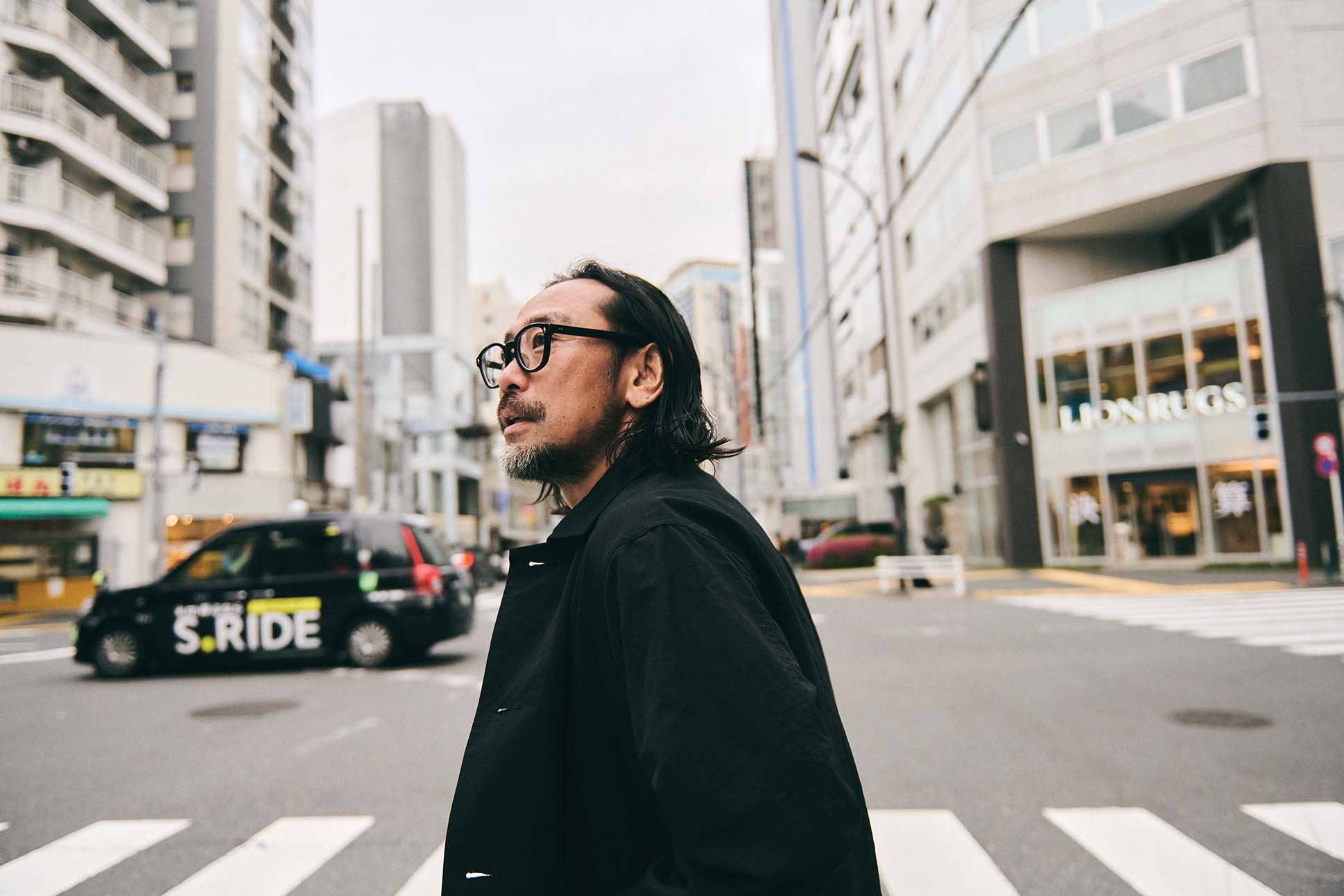
Yet in spite—or because—of this social malaise, a heady matrix of subcultures burgeoned as Japan’s youth experimented with new forms of individual expression. (Today, movements like Urahara-Kei and Karasu-zoku remain an indelible influence, giving rise to designers such as Nigo and Yohji Yamamoto.) It was along these Tokyo backstreets that a teenage Yamada refused the conventional life expected of him. In high school, he and some friends had formed the hardcore band Switch Style; his life defined by frenetic late night sets, playing in dark, sweaty bars heaving with the city’s restless youth. By day, he hawked imported vinyls and CDs through their mail-order catalog business, Start Today, stocking underground bands that couldn’t be found at Tower Records.
It was a modest operation initiated by their drummer Yusaku Maezawa’s recent return from the United States. He had come home bearing a stockpile of foreign albums, the basis for their first catalog. As demand ticked, they imported CDs en masse and Yamada soon became a regular at the customs office, where he hauled away box after box of fresh inventory. In between, he answered phones and took orders and trooped to the post office to drop off the parcels himself.
The team was small, sometimes just Maezawa and him. “We did what we had to do,” shrugs Yamada, recalling those early days. Compared to the salarymen, the work was even more strenuous. However, he was his own man, fortunate to find a job around something he cared about, and besides, the company wasn’t doing so bad either, netting around 60,000,000 yen a year. But, the dawn of widespread mobile internet access by the new millennium ushered in a sea change. In 1999, NTT Docomo, Japan’s largest cell phone company, unveiled i-Mode, a mobile internet service for the masses. Suddenly, Yamada’s days of mailing out catalogs and taking orders by phone seemed achingly obsolete.

Soon after, Maezawa, now serving as company president, showed up at his desk with a beginner’s guide to HTML and a directive to set up the shop’s website by the next morning. Yamada had never coded anything, much less a platform to digitize their entire mail-order business. He pored over the handbook all night, illumed only by the glow of his LCD monitor. Even today, Yamada looks back on those blue-black hours with fondness. That sleepless night in ’99—and the days that followed, as he and Maezawa optimized the site for launch—seemed to crackle with possibility, as if they were on the precipice of something urgent and new.
To recount the origins of Zozotown is to enter the familiar mythos of the digital age’s inception: the first Apple computer assembled in Steve Jobs’s childhood garage; Mark Zuckerberg launching Facebook’s precursor from his Yale dorm room; and Zozotown, an e-commerce giant that would remake Japan’s shopping habits in its own image, beginning as Yamada and Maezawa’s upstart to sell hardcore CDs.
Twenty-seven years later, much has been said about the company’s pioneering move into the fashion e-commerce space, selling apparel online two years before Jeff Bezos made the same pivot with Amazon. Silicon Valley’s favorite word—“disruption”—was the furthest thing from their minds, however. “I had a feeling that CDs weren’t going to sell as much anymore,” he says. Meanwhile, his friends in the music scene had launched independent clothing brands, attracting cult followings among Japan’s style-conscious youth. For Yamada, the shift from music to fashion was a natural step.



They launched the online store Eproze in October 2000, stocking popular Harajuku brands such as Madfoot and Mac Daddy. By 2004, they had 17 standalone e-commerce sites catering to distinct streetwear aesthetics. Start Today became Zozotown, synthesizing the itinerant experience of shopping around Tokyo’s eclectic alleys onto the digital sphere. A mere three years later, Zozotown went public on the Tokyo Stock Exchange, and remains Japan’s dominant fashion e-commerce site, hosting more than 11,000 brands and 1.3 million annual active users in 2025.
Through it all, Yamada retained the anti-corporate spirit of his youth. So it wasn’t a surprise when in 2013 he left Zozotown at its height, which by then had approximately a thousand full-time and part-time employees and netted 110 billion yen a year. With Zozotown, “I felt like I did all I could do at that time,” he says. “I wanted to venture into something different, with different challenges.”
He used the capital he earned from Zozotown to finance new projects. In classic Yamada fashion, this was driven less by financial motivations than his personal passions. The approach has turned him into a guru of sorts, channeling the knowledge he learned at Zozotown to scale brands into industry names. One such project was HLNA, an online venture catering to Tokyo’s surf and skate scene that quickly grew into one of the country’s largest action-sports lifestyle brands. Today, their Tokyo skatepark HLNA Skygarden is a Japanese skating hub, drawing in crowds and skating competitions to its iconic venue above the streets of Odaiba.
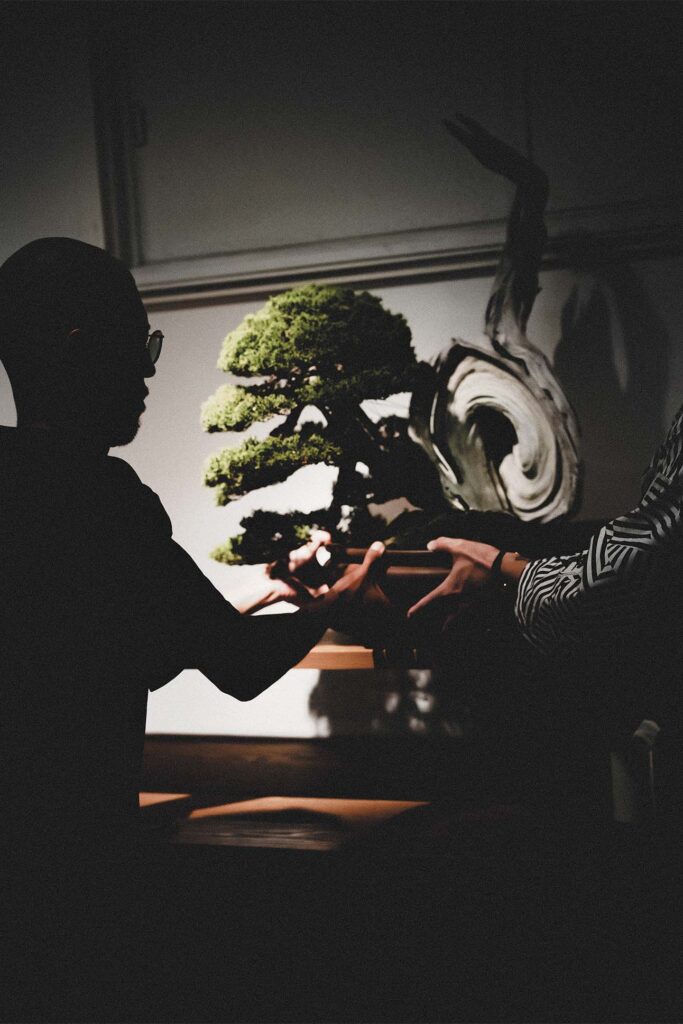
These days, Yamada, now 50, has his attention on Tradman’s Bonsai, a lifestyle brand reframing the tradition of bonsai through the lens of streetstyle. Like Zozotown, his involvement with Tradman’s Bonsai began as a friendship with its founder Teppei Kojima. It was only after the pair bonded on a personal level did Yamada join the company as a board member, an element he cites as crucial to a successful partnership. “The universe kind of brought us together,” he says. “It’s kind of bizarre how I ended up working with all the people I like.”
Looking back, relationships and creative obsessions seem to be the thread that united the many lives he’s lived. There was the music he loved, the scenes he moved through, the friendships that became companies. Perhaps, then, that is his real talent—not merely building brands, but recognizing the people and passions worth building them around.