Text by Eunica Escalante
Images by John Hook
I meet Kumi Iseki at her home in Honolulu’s Park Lane residences just before Christmas. Despite the impending holidays, a melancholia has settled over the islands. The gray clouds blotting out the blue skies might have been a welcome change of pace had they brought even a trace of chill. Instead, the gathering storm leaves only a humidity that clings to everything.
Iseki and I trade grievances, volleying complaints about the weather (stifling) and the city (bleak). All that falls away, though, once Iseki leads me inside, where the dullness finds no purchase.
A crystal chandelier drops gracefully from the ceiling, bathing everything with its warm glow. In the sitting room hangs a painting of a geisha’s back, bare save for an irezumi tattooed across her flesh—a Hisashi Otsuka piece, I later learn.
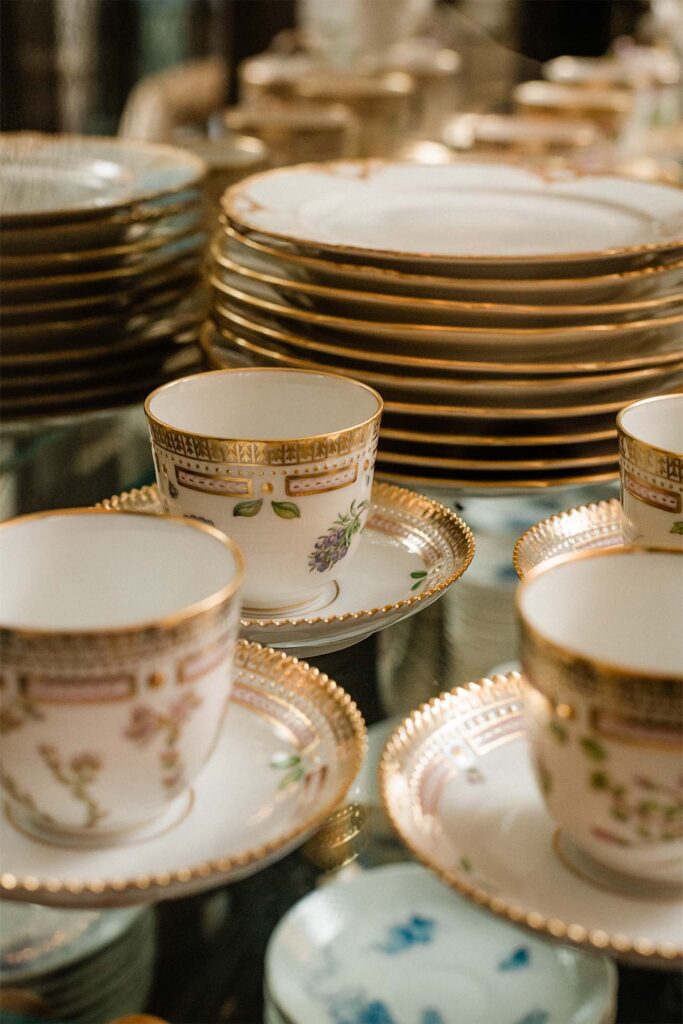
Elsewhere, a pair of wooden vitrines, richly lacquered and hand-gilded, stand sentinel in the hallway. An arched cornice accents the taller of the two, emulating the grace of a temple pagoda. Inside rests Iseki’s collection of fine china and crystal, lovingly amassed through the years. One full porcelain service bears hand-painted botanical drawings, an intricate design instantly recognizable as Flora Danica. The pattern, conceived by Royal Copenhagen in 1803 for a Danish king, remains among the most coveted in the world.
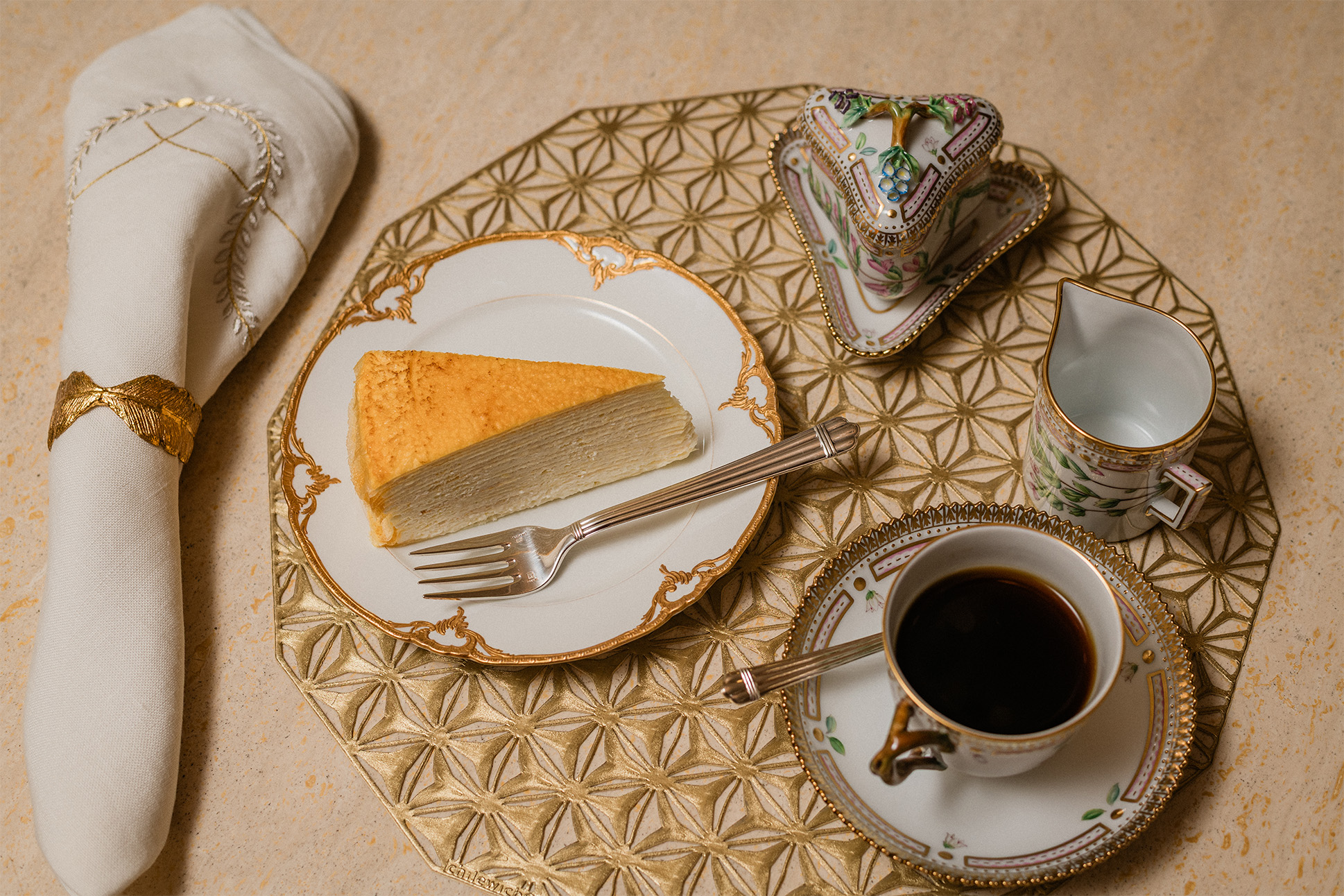
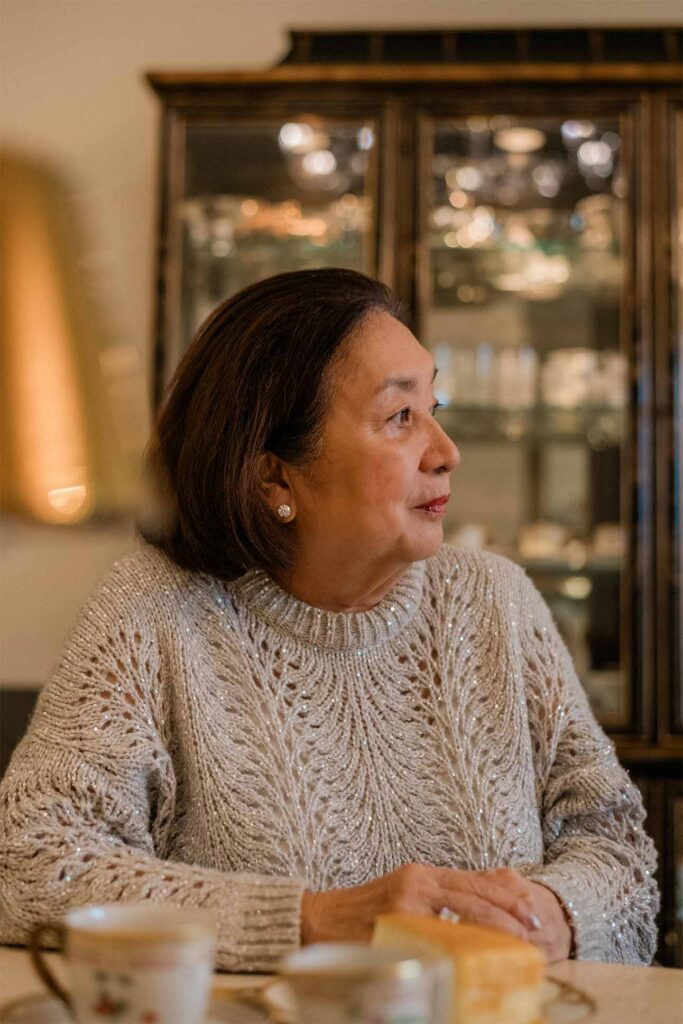
Like the room around her, Iseki is the picture of elegance. She takes the velvet chair across from me, dressed in a matching Brunello Cucinelli knit sweater and linen trousers, her bob styled in a polished coiffe. As Iseki moves, the lurex threads in her cashmere ensemble catch the light, giving her a subtle, radiant sheen.
Such exacting taste has been the currency of Iseki’s life. As a restaurateur, her sensibility has shaped not only what is on the table, but the entire experience that unfolds around it. Iseki’s first venture, Shōgun, was a Southern Californian teppanyaki chain, a format now ubiquitous even in the suburbs. Back in the ’80s, though, Japanese cuisine remained in the margins of mainstream America.
Still, Iseki thought: the food may be unfamiliar, but the atmosphere need not be. “I want you to be comfortable when you come to my restaurant,” Iseki recalls of her thought process. She deployed the accoutrements of European fine dining—porcelain services, polished silver, napkin rings—putting wary Western diners at ease.
In Hawai‘i, such reassurances proved unnecessary. Japanese fare, alongside that of other immigrant communities, had long defined the local table. Here, Iseki’s sensibilities surfaced without translation or apology.
There was the island-inflected minimalism of Wasabi Bistro in Waikīkī, which quickly drew a devoted following upon opening in 1992. Tokyo Tokyo followed, with its open-air deck and ukiyo-e prints carefully curated by Iseki and displayed throughout.
Though Tokyo Tokyo has since shuttered, its 2001 debut at the Kahala Mandarin Oriental, now the Kahala Hotel & Resort, offered a distinct take on fine dining. Guests gathered around a sizzling robata bar and sipped sake, sitting cross-legged in tatami-lined rooms—a bold counterpoint to the Eurocentric venues that dominated resorts in Hawai‘i.
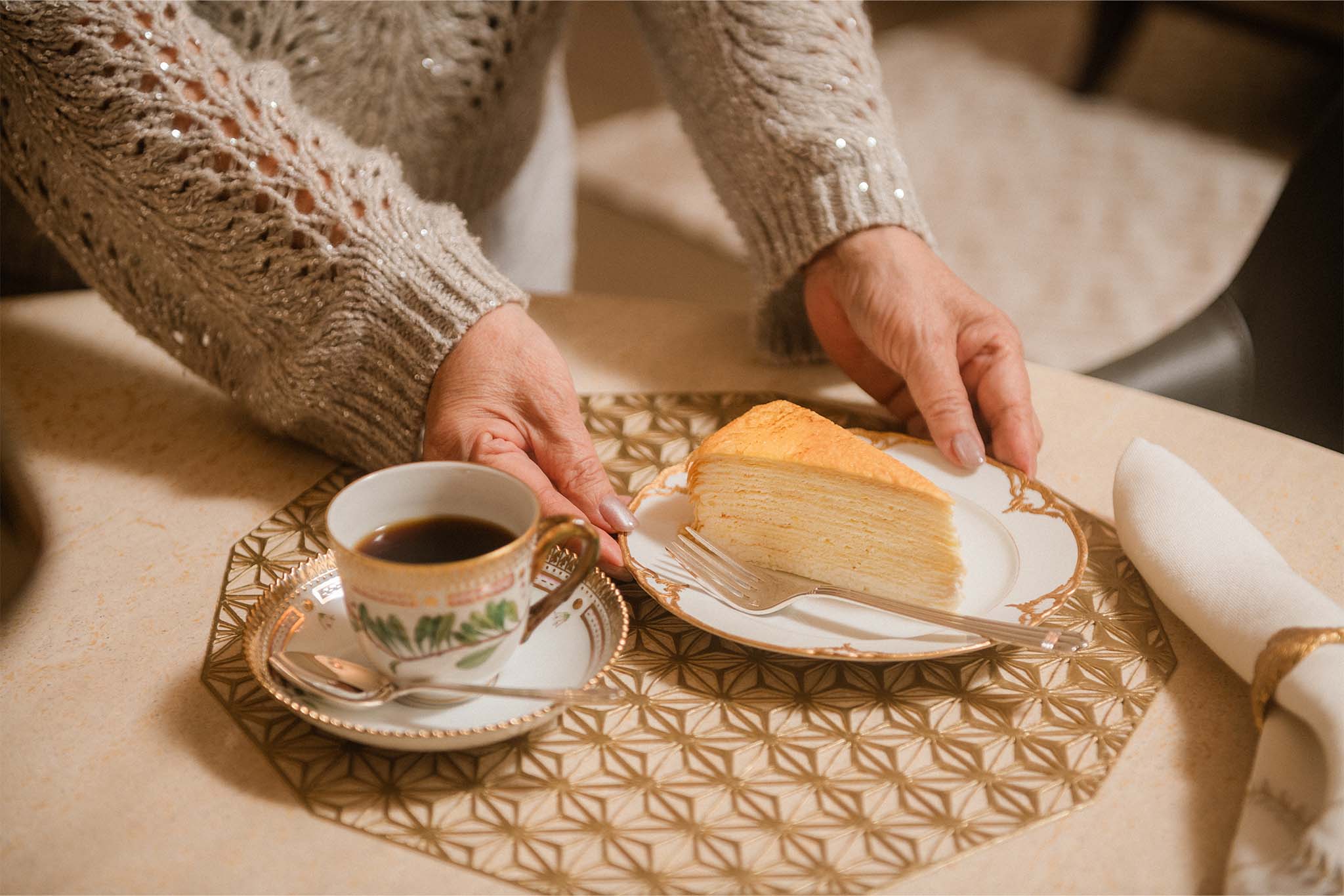
When asked how she developed such instincts, Iseki gestures toward the coffee and cake before us, served on a fine porcelain set as a matter of course. “Here is a beautiful example,” she says. “I don’t have too much basis for [the cuisine itself], just the feeling.”
Nowhere is this sensibility more pronounced, or acclaimed, than at Lady M, the New York confectionery famed for inventing the mille crêpes cake. As an early investor, Iseki helped shape the brand’s understated elegance, curating a space that was less a bakery than a destination. “It’s not only about the cake,” she says, alluding to the patisserie’s marble counters and porcelain tableware. “It’s the whole thing.”
Indeed, in most accounts of Lady M, the atmosphere carries as much weight as the cakes themselves. One New York Times Magazine piece described the Manhattan flagship as “a clean, bright box done completely in white,” so pristine that “not even a cash register is visible.” In Eater, the shop is likened to a “hushed, minimalist art gallery.”
Iseki has since passed on the operation of Lady M to her son, Ken Romaniszyn. Lately, she’s been toying with plans for a Cantonese yum cha-style brunch concept. Whatever comes of the idea, one thing is certain: Her flair for elegance will always be worth savoring.