


Text by Stephanie Gancayo
Images by Marie Eriel Hobro
House of Gongs began as a dream—literally. In 2016, the night before kulintang musician Danongan “Danny” Kalanduyan passed, Lydia Querian dreamt of a gathering. In it, she and her husband, Ron, sat with Kalanduyan, orchestrating a festival for their Bay Area community.
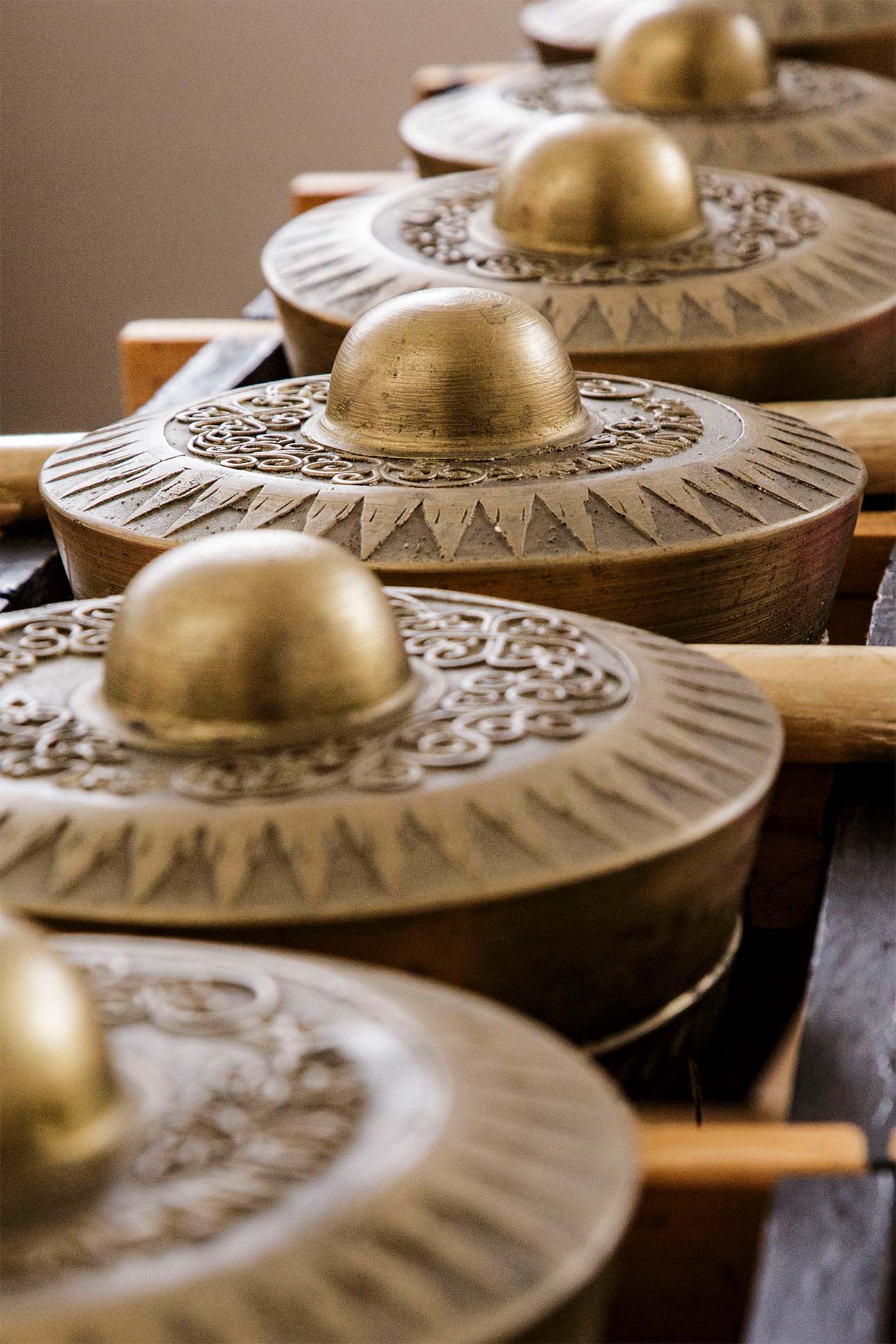
At the time, Lydia was only two years into playing kulintang, a gong-based musical form from the southern Philippines. It is a centuries-old tradition, with motifs drawn from ancestral chants and boat-lute melodies. Every beat serves as communication: a way of relating to nature and marking celebrations, processions, and shared experiences. Passed down orally, its pieces shift through memory and improvisation, a precolonial tradition ever evolving.
Her and her husband’s lives had been shaped by kulintang, guided by Kalanduyan’s steady presence through the years. Still, she never imagined being the bearer of such a storied craft. Her dream suggested otherwise, arriving like a message from Kalanduyan, understood only in time. She awoke at 3:30 a.m. to news that he had died.
That morning, his loved ones laid him to rest in accordance with his Islamic traditions. Soon thereafter, friends, collaborators, and students held a memorial at a Filipino community center in downtown San Francisco. The gathering quickly unfolded into a cross-generational reunion of those bound together by the revered musician’s legacy.
For three days after, Lydia continued to dream. She had visions of a biday, a spirit boat central to the healing ipat ritual of Kalanduyan’s native Maguindanao, said to ferry spirits between worlds. Lydia knew they were more than illusions of the night. In her native Philippines, dreams are considered guidance from the ancestors. “I don’t believe that whatever message was moving through those dreams was meant only for me,” she reflects. “But because of my closeness to that ritual, I think Danny may have seen me as a vessel to send something forward, especially to my husband, who was one of his students.”
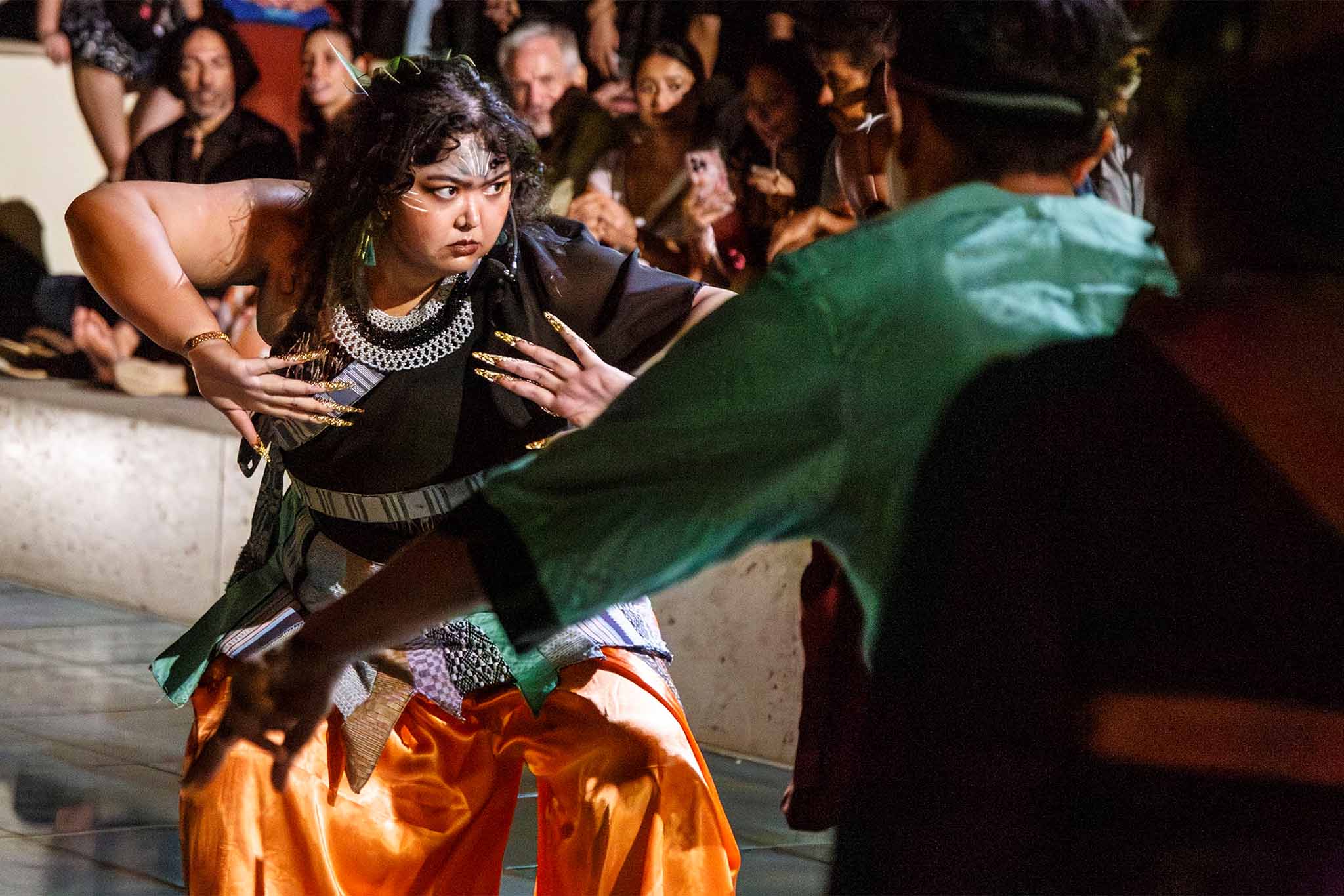
The dreams materialized as Gongsters Paradise, a kulintang event in tribute to her mentor. In attendance was every kulintang group touched by Kalanduyan’s work, from San Francisco to Toronto. As each group took the stage, Ron and Lydia flowed through the successive sets, having played with many of the ensembles over the years.
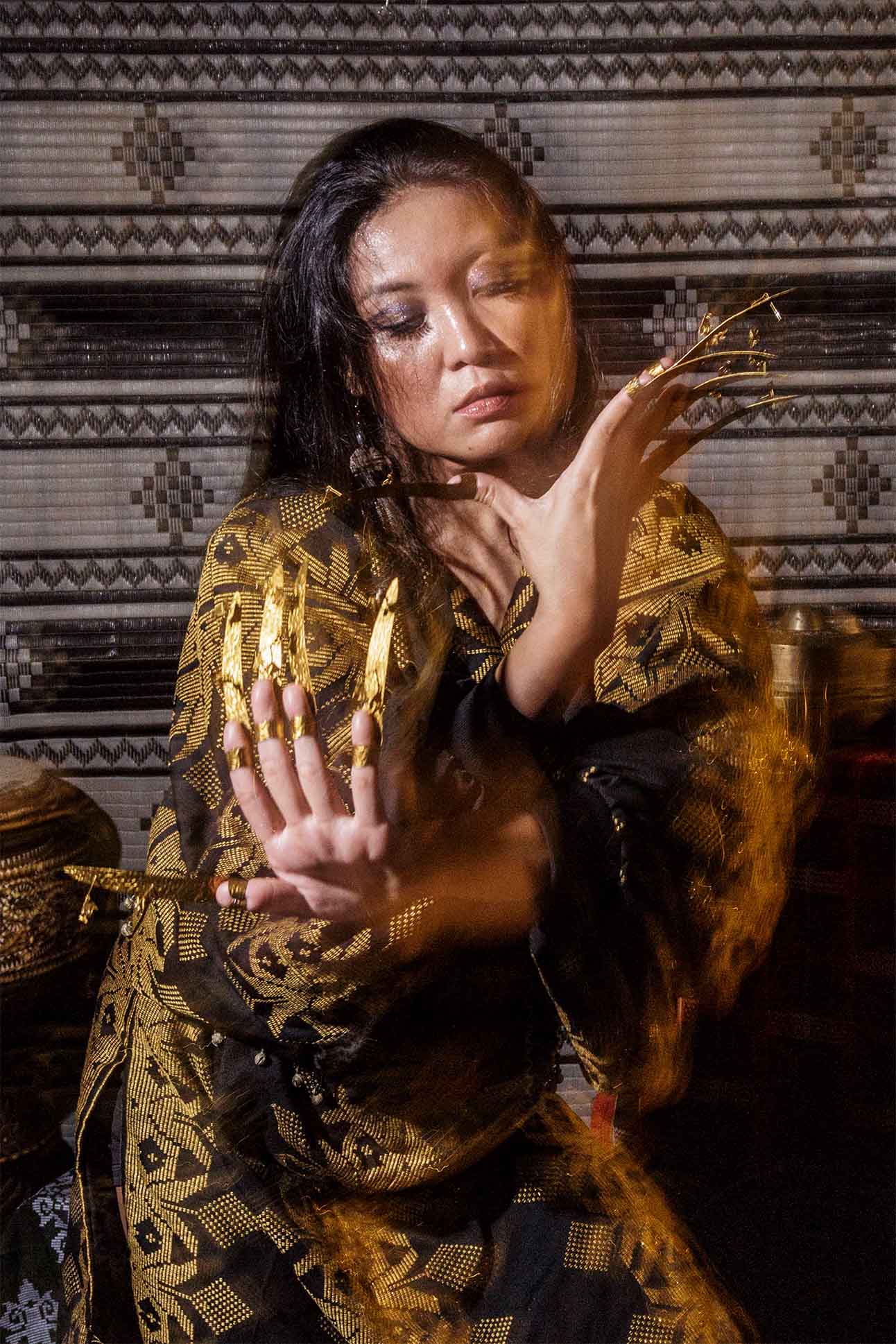
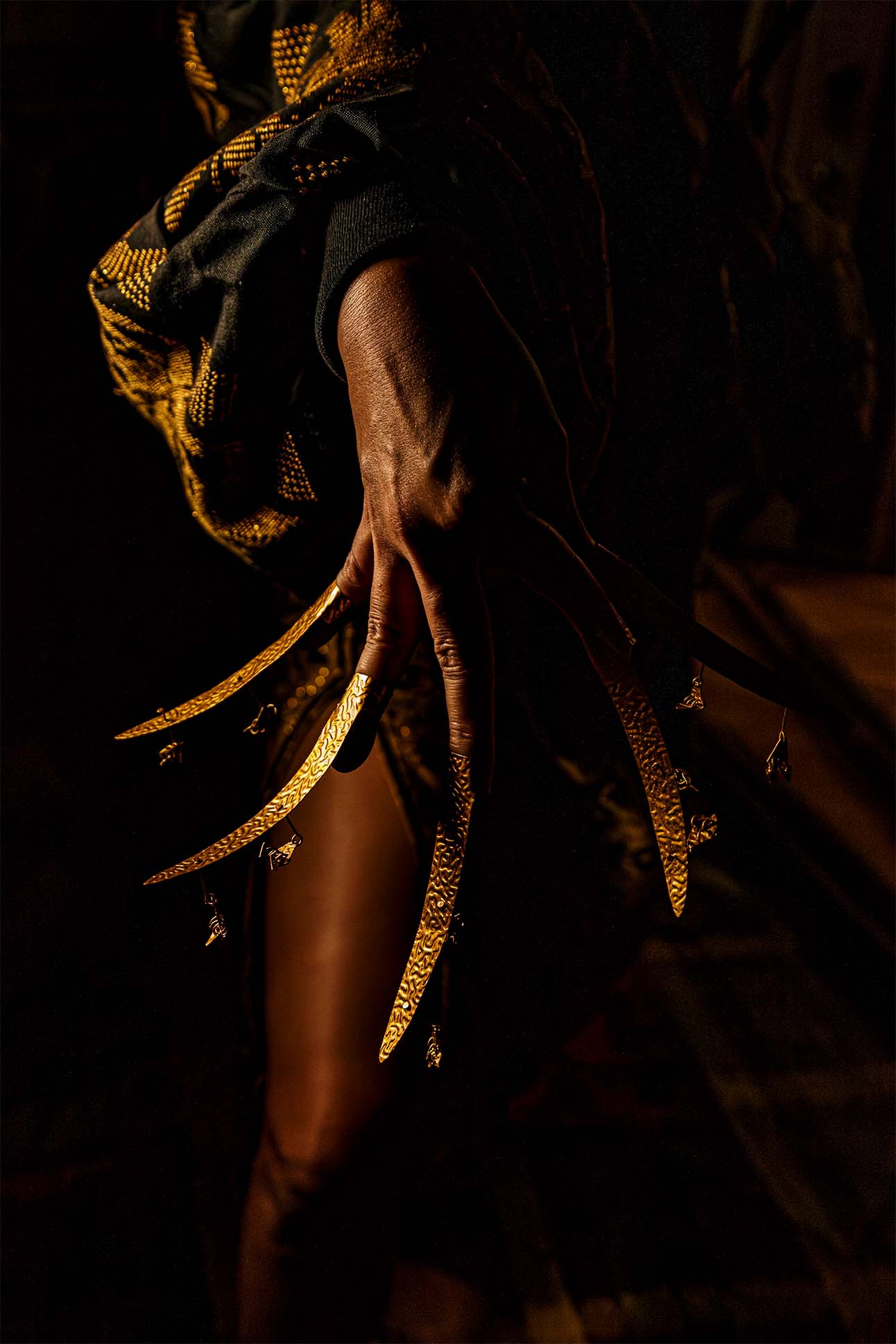
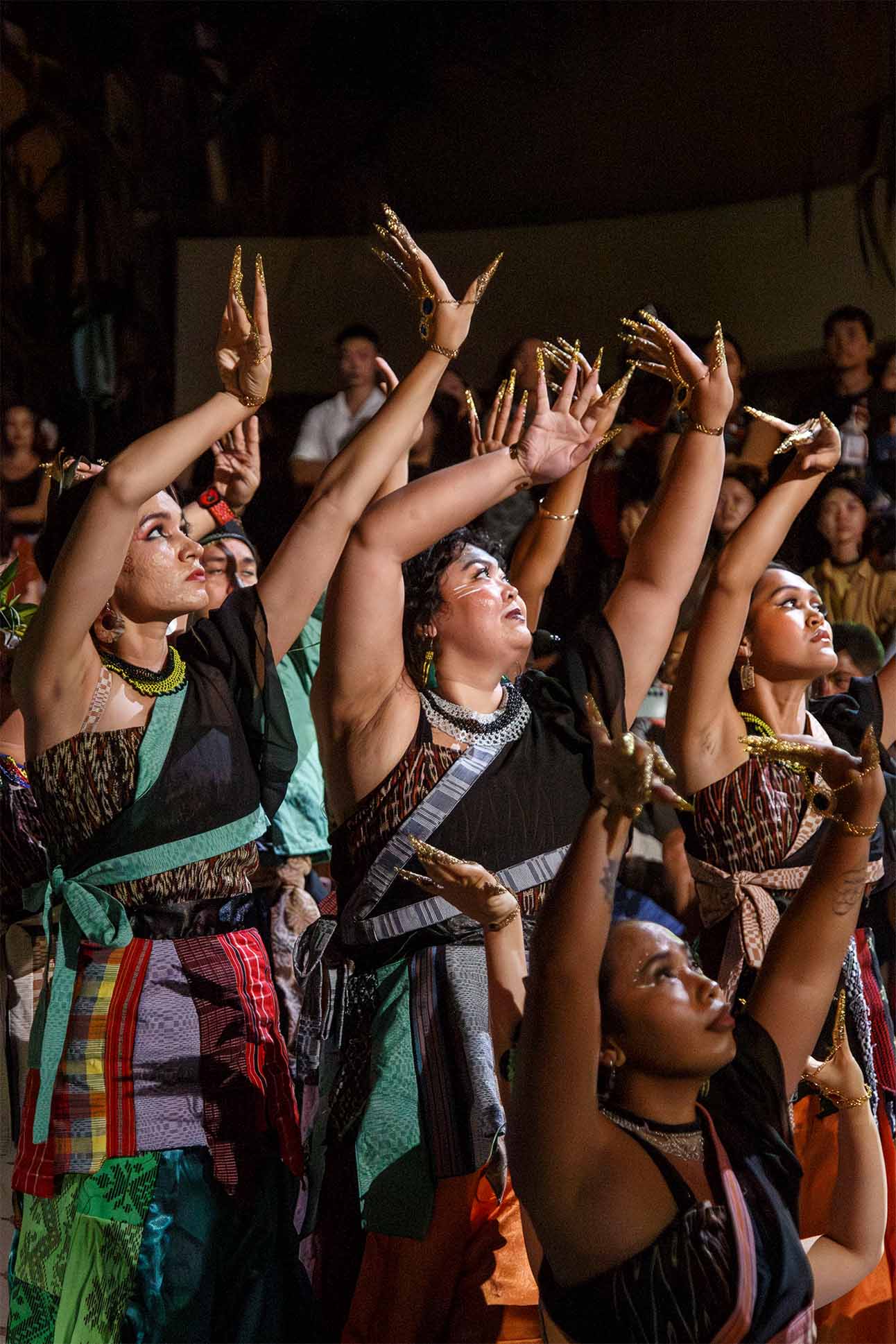
Under warm stage lights, the musicians formed a half-circle, gongs and drums arranged like ritual objects. Mallets struck with precision, coaxing shimmering overtones that rippled into deep, grounding pulses. Bright gongs rung; low drums settled into a shared heartbeat. In the center, Pangalay dancers moved with sinuous grace, fans flicking, janggay-clad fingers tracing the air in fluid arcs. Players and dancers leaned into one another as synchronized storytellers while the audience swayed, caught in the collective pulse.
With few vendors and no headliners, the focus remained on kinship rather than spectacle. Lydia meant for it to be a standalone event held in Oakland, California, in 2017. Instead, it planted the seeds of a diasporic movement.
Nearly a decade on, Ron and Lydia sustain the spirit of that gathering with House of Gongs. Part cultural studio, teaching center, arts incubator, and diasporic sanctuary, it is less an institution than a living organism, shaped by those who enter and their histories. Their mission was articulated from the outset: honor tradition, foster innovation. They name their teachers and cite lineages. They remember those behind the knowledge, a grounding approach as they encourage artists to experiment boldly.
“We wanted people to have a place to make music, to be their most authentic selves in,” says Ron, for whom music has always been a portal. As a young performer in the Bay Area, he felt the thrill of sound but not its soul. “I was living the musician lifestyle,” he recalls, “but something was missing.” Then, he took a Philippine guitar workshop, which led to a Pilipino Cultural Night performance at a local college. The applause, the families cheering on their kids, the shared pride—it filled the long-felt absence.
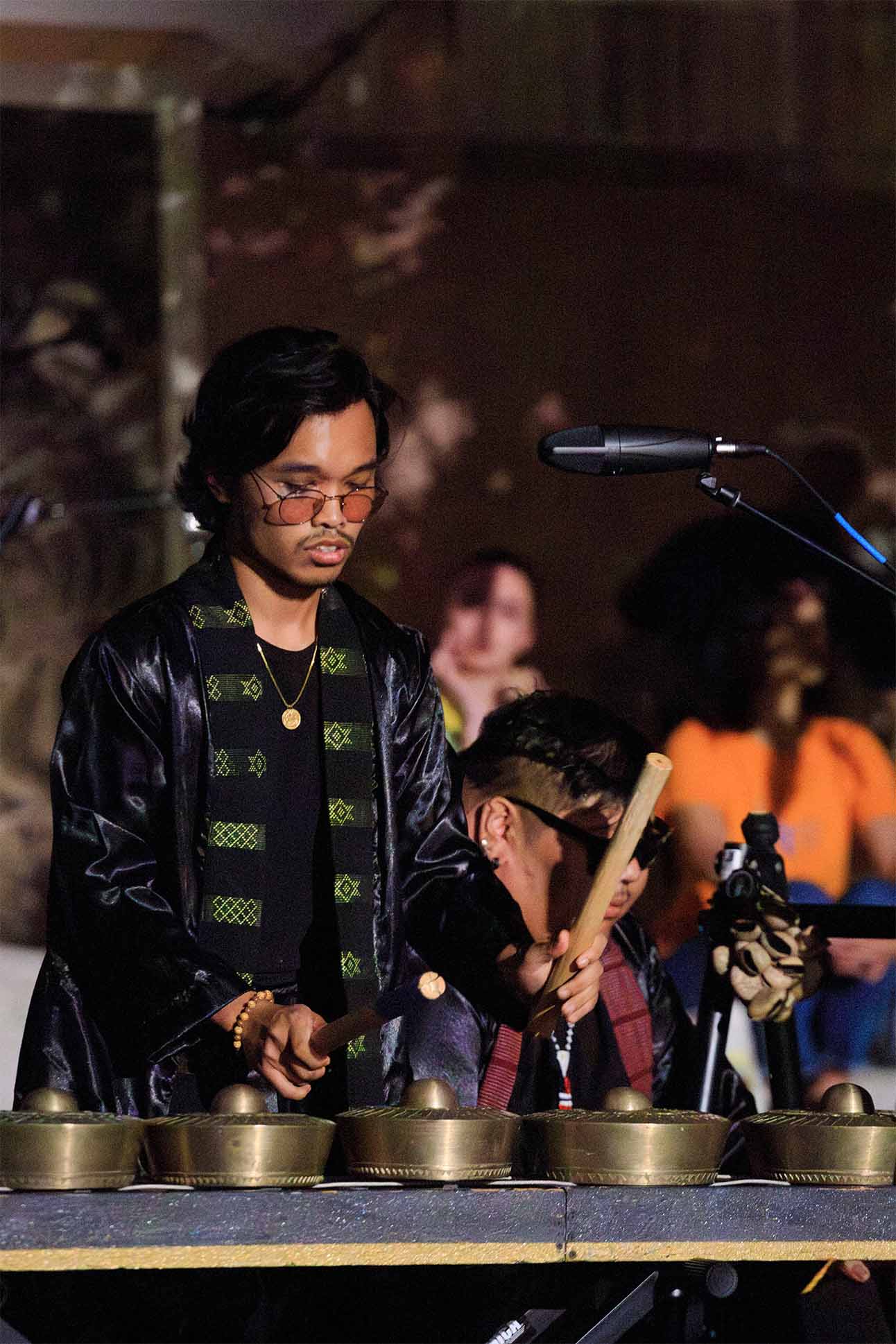
Pursuing kulintang, he studied under Kalanduyan and entered a community of cultural leaders, including dancer and choreographer Alleluia Panis. Her encouragement to merge kulintang with his roots in disco, house, and dance-floor rhythms pushed him to develop Kulintronica, his pioneering fusion of kulintang and electronic dance music.
Lydia had a parallel path. Born and raised in the Philippines, she was trained in dance, music, art production, and fashion, and her sensibilities were shaped by her heritage. The pair were drawn to one another through their mutual regard for music. Upon Kalanduyan’s passing, informal jam sessions filled their home, where performers shared repertoires and talked story over communal meals. It was from those gatherings that House of Gongs emerged.
In recent years, House of Gongs has found fertile ground in Hawai‘i. Following the family’s move from the Bay Area in 2020, Ron met Paul Cosme, a student in the doctoral composition program at the University of Hawai‘i at Mānoa, at a House of Gongs gathering. The encounter would eventually lead to a position at the university, where he now directs the UH Kulintang Ensemble. Guided by kulintang’s tradition of innovation, the group approaches Filipino music not as a fixed heritage but a living practice.
“With the way communication works now, artists have no excuse not to have some sort of relationship to traditions they’re claiming to draw from, but you’re also not bound to do things the traditional way. That’s where the artistry comes in,” Ron says, citing diasporic musicians such as Gingee or Susie Ibarra, who received the Pulitzer Prize for Music in 2025. “Even traditional culture bearers, they use their own artistry,” he says. “They take risks. We also need to do that.”
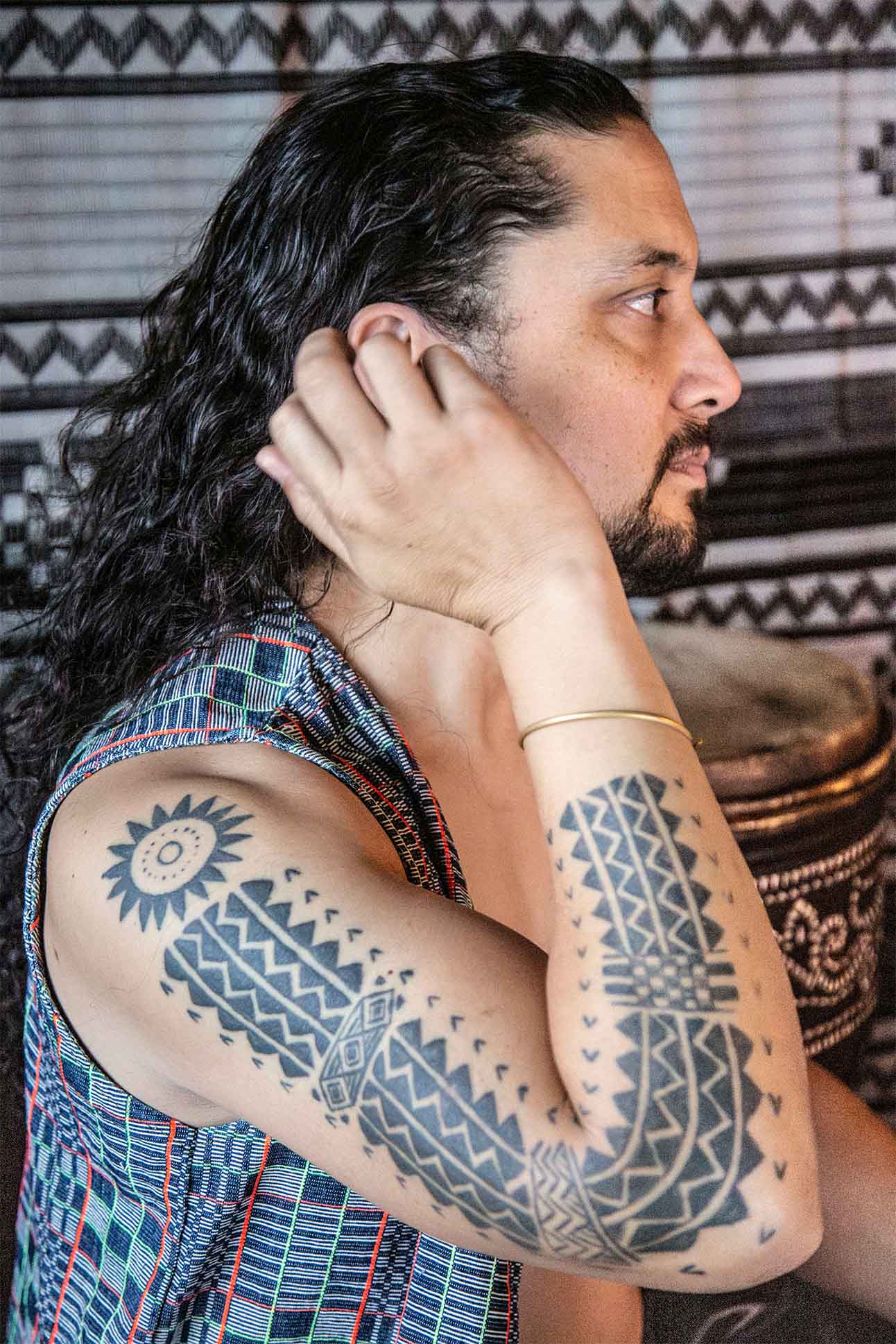
Lydia echoes the sentiment. “Innovation is a form of preservation,” she says. “It’s about how you communicate your work, how you carry the lineage forward.” She looks to Hawaiian hālau, where performers are taught to trace their genealogy back 14 generations. For diasporic Filipinos fragmented by a colonial history, such continuity can be difficult, but not unattainable. “The Filipino community here has a deep lineage that’s more rooted, more soil-driven,” she says. “They’re looking for depth, something more ancestral, less commercial.”
A 2025 collaboration with Tahiti Mana symbolizes this reconnection. Dancing in the Diaspora, a multi-run show at UH Mānoa’s Kennedy Theatre, blended kulintang with Tahitian drumming. Dancers found that their movements translated across cultures, gestures of a shared Oceanic ancestry as much as shared artistry.
Even with significant cuts to federal grants, which once helped sustain them, House of Gongs continues because artists insist on it. At Gongsters Paradise, now a yearly kulintang event, artists offer to participate without pay. It’s a gesture not of scarcity, but devotion.
Their events form a kind of cultural altar. They are places where diasporic Filipinos can return to themselves, where art becomes an embodied experience. “It’s not about the festival itself,” Lydia says. “It’s really about how people feel in that specific space. There’s a transformative thing happening.”
House of Gongs began as a dream. Today, it lives in the ongoing rhythm of community, evolving with every person who steps into its circle.