


Text by Sarah Burchard
Images by John Hook
I was a 24-year-old sous chef when I purchased my first hōchō, or Japanese knife. It was an eight-and-a-half-inch Nenohi Nenox Corian Gyuto crafted from stain-resistant carbon steel, with a Western-style build that lent it a heavier handle and wider blade than traditional Japanese knives.
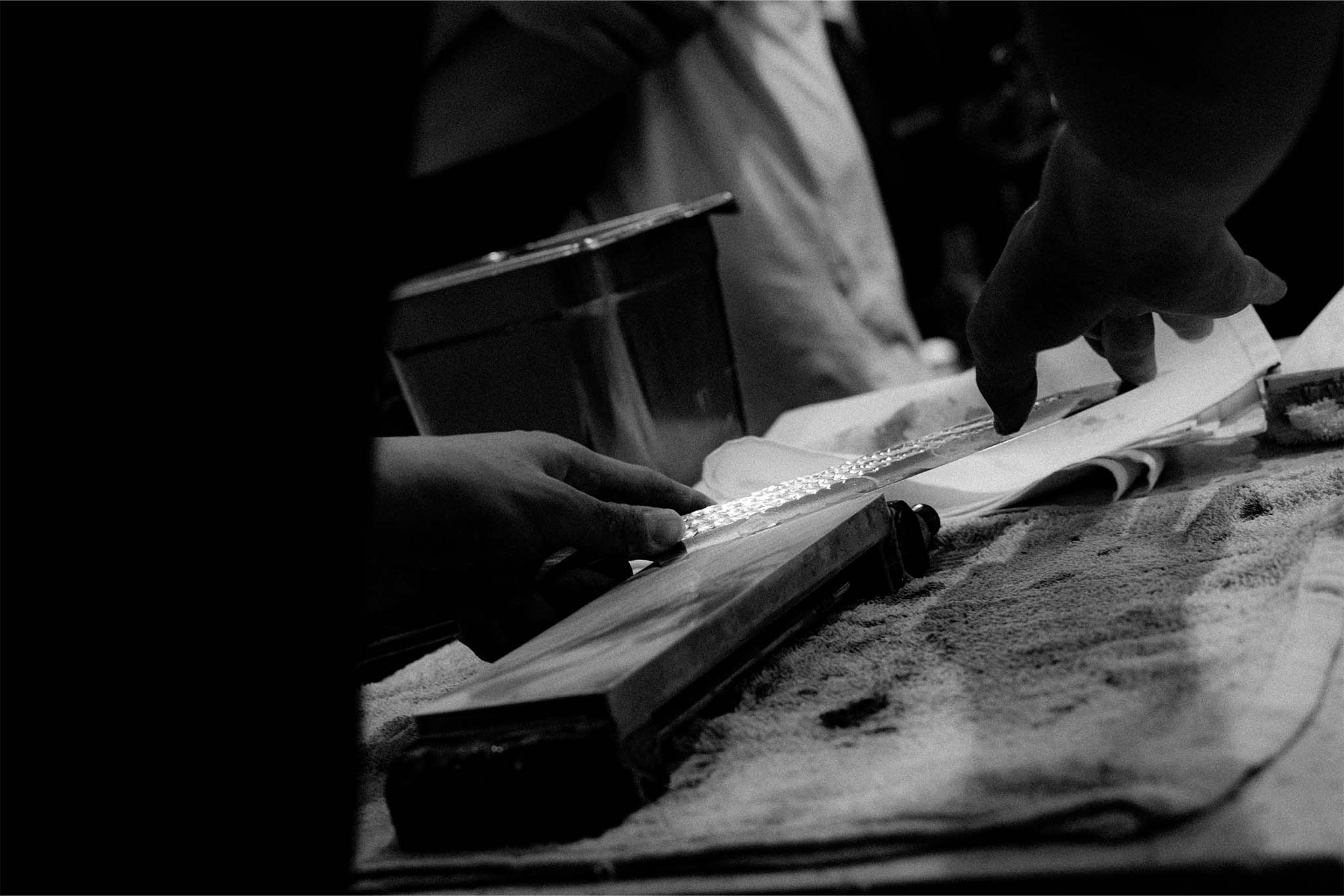
The purchase was kindled, in part, by my chef’s own collection of hōchō, which he laid across our prep table every morning for sharpening. Their steel edges glinted from vibrant red, green, and blue handles. There was one made of hammered damascus that was particularly beautiful. And I can still recall his sushi knife, as long as my forearm, as he ran it along a Japanese whetstone until razor sharp. It strikes me now, as it did then: There we were, in an Italian restaurant, using Japanese knives.
For chefs, no matter their cuisine, there is no better knife than a hōchō. Beyond the obvious practical merits, superior edge retention chief among them, Japanese blades stand as a living tradition rooted in the country’s metalworking and bladesmithing heritage.
Before there were hōchō, there were nihontō, Japanese swords. As the samurai class rose in power, so too did the symbolic weight of the blades they carried. Swordsmithing emerged as an esteemed craft, driven by a lineage of techniques that marked the Japanese blade as distinctive. Then came the Meiji Restoration of 1868, and with it the abolishment of the samurai class. Later, the Haitō Edict banned swordwearing in public, effectively effacing the blade’s status.
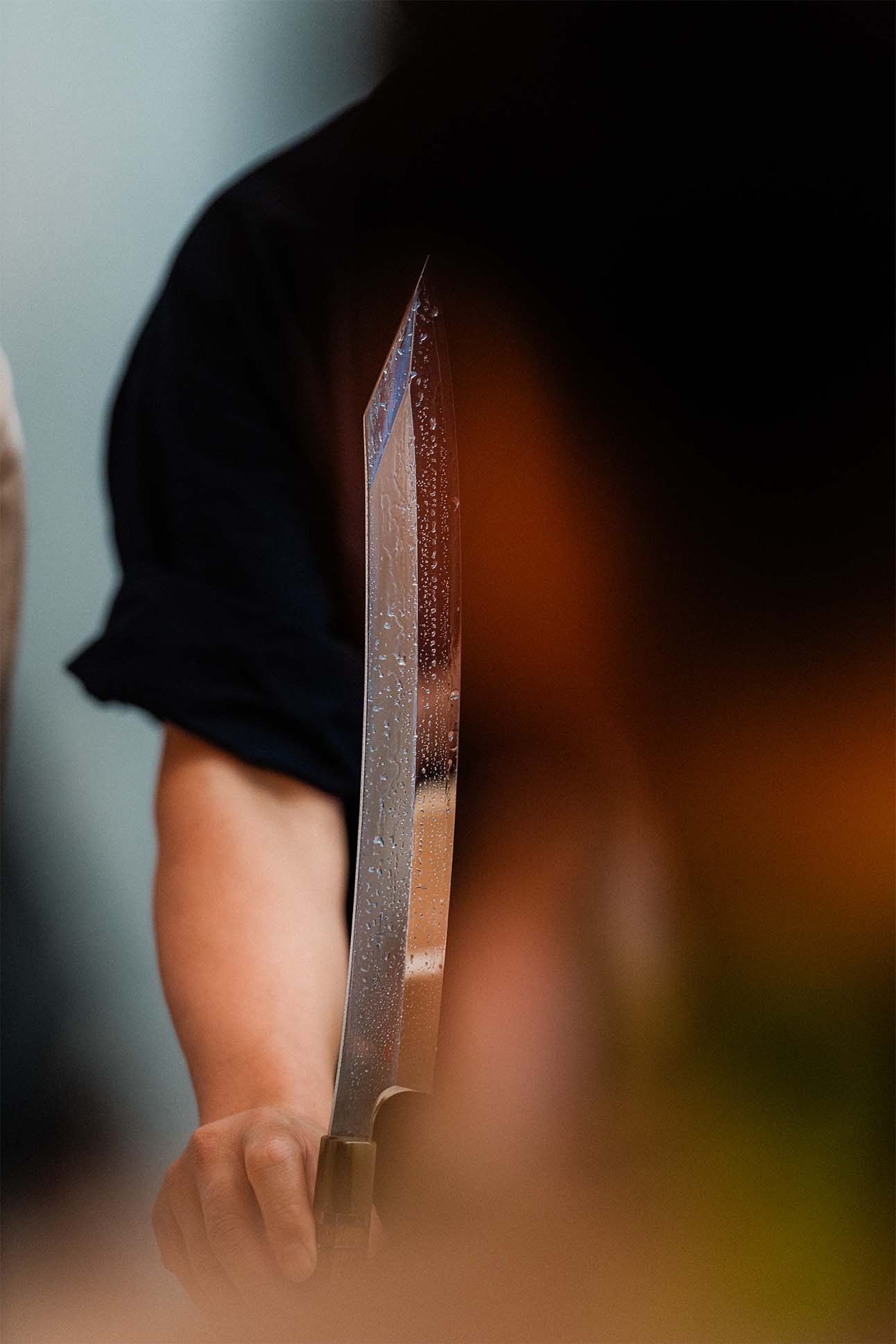
To preserve their centuries-old craft and stay in business, many swordsmiths pivoted to crafting utilitarian items: first farm tools and, eventually, kitchenware such as knives. They applied samurai sword methods to knifemaking, including san mai (three layers), in which a hard steel core is clad in softer layers.
This allowed blacksmiths to use higher-carbon steels without risking damage. The result? A knife of superior sharpness.
“One of the priorities of Japanese knifemakers is the edge of their knives,” says Will West, general manager of Seisuke Knife, a retailer that has broadened access to hōchō for chefs beyond Japan. “There is greater emphasis on the sharpness and longevity of an edge, as opposed to the durability or sturdiness.”
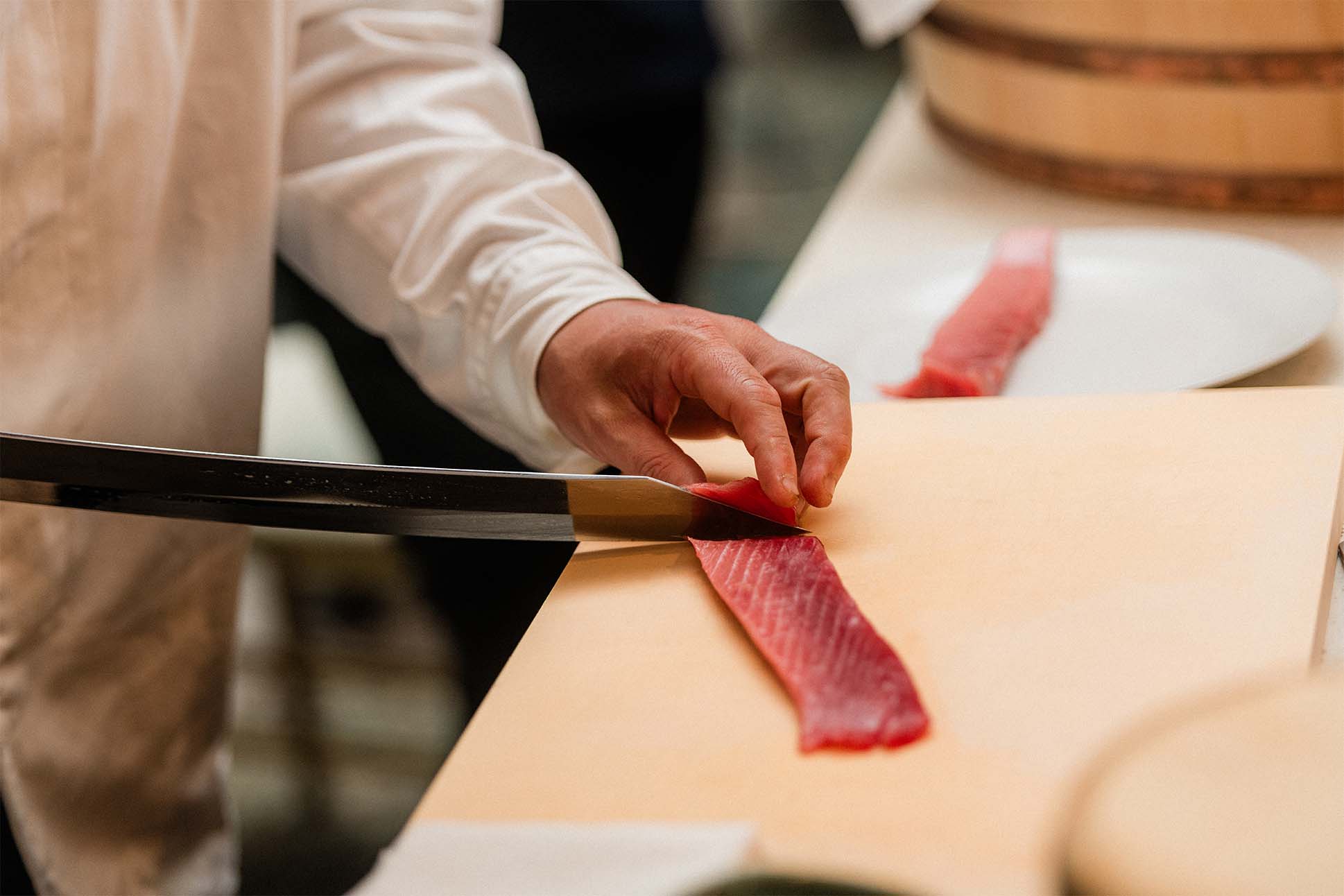
As the appreciation for Japanese craftsmanship and cuisine grew, so did the popularity of Japanese knives. In recent decades, chefs and home cooks worldwide have turned to hōchō for all manner of cuisines. At the 16-seat omakase Sushi Sho Waikīkī, executive chef Yasushi Zenda favors hōchō by Nenohi Cutlery Co., wielding a 12-inch yanagiba like a sword through hunks of ‘ahi. Meanwhile, Nae Ogawa of Nature Waikīkī works with blades by Takamura Knives, a prominent forge in Echizen, Japan. “The first time I held [the knife] and began cutting, I felt a sense of respect,” Ogawa says. “It made me realize that I must continue to grow as a chef.”
Similarly inspired, founder Atsuhiro “Hiro” Nakamura launched Seisuke Knife upon meeting renowned blacksmith Takeshi Saji in 2014. Two years later, Nakamura opened his first brick-and-mortar in Portland, Oregon, with knives handcrafted by some of Japan’s leading bladesmiths. In recent years, they’ve expanded this reach through biannual festivals across the Pacific Rim.
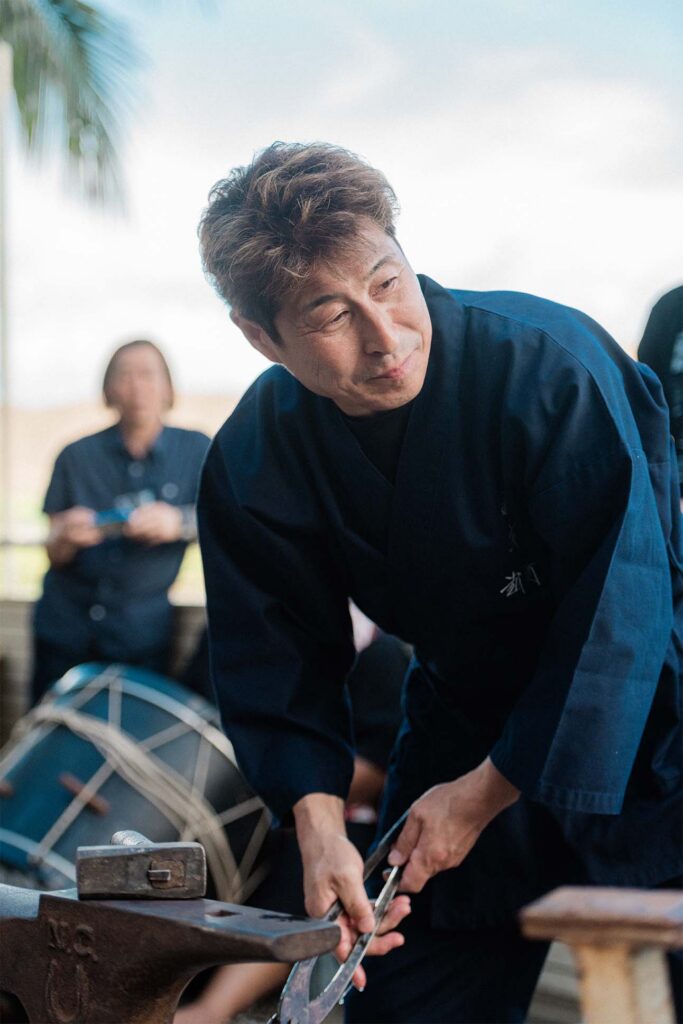
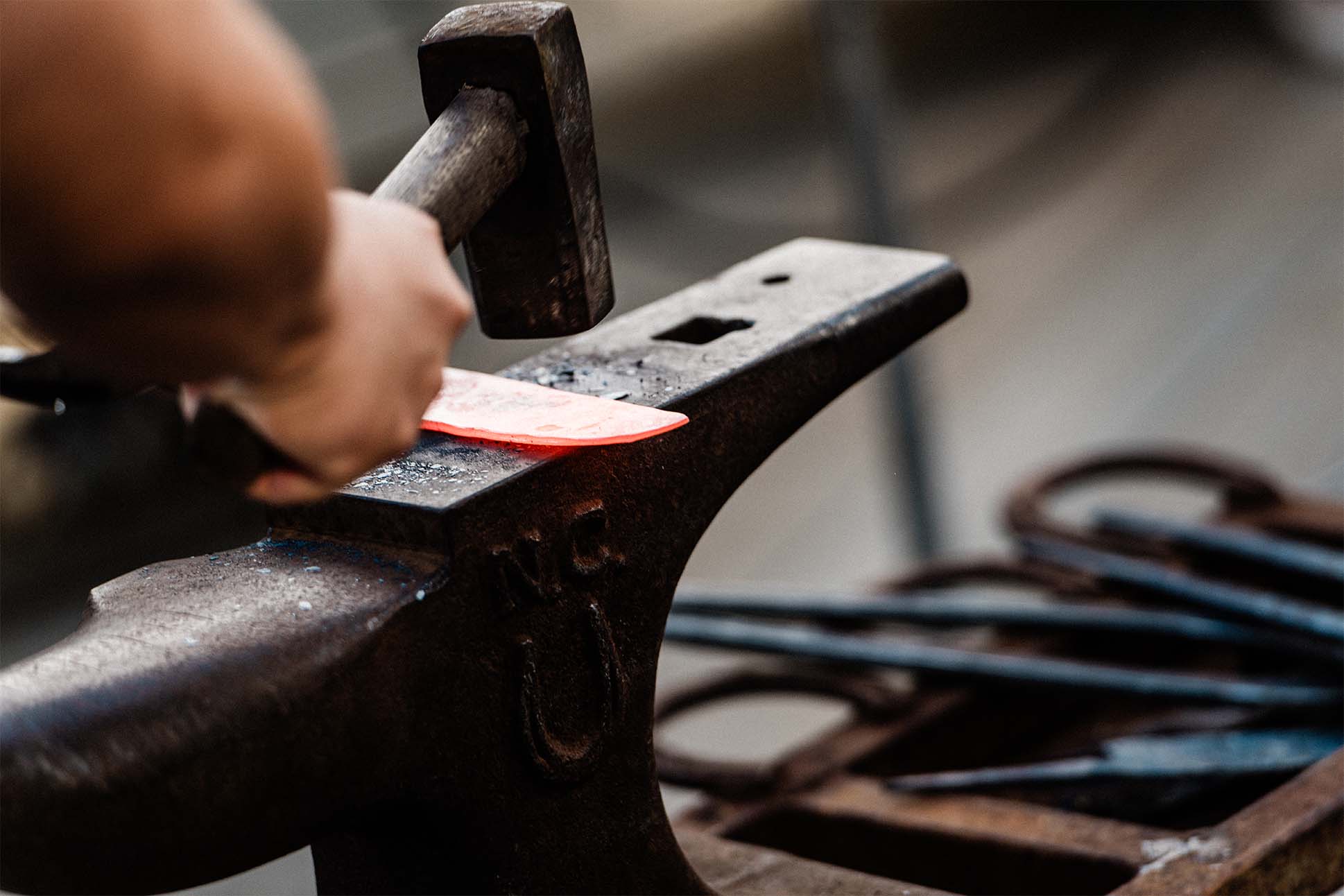
In 2025, at Seisuke Knife’s first Hawai‘i event, some 200 cooks huddled around three blacksmiths—Yu Kurosaki, Yoshimi Kato, and Takumi Ikeda—flown in from Takefu Knife Village, where a collective of traditional knifemakers have worked to preserve the centuries-old craft since 1973. Working out of a 2,000-degree forge, Kato and Ikeda took turns pulling out red-hot billets of steel, swiftly shaping them with a hammer until flat and uniform in size. Throughout the venue, finished knives glimmered like diamonds against black tablecloths.
Elsewhere, renowned sushi chefs demonstrated the knives’ prowess. Yoshiki Hatano of Sushi Tonari, a Michelin Bib Gourmand sushi bar with locations in London and Tokyo, sliced perfect slivers of raw ‘ahi with one seamless swoop of his hōchō. Angie Lee, founder of the handroll omakase pop-up Tsuki Maki and an alum of Sushi Sho Waikīkī, sliced oshizushi (pressed sushi) with precision, showcasing the stealth of a Kurosaki knife.
Such craftsmanship is only possible with true devotion. For 12 years, Kurosaki apprenticed under Hiroshi Kato, co-founder of Takefu Knife Village. He spent years making only nakiri, a rectangular-bladed vegetable knife, hammering as many as 120 forged blades a day, until his fingers were stiff and aching. Even then, he did not stop, working until every edge was even and true. Later, as a master bladesmith with his own workshop, he began perfecting other knives, such as his signature gyuto and santoku.
By age 39, Kurosaki was recognized as a Traditional Master Craftsman, a distinction other bladesmiths hadn’t received until their 60s. The distinction owes much to the artistry he brought to the trade. When he opened his own workshop in 2014, Kurosaki became one of the first Takefu craftsmen to break from convention, favoring a bolder aesthetic over tradition.
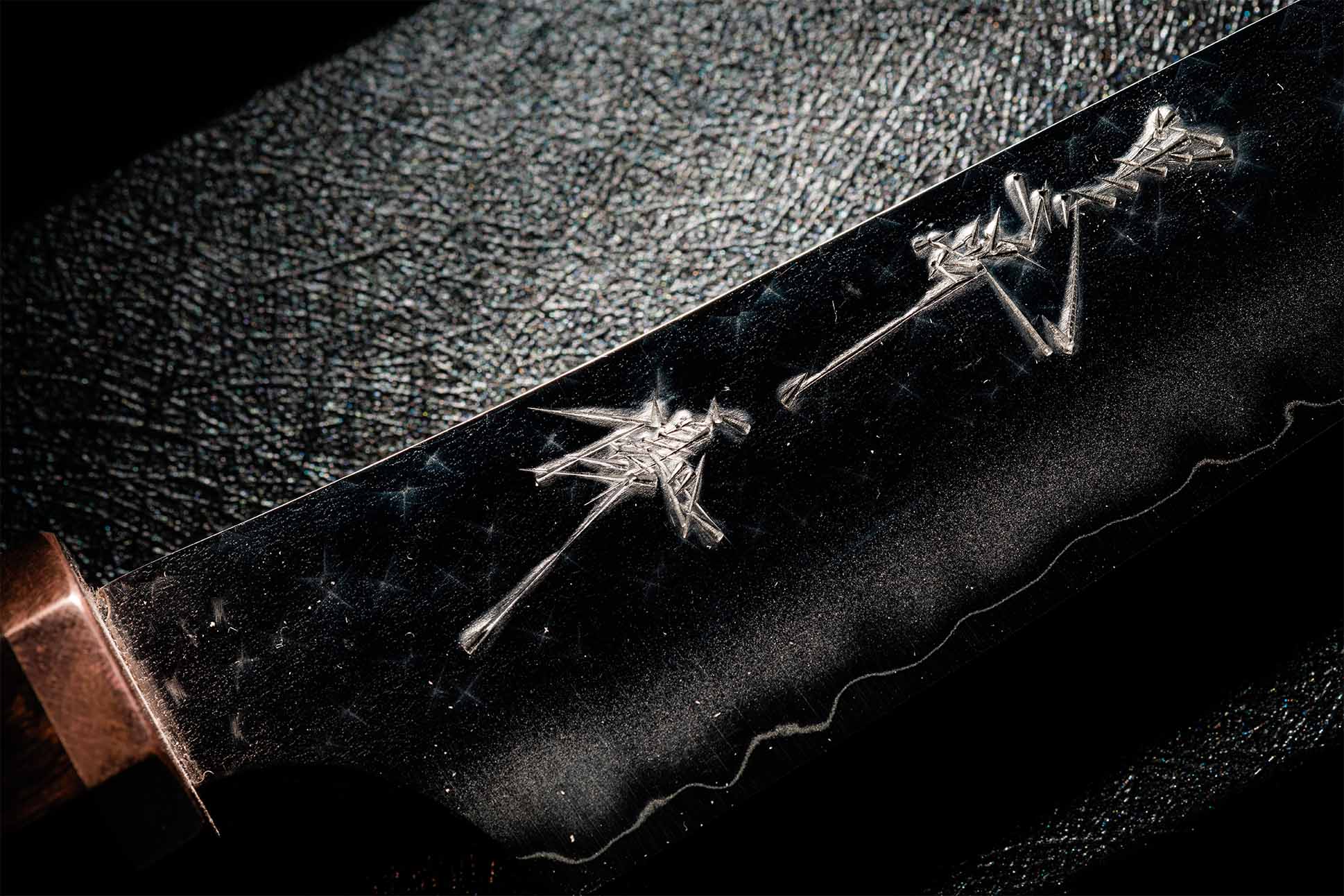
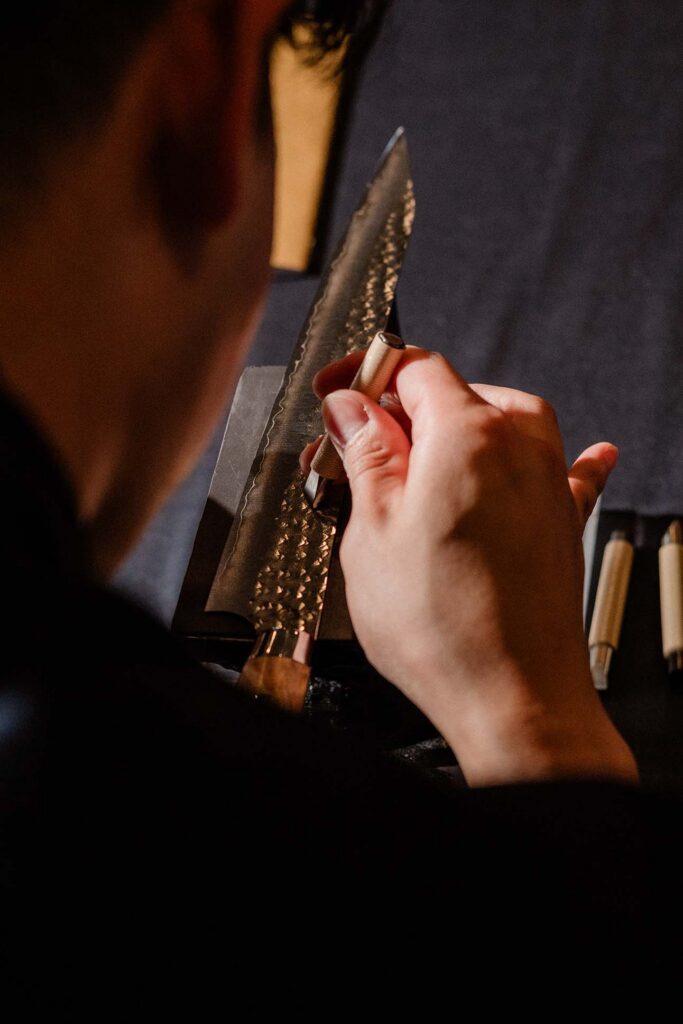
Consider his approach to tsuchime. Typically, dimples are hand-hammered onto the blade’s flat, a finish that marks it as forged. Instead, Kurosaki chisels intricate designs, like the slash marks for the Japanese gods Fujin and Raijin, which is now among his signatures. Then, there is his characteristic bolster: rounded for improved handling and imbued with a certain sensuality, mirroring the sweep of a woman’s curves. For Kurosaki, it does not do well for a knife to merely be pragmatic. It must also carry a certain sex appeal.
This is why chefs like myself obsess over collecting Japanese knives. They become an art collection.
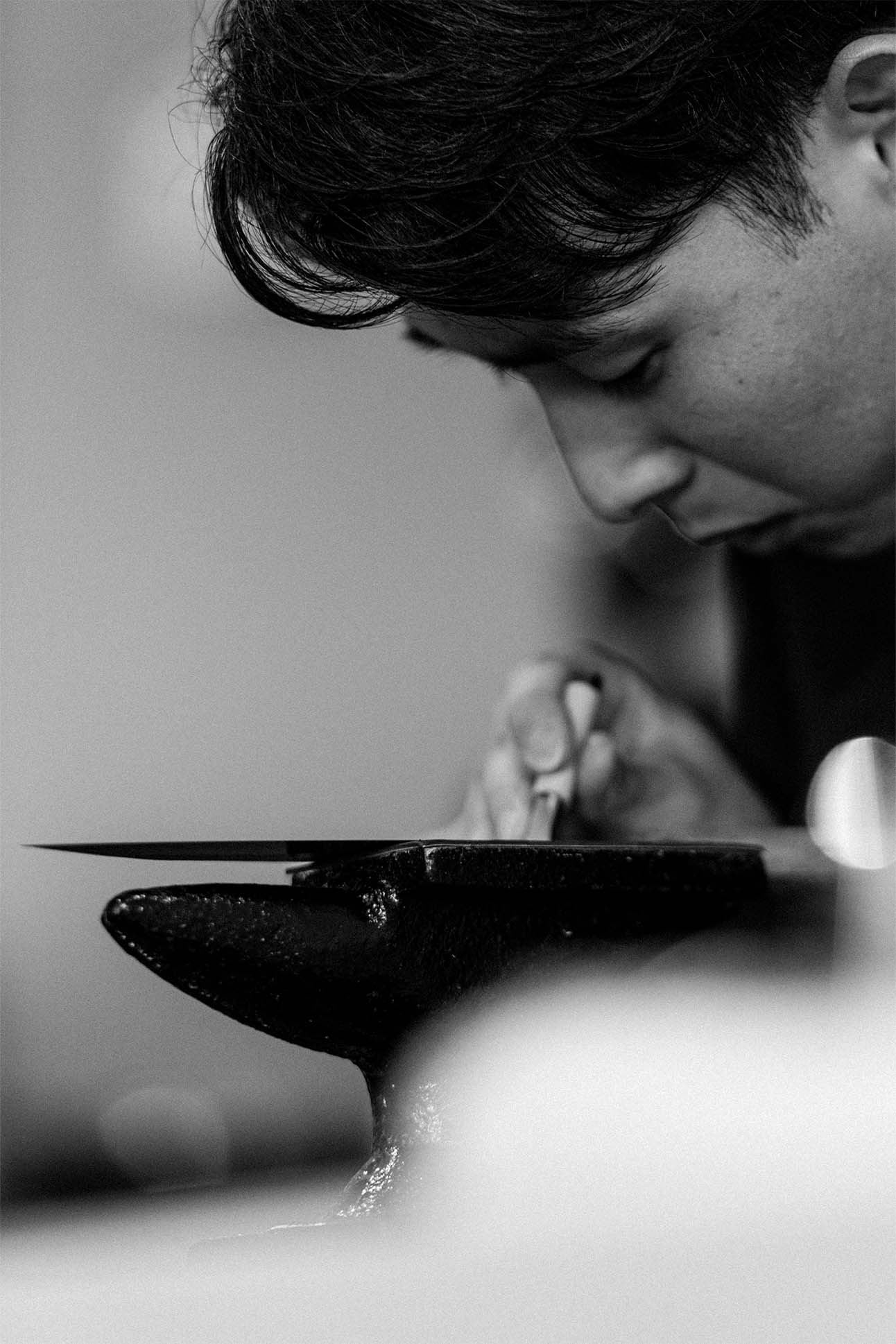
Our vocation prioritizes practicality; luxury clothes and flashy jewelry have no place in the kitchen. So, our knives become our bling, a signal of our devotion to the craft.
“Using first-class tools naturally raises one’s awareness and sense of responsibility to perform work worthy of them,” Zenda says. “As that awareness deepens, it leads to discovering even better tools. I believe this positive cycle is what allows craftsmen to continually improve.”
When I told my boyfriend—also a chef—that I was to meet Kurosaki for this story, he stopped short. “You mean the Yu Kurosaki?” he said. “Master knifemaker from Japan?” When I later mentioned the exchange to Kurosaki, he gifted me a honesuki, a boning knife noted for its precision. I still haven’t used it. I sit with it sometimes, admiring the ebony wood handle and blue carbon steel blade chiselled with a pattern that Kurosaki calls “light.” The initials I had etched—mine and my boyfriend’s—surfaces as I turn it in my hands. I think I’ll have it framed.