


Text by Melinda Joe
Images by Laura Pollacco
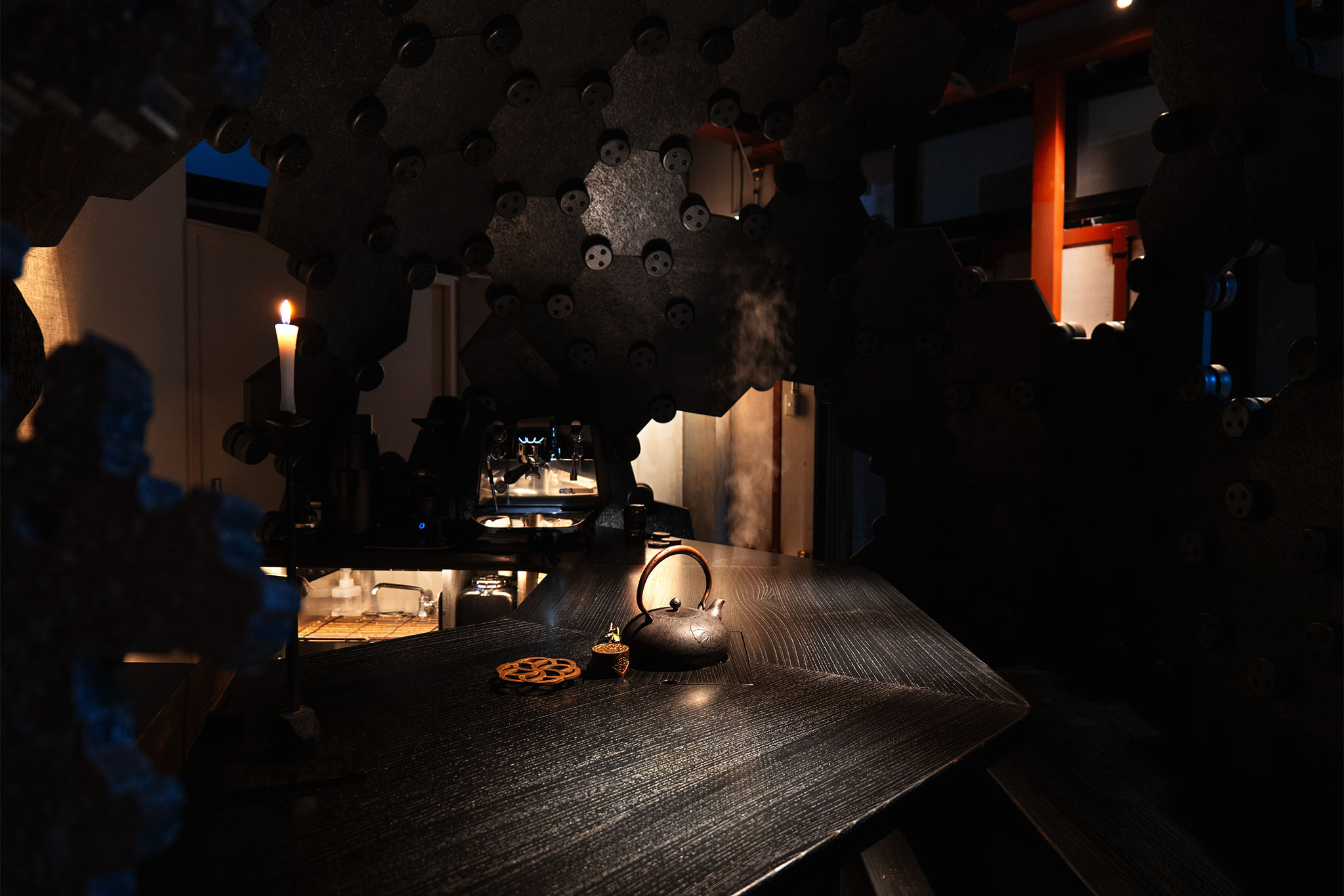
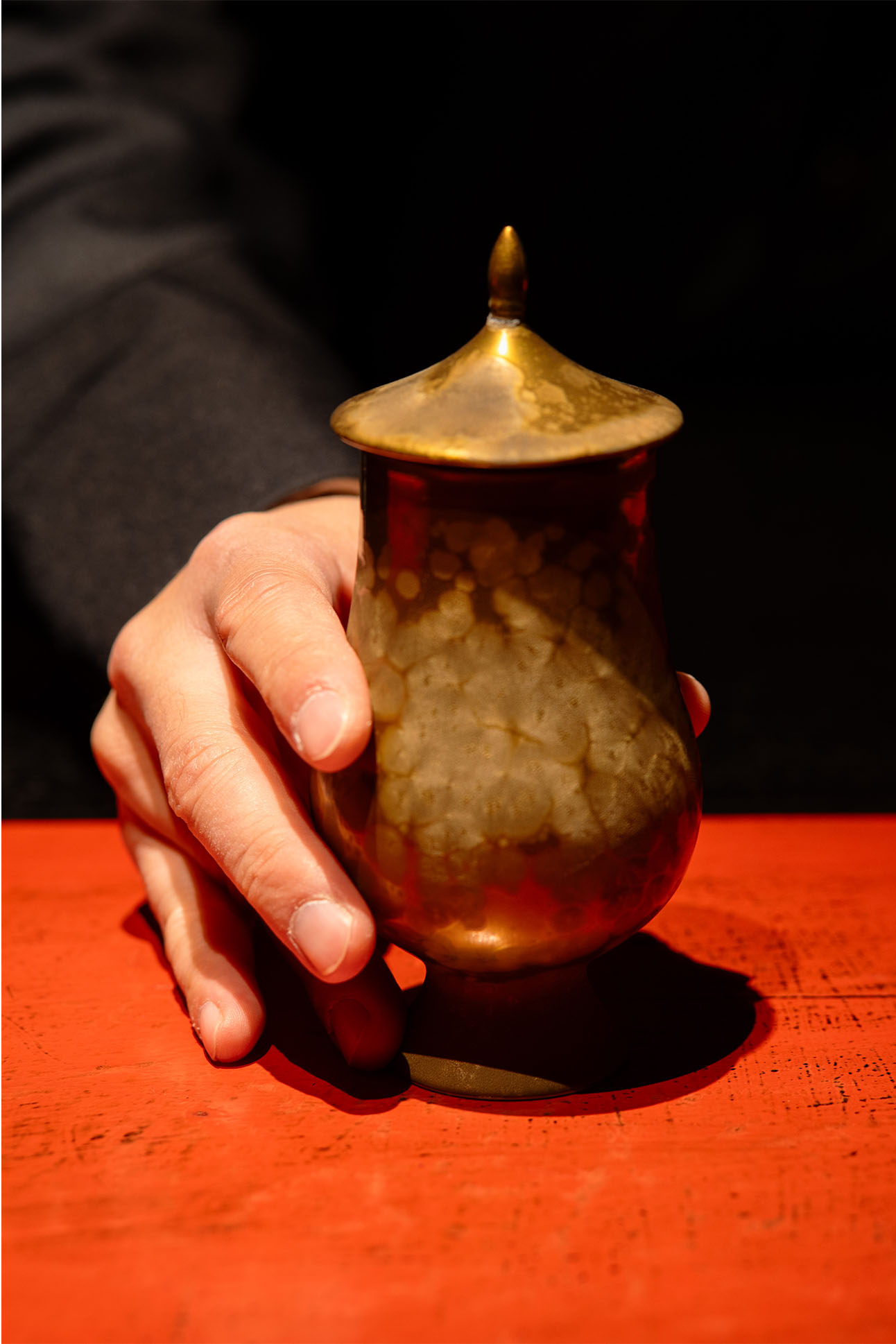
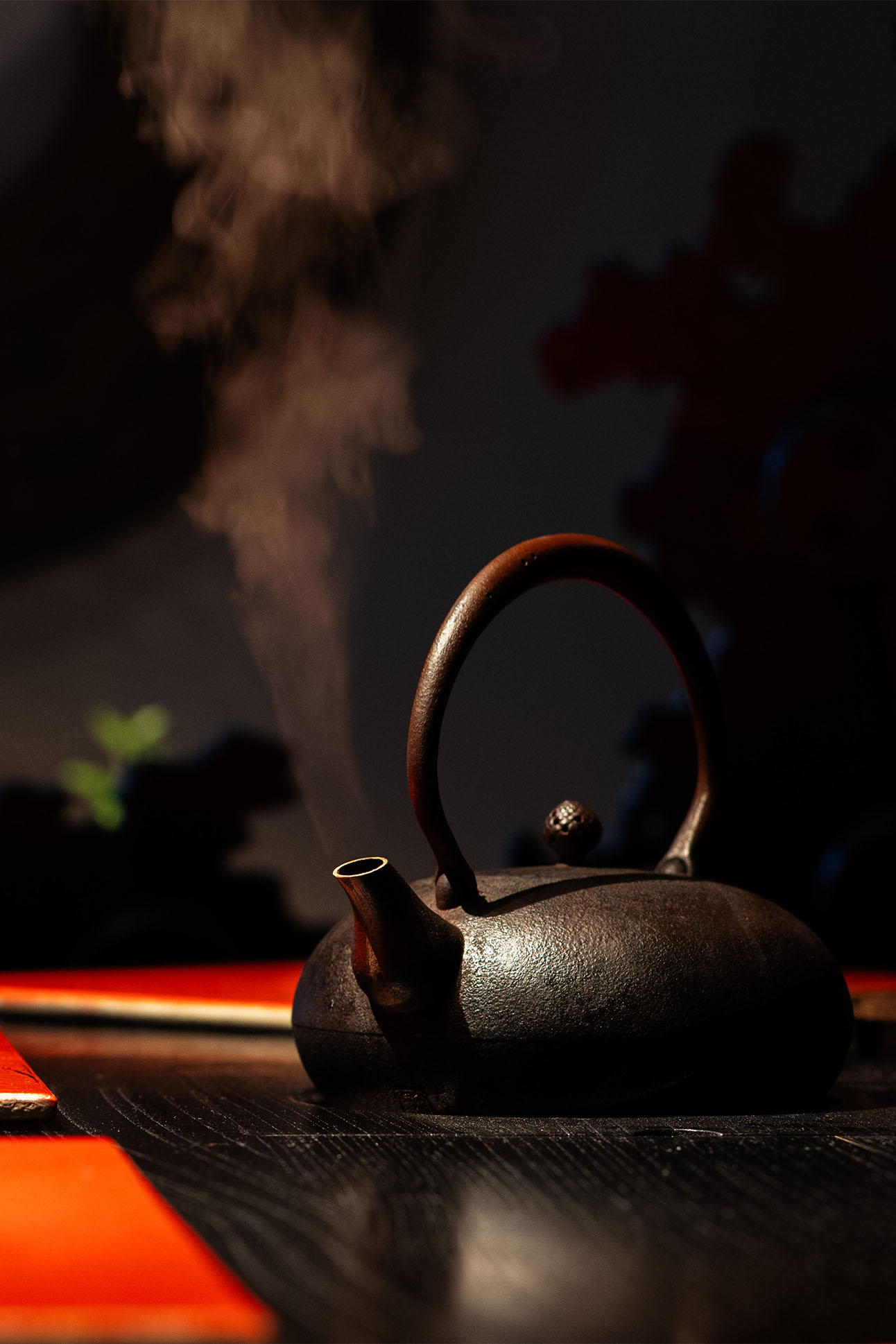
To enter Cokuun, you bow. The passage is low and narrow, like the humble doorways of traditional tea houses, and it delivers you into a dim, curved chamber modeled after a Nambu tetsubin, the cast-iron kettles of Iwate Prefecture. The aesthetic is half chashitsu (tea ceremony room), half steampunk spacecraft. Four seats face a counter. On the counter, an antique cast-iron pot exhales a wisp of steam. For the next ninety minutes, Hidenori “Hide” Izaki will guide you through some of the world’s most exquisite coffees, paired with seasonal Japanese fruits and ferments to complement the coffees’ fruity and floral aromas. You will leave knowing more about the art and science of coffee than you ever imagined.
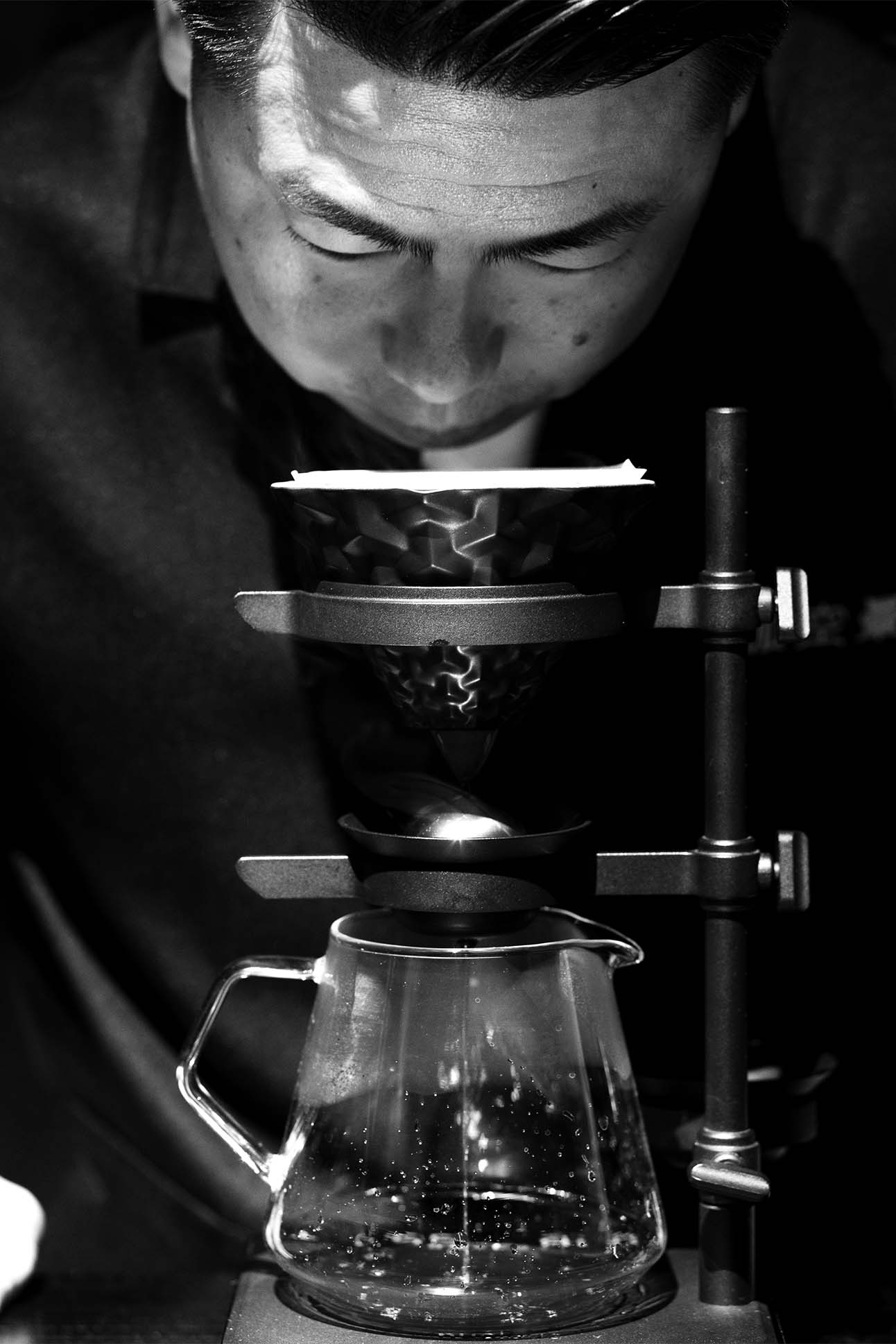
Later, when we meet again at his Tokyo office—a modest space lined with white bags of beans, redolent with red berries and cacao—Izaki is equally gracious. In a hoodie and baseball cap, he brews me a cup made from Etiope 47 beans, a rare varietal originating in Ethiopia, grown in a high-altitude region of Costa Rica.
I propose a simple word-association game: three words, first instinct. Coffee. “Life.” Success. “Fun.” Family. “Love.” When I ask if he was always this lighthearted, he doesn’t skip a beat: “Absolutely not.”
Izaki grew up on the outskirts of Fukuoka, in a household consumed by his parents’ fledgling coffee business. His father had bought the shop almost on impulse—drawn, he says, by the beauty of its name, Honey Coffee. The family poured everything into keeping it alive. There were no vacations, no Christmas celebrations, no birthday presents. “Even my otoshidama,” Izaki recalls, referring to the traditional New Year’s money children receive, “my father used it to pay off his debts.”
Most days, Izaki and his brother stayed with their grandparents while their parents worked from dawn past dark. In school, he chafed against the rote demands of Japanese education. Teachers wanted him to memorize that one plus one equals two; he needed to know why. They saw defiance. He felt only frustration.
By junior high, he had stopped trying. He fell in with older kids who smoked behind the gym and rumbled with gangsters from schools in the rougher districts of Kitakyūshū. A badminton scholarship got him into high school, but he quit within 18 months.
What followed was a jumble of odd jobs: construction, day labor, whatever paid. For a time, he worked for a shadowy outfit that specialized in yonige, helping people burdened by debt vanish in the night, before creditors came knocking. “Some of my friends from that time are in prison now,” he says. “I could have been one of them.”
One evening, his father came into his room with a question he had never asked before: “What do you want to do with your life?” Izaki had no answer. When his father offered him a job at Honey Coffee, he took it.
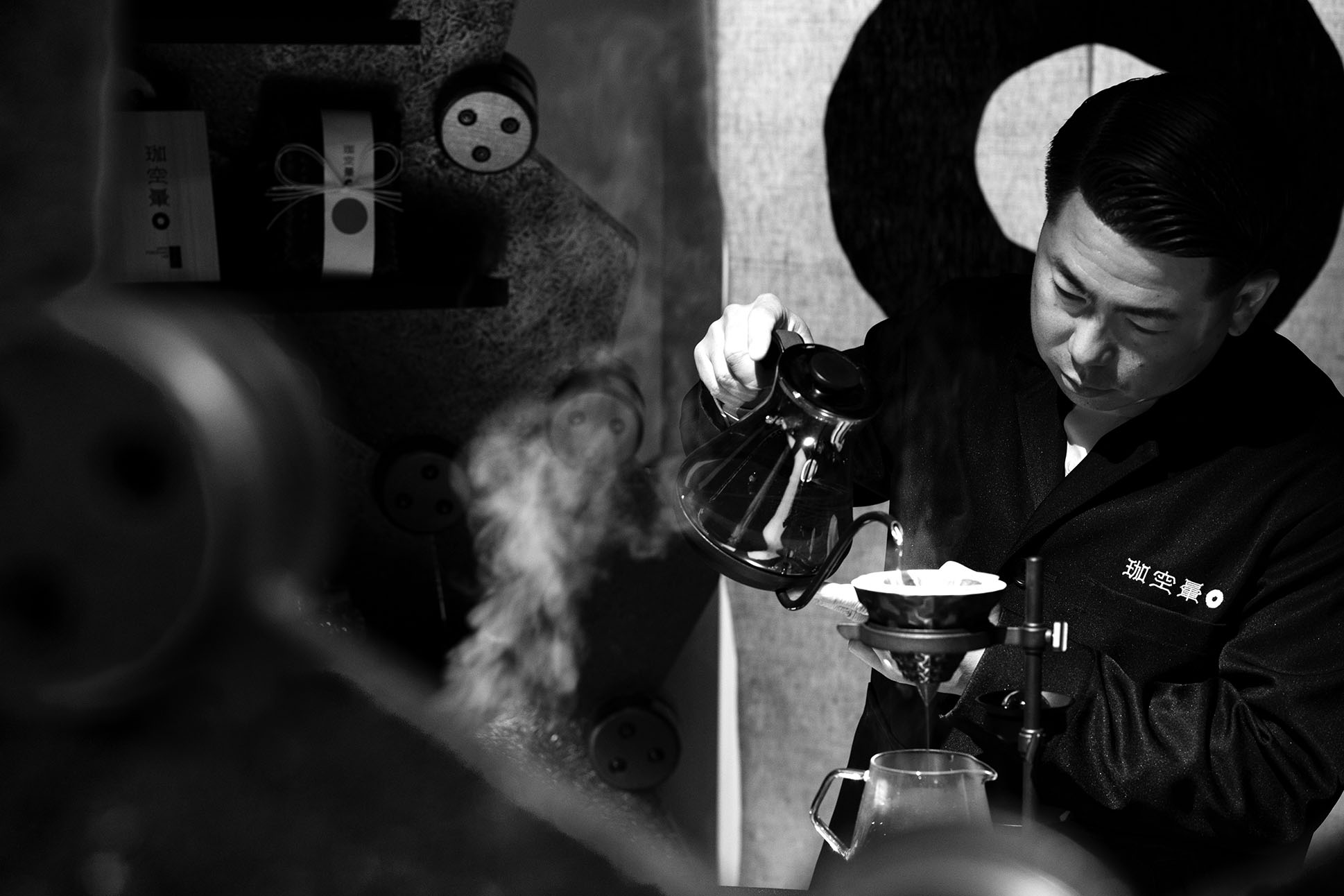
He started at the bottom, sweeping floors, hauling sacks of green beans, weighing bags in the back room. But after hours, his father brought him to cuppings and late-night gatherings with roasters and traders, where the conversations ranged from acidity profiles to commodity markets to the politics of Central American exports. Izaki stood at the edge of the table, understanding almost nothing.
“In order to become a coffee professional, you need to be a great taster,” his father told him. Then one evening, he handed Izaki a cup of Ethiopian Yirgacheffe. It tasted like a revelation: lemon tea, white flowers, and new possibilities. “I didn’t know coffee could taste like that,” Izaki recalls. “I needed to understand why.”
At 17, he made two decisions. He would return to high school and compete in the Japan Barista Championship (JBC). He enrolled in a correspondence program and a cram school, waking at 5 a.m. to study, then practicing his competition routine until midnight. A teacher who prioritized reasoning over answers alone became his mentor, elevating his scores to the honor-student range. For the first time, learning felt like discovery.
That same year, he entered the JBC and placed 24th out of 160 competitors. The ranking mattered less than what he felt standing on stage. “It was like my feet grew roots in the ground,” he says. “This is the place I could shine. I just knew this is where I belong.”

He won the Japan championship in 2012—the youngest competitor ever—and again in 2013. The following year, he became the first Asian to win the World Barista Championship.
Even as a world champion, though, something didn’t add up. At pop-up events, Izaki would make 800 cups in a single day, only to notice the booth beside him charging more for something far simpler. His salary was a mere ¥200,000 ($1300) a month.
“Baristas were essential to the industry,” he says, “but treated as its lowest tier.” The realization became a mission. Baristas had to be understood as professionals, worthy of a lifelong career. Cokuun, opened in 2022 in Tokyo’s fashionable Omotesando neighborhood, was the concept that could prove it.
Much of Cokuun is rooted in the aesthetics of Japanese culture. Izaki’s mother hails from a prominent samurai family in Kagoshima, raised in a household steeped in calligraphy, poetry, and the traditional arts. He didn’t recognize her influence on him until years of traveling abroad kept returning him to the same realization, that he was unmistakably Japanese.
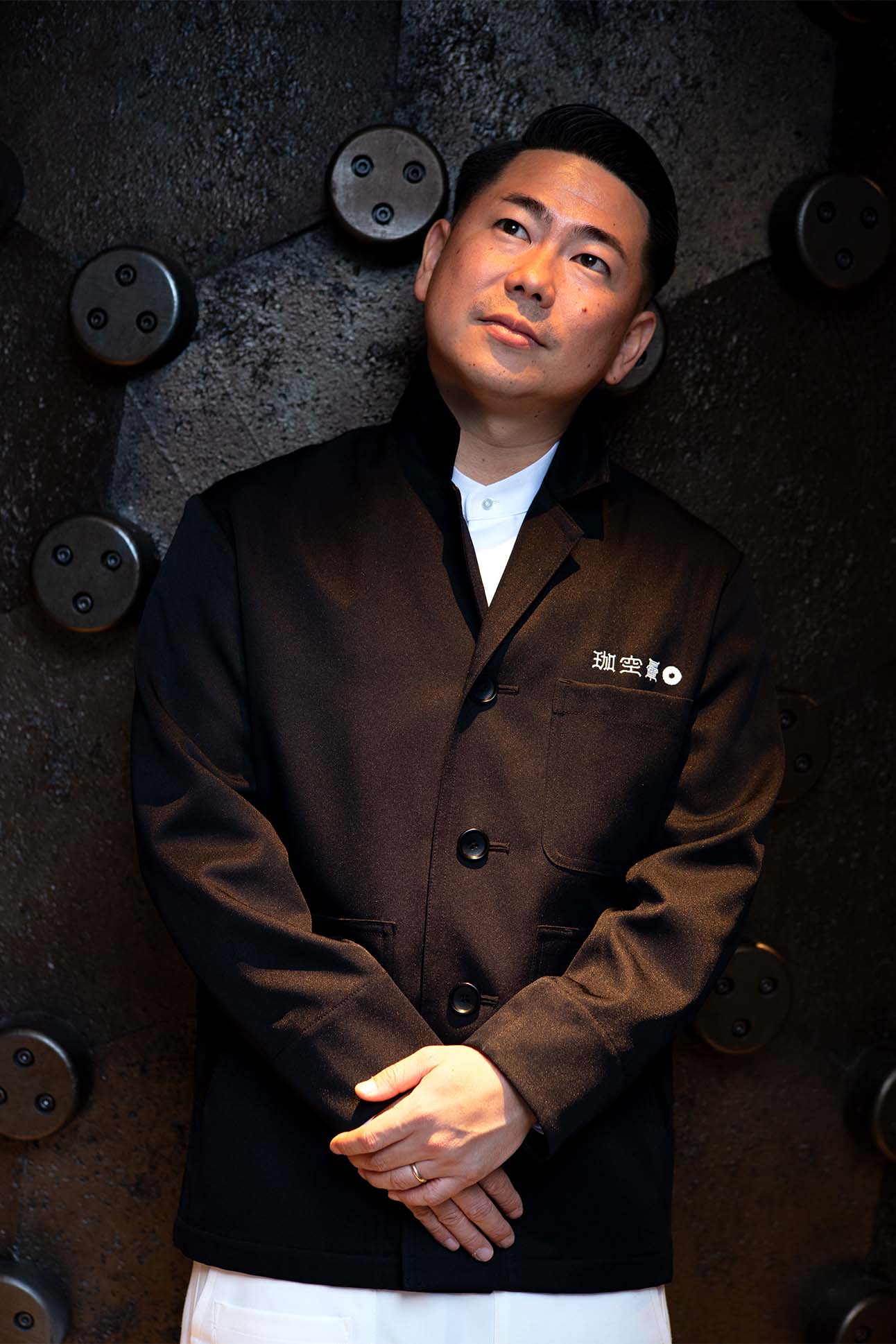
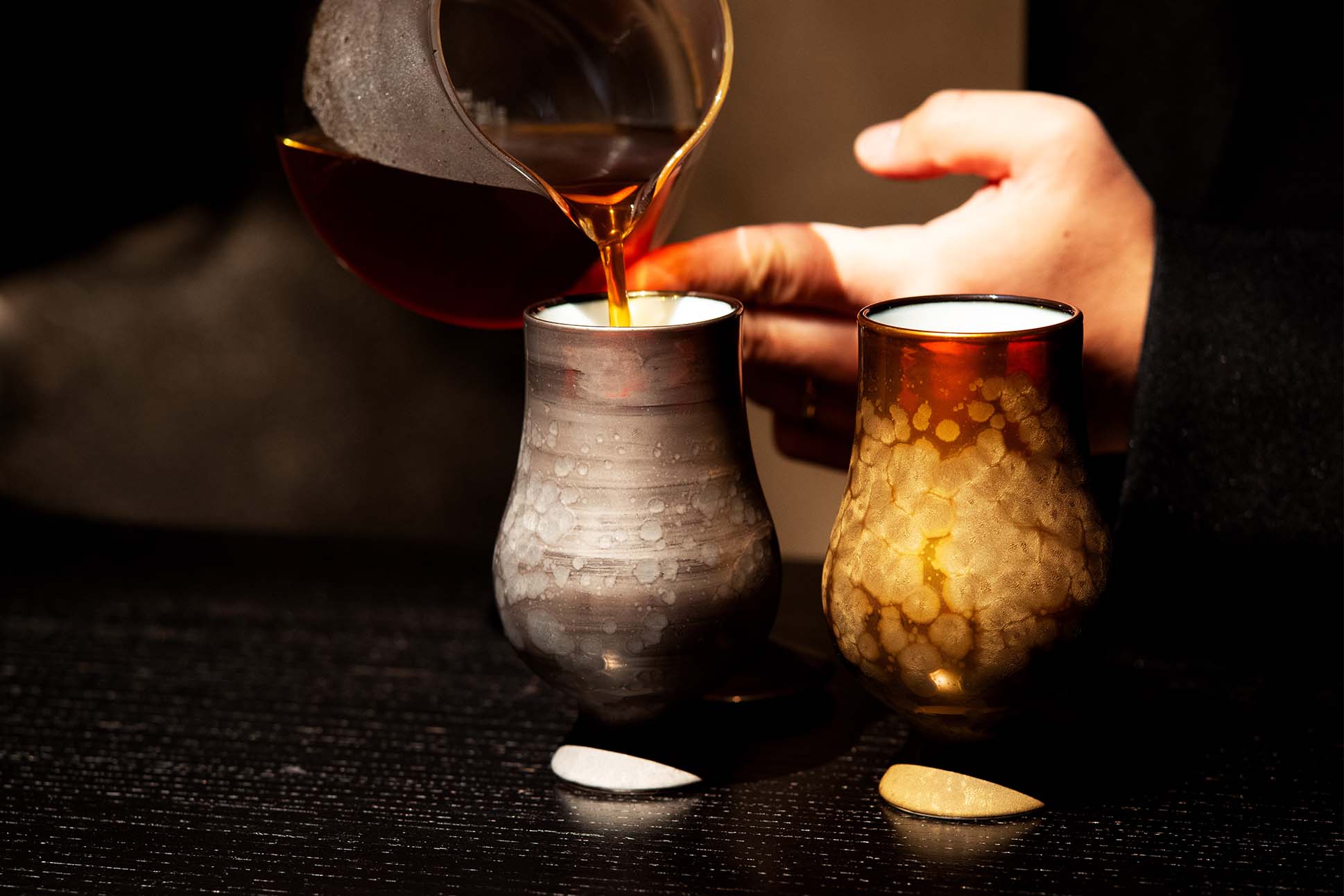
“Every time I spent time with friends from different cultures, it made me think about where I come from,” he says. At Cokuun, that inheritance shapes every detail, from the handcrafted porcelain to the omakase progression of pour-overs, espressos, and cold-brew cocktails paired with seasonal Japanese ingredients.
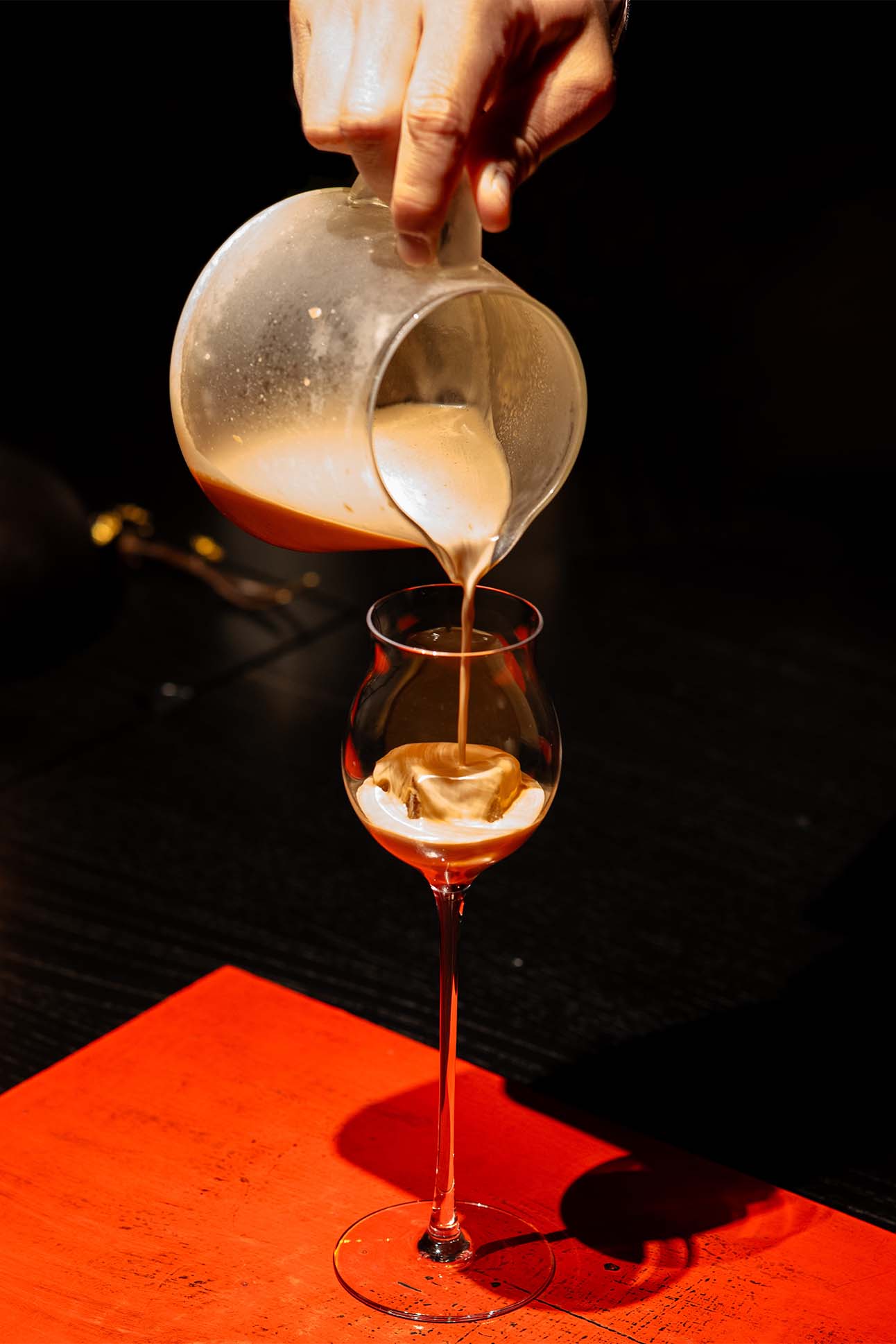
A ceremonial stillness settles over the space as one savors a warm latte made with milk from Kikuchi Farm in Hokkaido and crowned with a foam of Tachibana citrus, juniper, and sansho (Japanese pepper). The tasting concludes with an espresso-based mocktail made with pomegranate concentrate, hibiscus cold brew, and yeast-fermented white peach, paired with fluffy sponge cake filled with grapes from Yamagata Prefecture and accented with umeboshi (pickled plum) from Wakayama Prefecture.
He dreams of earning a Michelin star—not for vanity, but as validation of the profession itself. And he’s spent two years lobbying to bring the 2027 World Barista Championship to Tokyo, hoping to ignite in some young competitor the same spark he felt at 17.
As our meeting draws to a close, I pose one final word: future. “Fun,” he says. At 35, Izaki is entering the peak years of his career. For this teenage misfit turned world champion, the fun is just beginning.