


Text by Serene Gunnison
Images by Alanna O’Neil
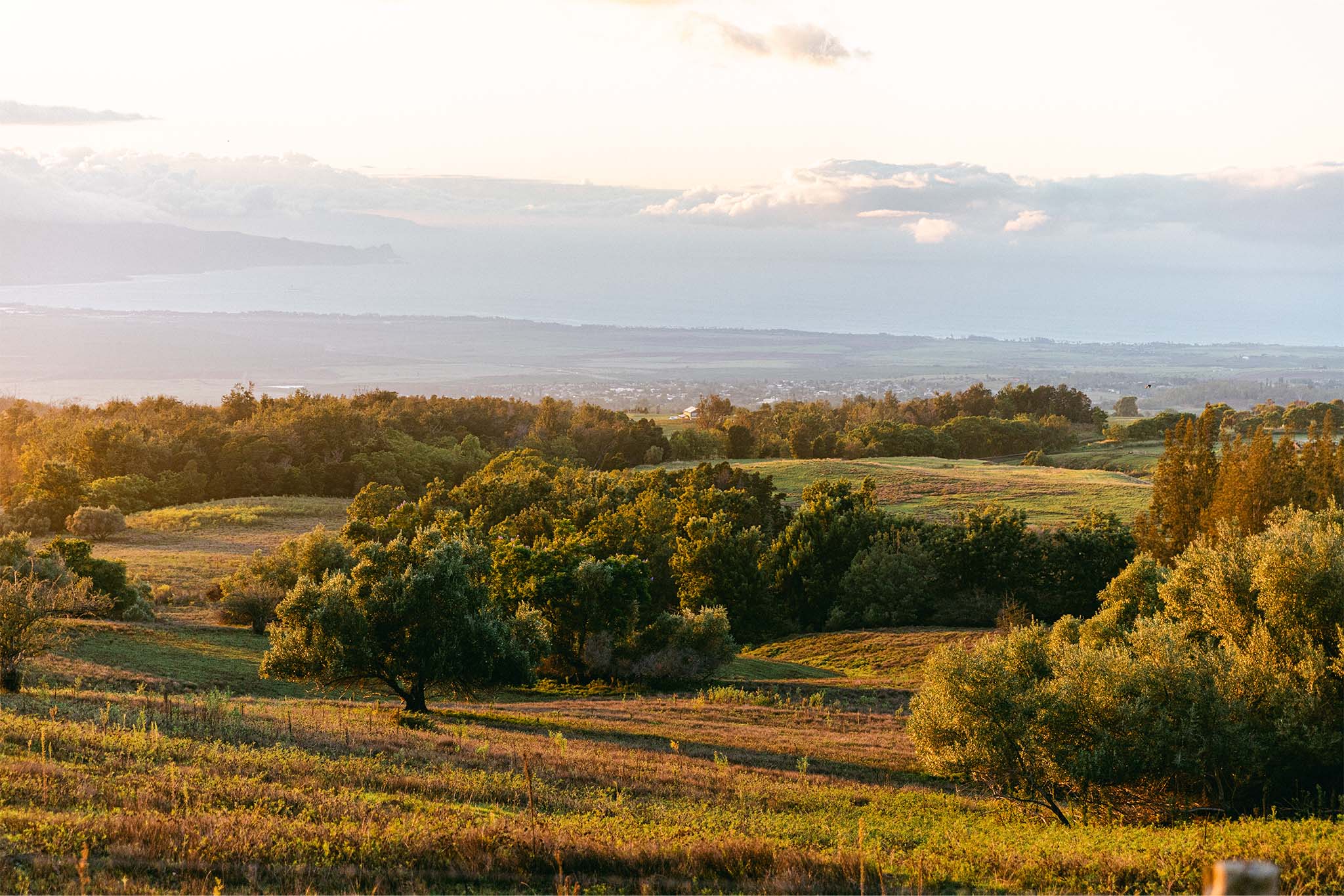
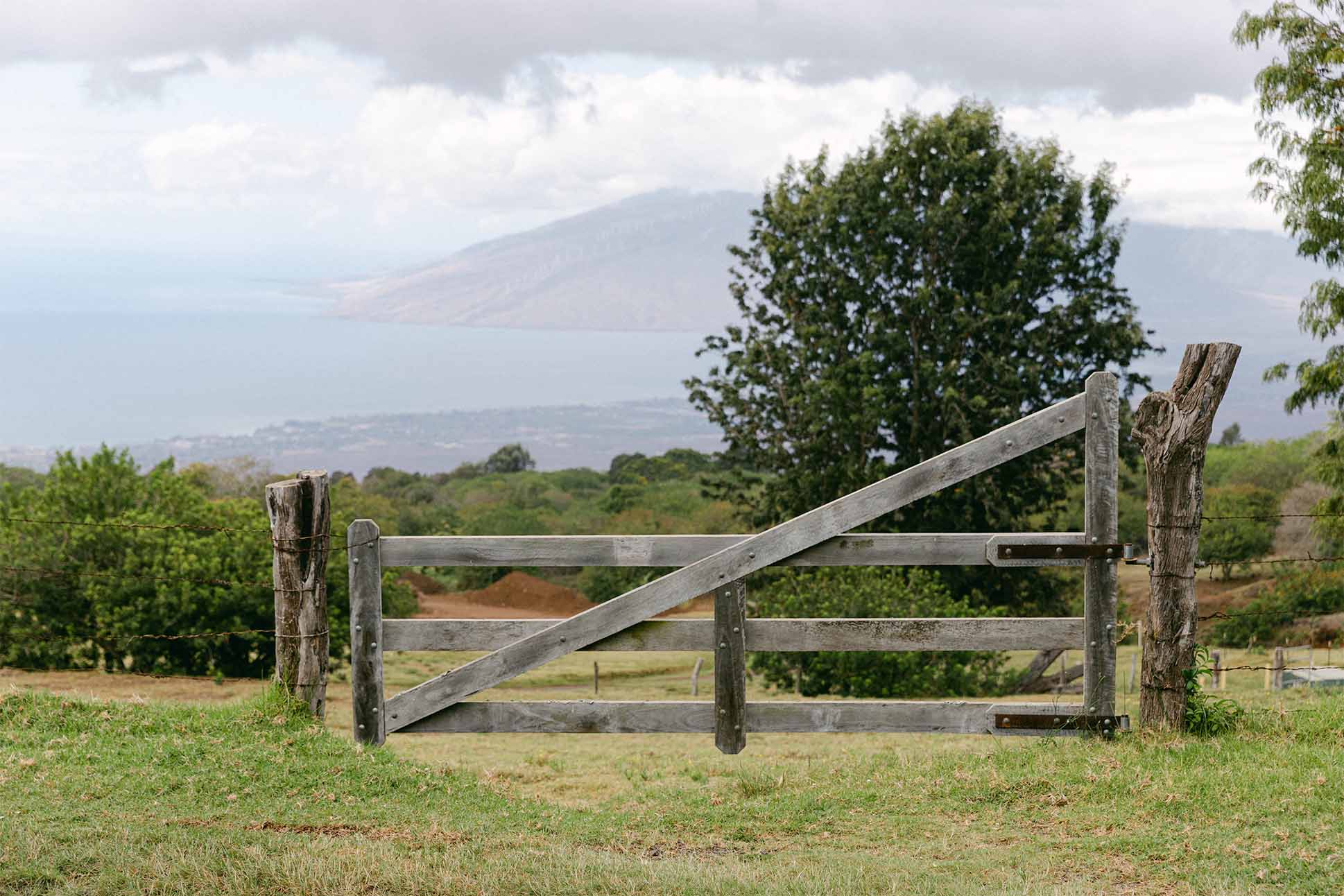
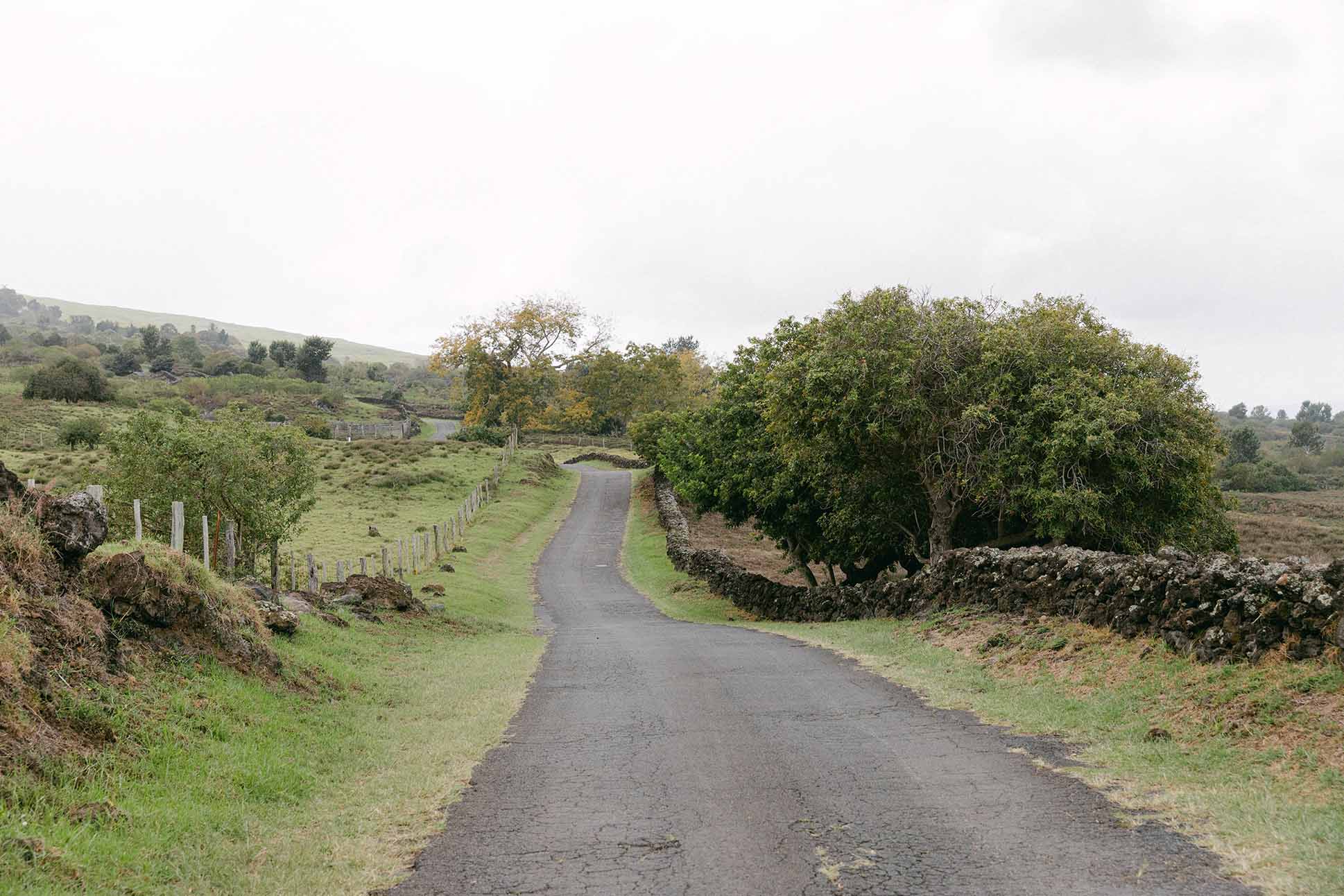
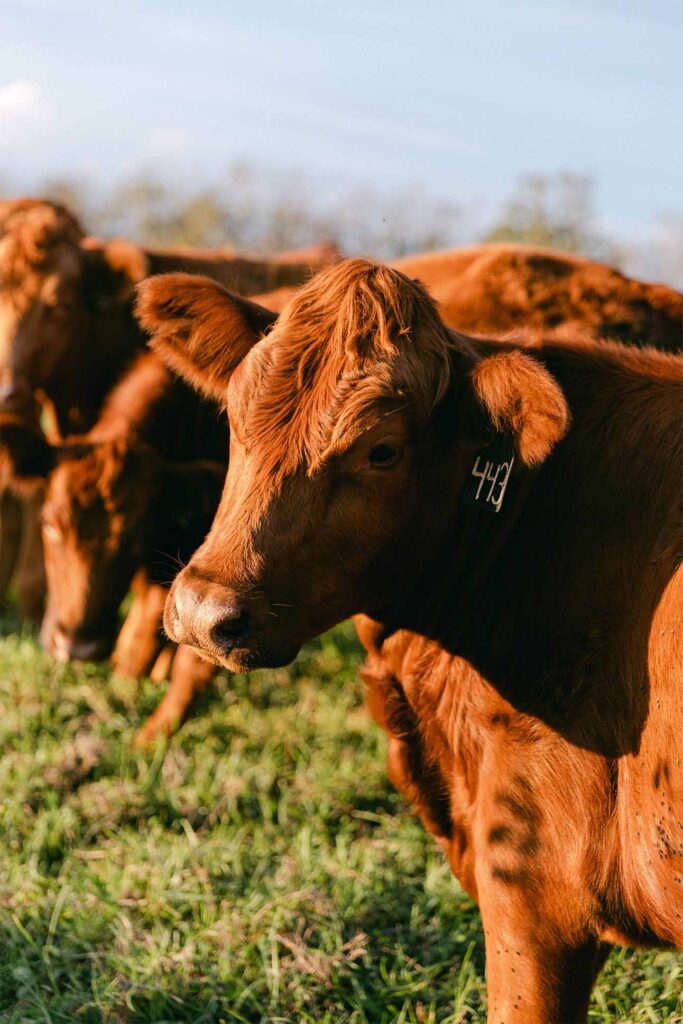
Spread across Haleakalā’s northwestern flank, Upcountry Maui unfolds in long, slow curves of pastureland and forest. The region is a departure from the quintessential vision of Maui: sunlit coral reefs, coconut palms rippling above amber beaches. Here, the air is crisp and cool, scented with eucalyptus and jacaranda. Horses and cattle graze in wide, undulating fields as cowboy-boot-clad ranchers talk story over fencelines. Below, the land falls toward Maui’s central valley and south and north shores, where views of the Pacific extend to the horizon.
While these are the archetypal scenes, it’s impossible to distill the region into a single snapshot. Upcountry is many things beyond its rich paniolo (cowboy) heritage and dramatic landscapes. Perhaps more than anything, its small mountain communities, places shaped by a love for the land, are what truly define the Upcountry spirit.
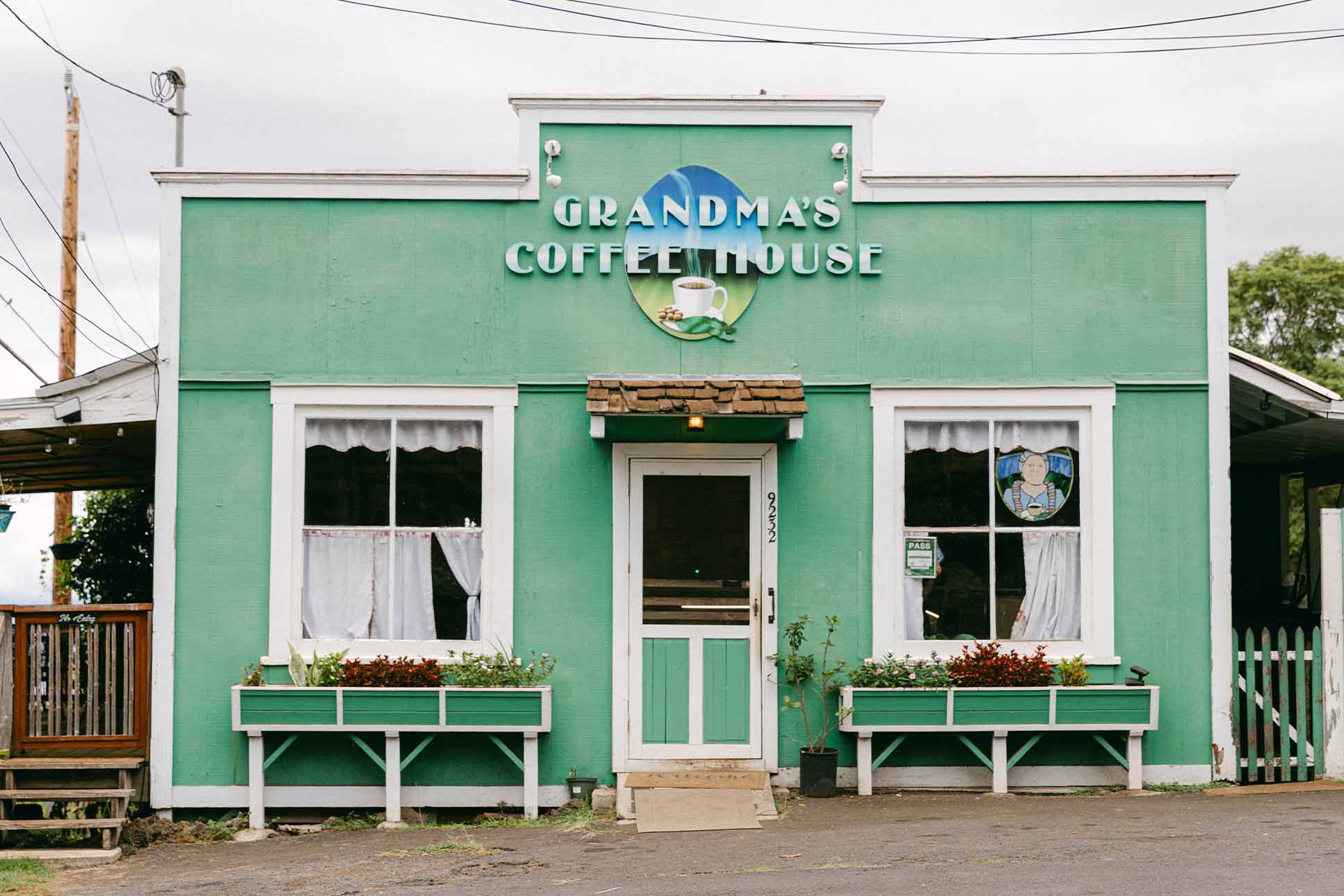
Makawao, perched halfway up Haleakalā, is the gateway to this region. Like many places in Hawai‘i, the small historic town has faced rising tourism in recent decades. Though boutiques and art galleries now line the streets, blocks of aged false-front buildings still hint at the town’s pastoral roots.
Makawao grew in the late 1800s as a hub for paniolo, when ranching took hold along Haleakalā’s foothills. By the early 20th century, it was a bustling township with markets, movie theaters, and filling stations. Today, the main street of Baldwin Avenue retains much of its original architecture, a vestige of a town once peopled by paniolo and plantation hands. Among the storefronts, T. Komoda Store and Bakery is the most iconic, serving the community since 1916. Even today, the store’s cream puffs and stick donuts draw a line each morning.
For all that has endured, though, there has been equal change. In the 1970s and ’80s, art galleries began to occupy the town’s country-style storefronts. Gradually, Makawao became a creative enclave. Now, some of Maui’s finest galleries and artists call the town home. Much of that creative identity, locals say, comes from Upcountry itself.
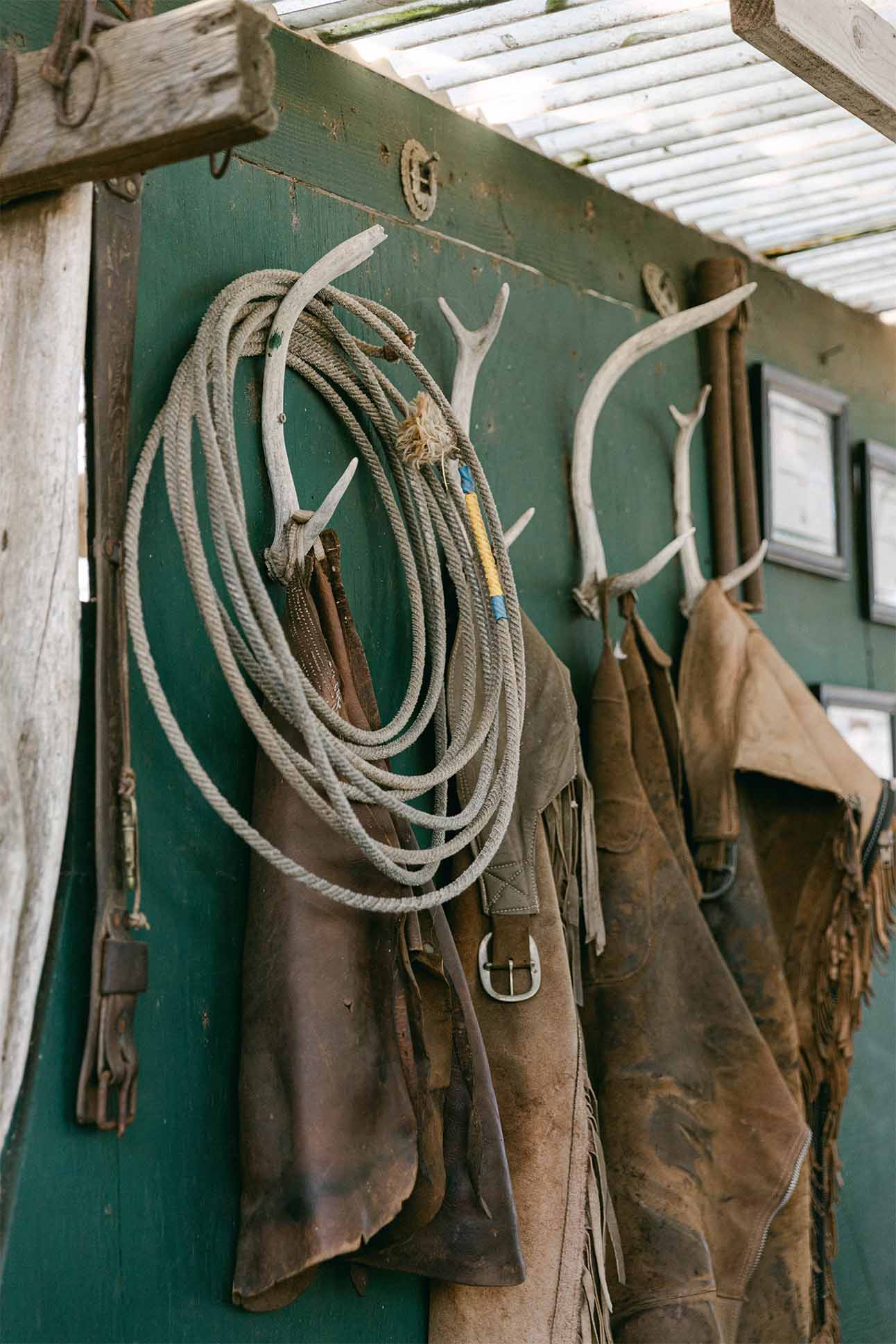
“I personally feel that [Upcountry] inspires so much,” says Jordanne Perkins, plein-air artist and owner of Jordanne Gallery on Baldwin Avenue. “There’s an aspect of the old paniolo town, but there’s also this certain upscale country elegance.” This interplay between past and present—between the town’s ranching history and its new artistic sensibility—is what distinguishes it. “Makawao offers something very different from the normal Hawai‘i beach town,” Perkins says. “Up here, it’s almost like, back to the land.”
Just uphill from Makawao, the landscape shifts immediately. Small town density gives way to rolling pastures as Haleakalā Highway climbs in drawn-out swoops. This corridor is the main passage to Haleakalā National Park, and nearly every mountain-bound traveler passes through to reach the summit.
Nearing the switchbacks, the landscape settles briefly into the residential stretch of Upper Kula. Here, life is tied closely to ‘āina (the land), rooted in its community of ranchers, farmers, and park rangers. Yet, the region can be unforgiving, marked by floods in the winter and fires in the summer. In August 2023, as Lahaina burned, flames whipped through Pōhakuokalā Gulch, fueled by hurricane-force winds and invasive black wattle trees. Over 300 acres were taken by the blaze, including 25 homes. Two years later, the burn scar that once marred the mountain face has become imperceptible to most. Yet, the smell of charred earth still catches when the wind shifts.
Other traces are harder to ignore. The slopes remain eroded, while fire-prone trees seed the landscape. Such challenges have proved difficult for residents to tackle alone. “Instead of every resident for themselves, we were like, let’s do it together,” says Sara Tekula, executive director of the Kula Community Watershed Alliance (KCWA). Formed in 2023, KCWA grew out of a grassroots coalition of residents and landowners looking to rehabilitate Upper Kula. Among their initiatives is the removal of invasive wattle and the replanting of native plants in their stead. Today, a burgeoning forest of native koa, ‘ōhi‘a lehua, and māmaki grows steadily across the razed mountainside. “What we’ve been trying to do is tap into the awesome Upcountry spirit,” Tekula says, “which is very connected to the land.”
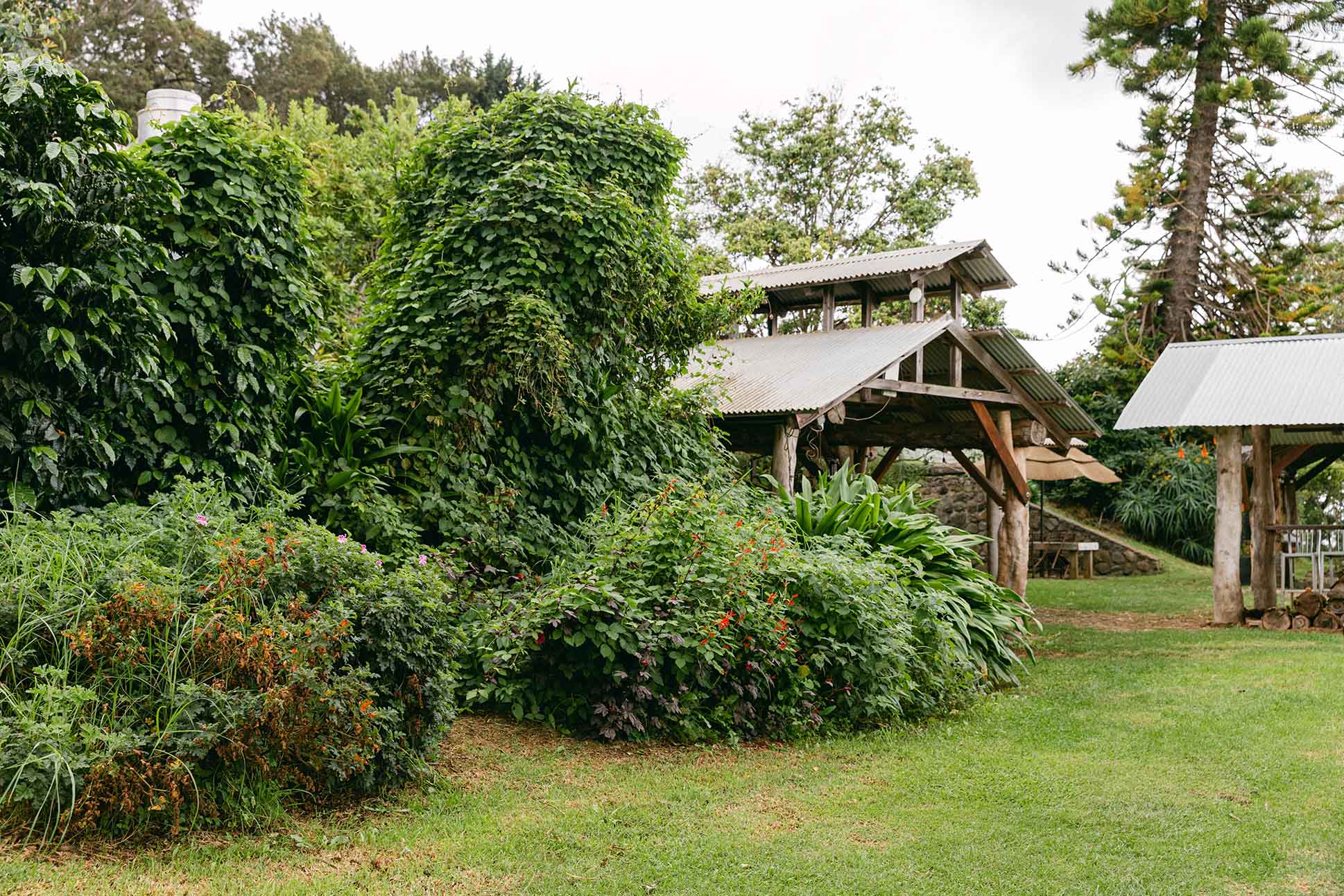
A gentler expression of Upcountry unfolds in the mist-kissed hills of Waipoli, just three miles down the road. Framed by soaring eucalyptus, O‘o Farm’s arcing beds of produce are set against ferns and a meadowy hillside, forming a spectrum of green. While agriculture may seem pervasive, with most of the central valley dominated by farmland, Maui still imports about 90 percent of its food. It’s an imbalance many are working to correct with a renewed emphasis on food sovereignty. At O‘o, owners Louis Coulombe and Stephan Bel-Robert showcase the possibilities, cultivating about 130 crop varieties across 8.5 acres.
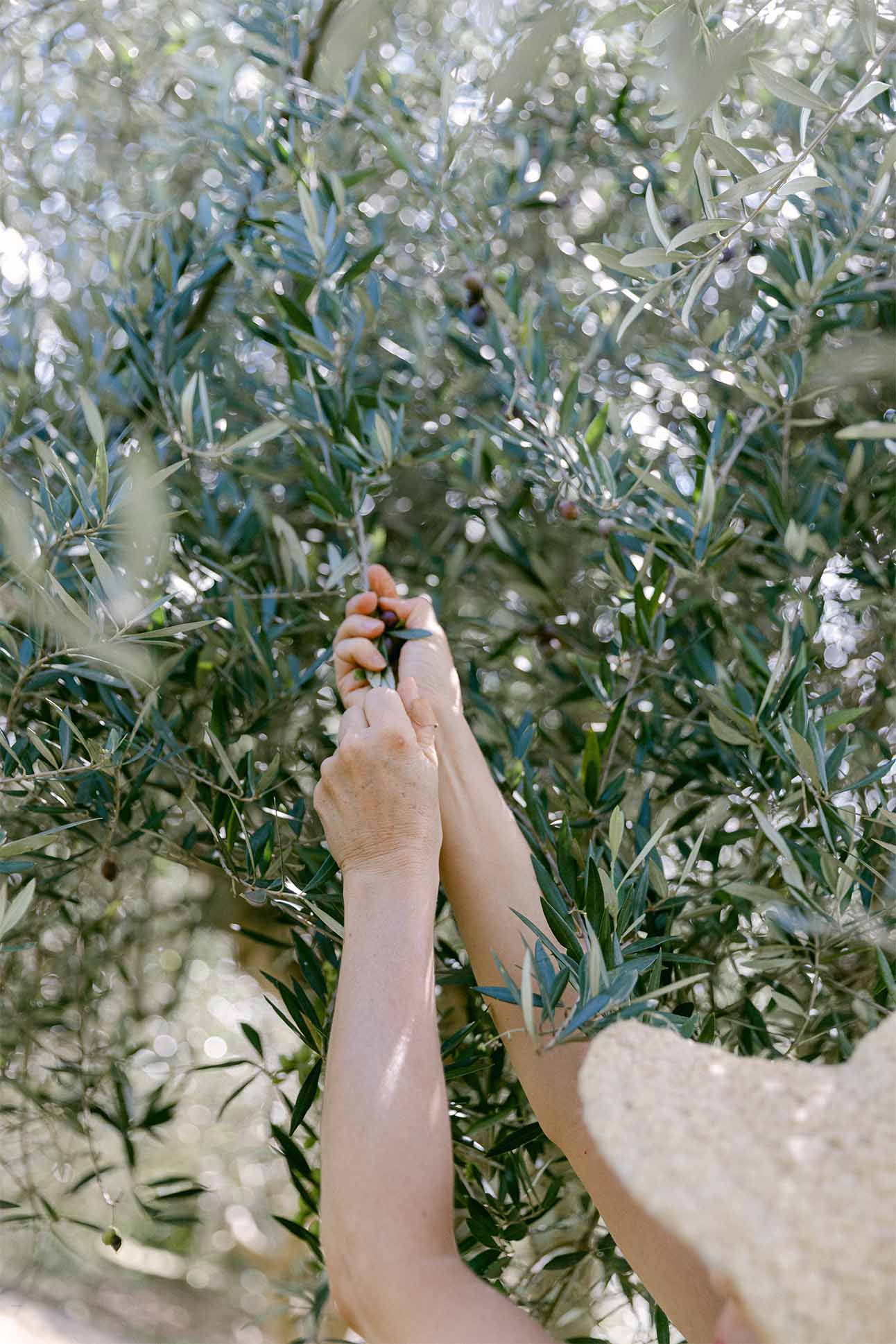
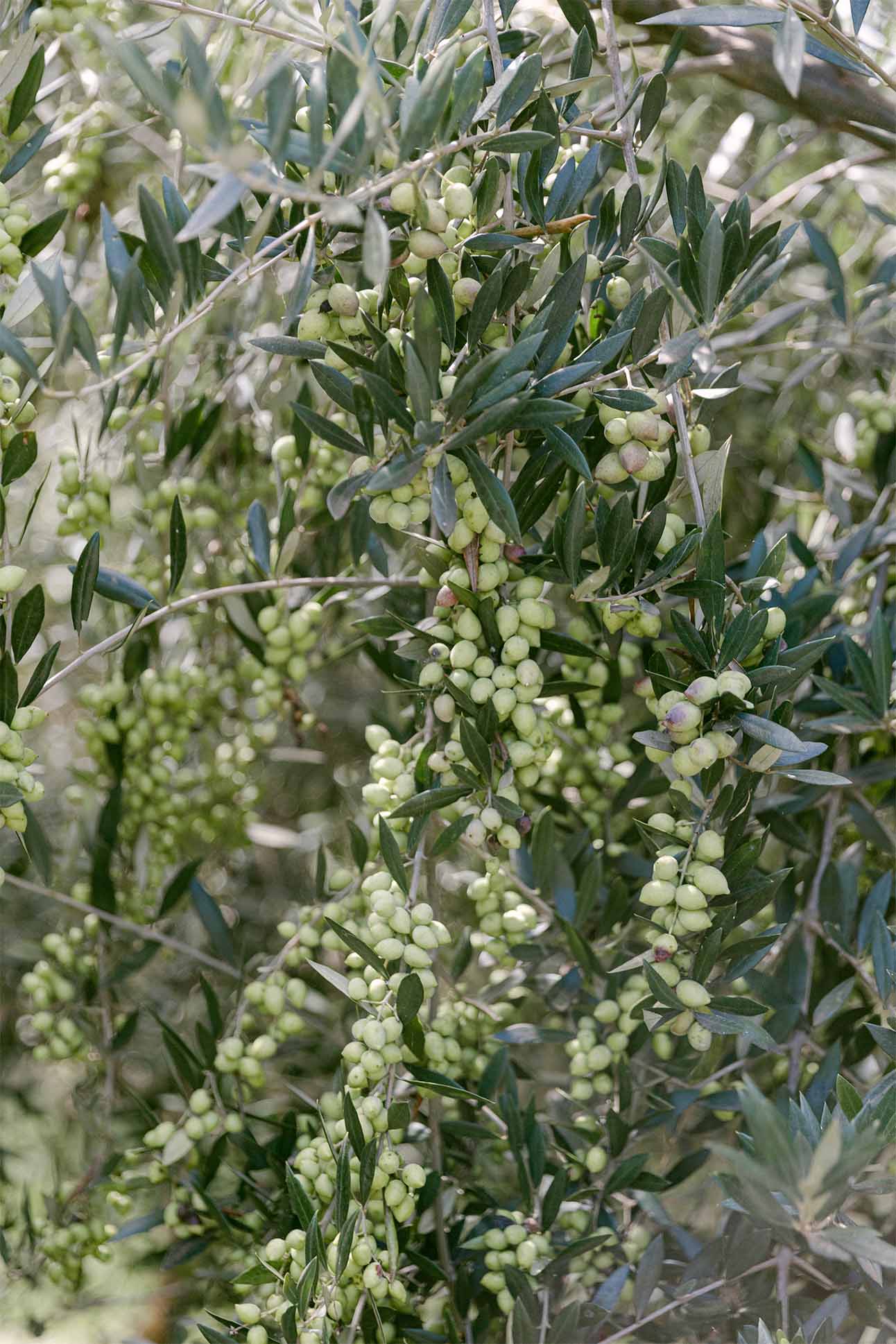
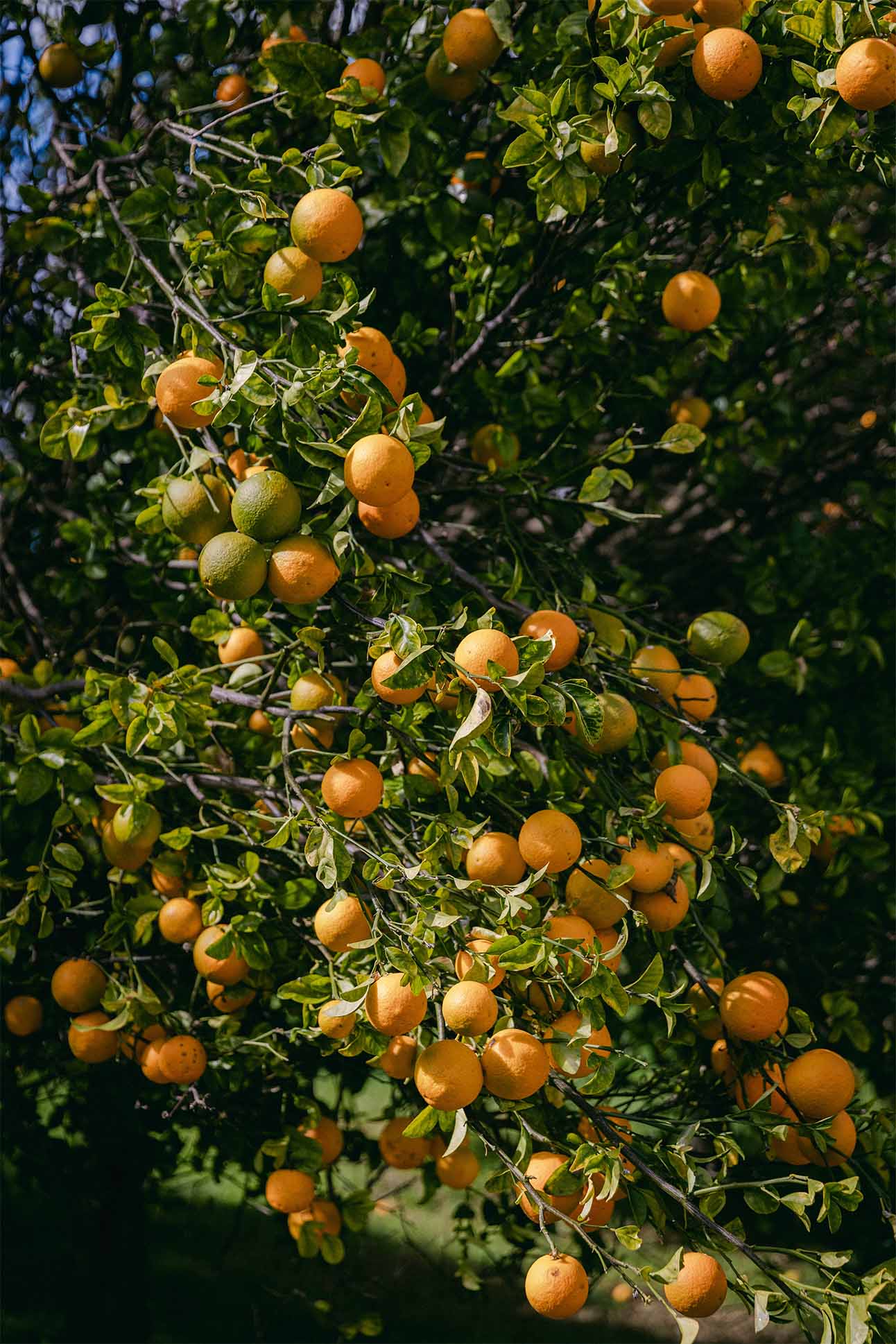
Their farm-to-table tours also offer visitors an immersive way to engage local agriculture beyond the common farmers market. After eating their way through rows of dew-beaded produce and orchards of loquats, citrus, and olives, guests gather at a broad wooden table, where an al fresco meal of seasonal ingredients unfolds over four courses. There is a frittata with braised greens and locally sourced venison sausage. And a dish of organic chicken, seasoned with house-made coffee rub, is served over a seasonal herb purée. In leveraging Maui’s tourism industry to champion organic farming, O‘o’s tours bring the scale and impact of local agriculture into focus for visitors and locals alike. What emerges is a vision for what Hawai‘i’s food system might yet become when resilience and self-sufficiency is actualized.
In this upland region, the future is being cultivated slowly, deliberately, and amid persistent challenges. In the end, Upcountry endures in the people who continue to shape the land and who allow the land to shape them.