



Text and images by Laura Pollacco
The summons came from Morioka, seat of the Nambu clan. Having cemented their lordship over Japan’s northern region in 1597, the samurai lords turned their attention to its natural resources. Fed by three rivers, the cold mountainous region boasted an abundance of iron sand, clay, and charcoal, the perfect conditions for casting iron.
To transform Morioka into Japan’s preeminent center for iron casting, they called upon skilled artisans. Among them was Ietsuna Suzuki, a metalworker from Koshu, who, upon arriving in 1625, set up a foundry within the city.
Thanks to an abundance of natural materials and the generous patronage of the Nambu clan, Suzuki’s craft flourished. Meanwhile, sand-and-clay molds allowed forms to be made and remade, each iteration allowing for further refinement. Centuries of craftsmen have since inherited the approach. Each generation imbued the craft with their own artistry, passing it on until a distinct style—later known as Nambu tekki—took form.
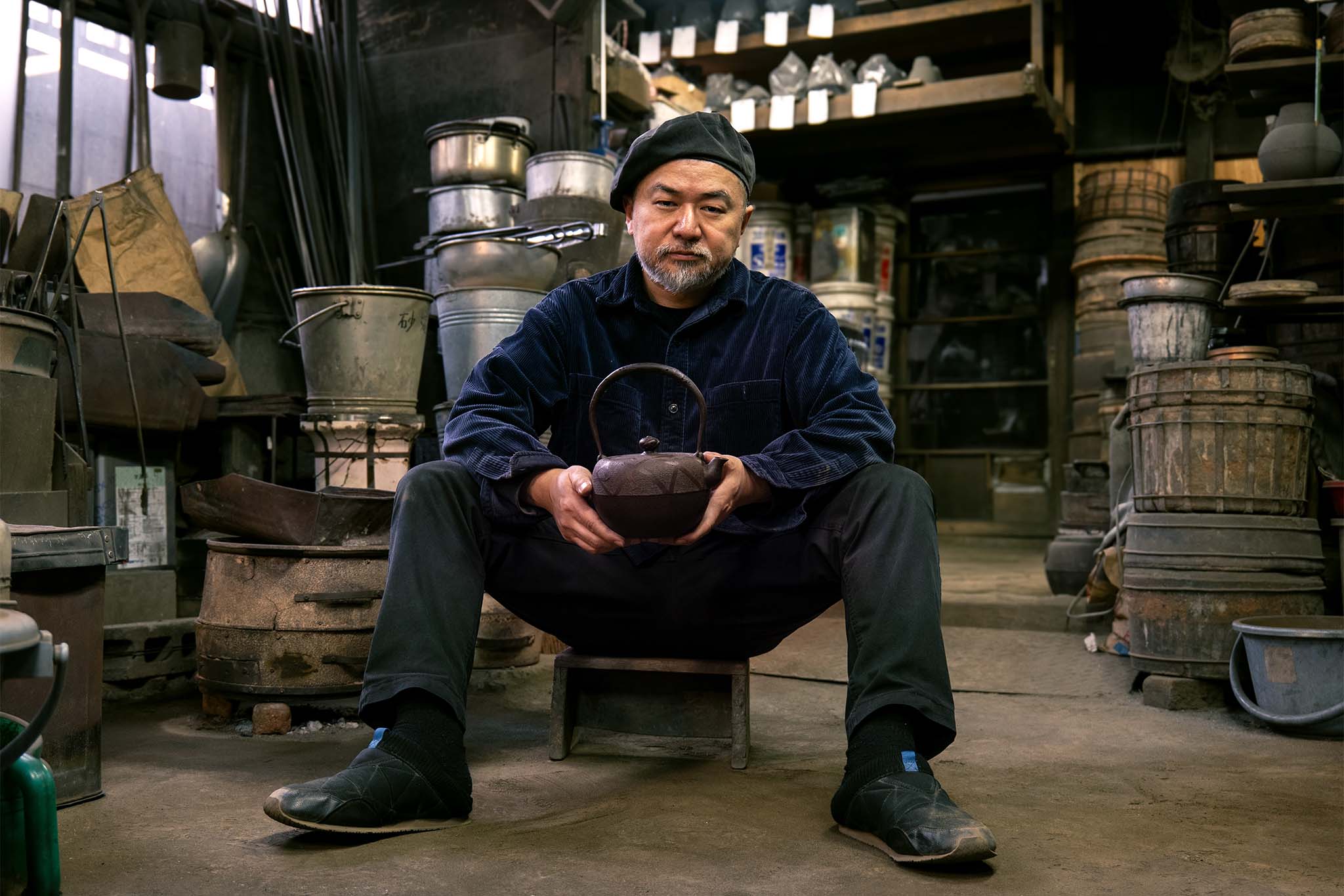
Sixteen generations later, Suzuki’s lineage remains rooted in Morioka as his descendant, Shigeo Suzuki Morihisa, now stewards one of Japan’s oldest Nambu tekki studios, a role that carries the weight of sustaining the craft’s future.
Nambu tekki was part of Shigeo’s life from an early age. As a child, visits to his grandparents’ Morioka home were spent playing in the sand used to make molds. Even so, he did not expect to inherit the family business. It was his mother who was a Suzuki, he explains through a translator, and “there were other relatives we thought would take over first.” That assumption changed in 1993, when his mother, Shiiko Kumagai, was named the 15th-generation Suzuki Morihisa master—the first woman in the family to hold the title—forever altering Shigeo’s path.
He studied casting at the Tokyo University of the Arts. After graduating, he chose to remain in the capital a while longer, taking work as a graphic designer for his older brother’s streetwear brand, GDC. He immersed himself in contemporary fashion and modern art, forming friendships with designers who would have a lasting mark on his thinking. Among them was Shinichiro Ogata of Simplicity Co., whose craft-oriented approach offered Shigeo a new framework for bridging tradition and modernity.
In 2008, finally feeling ready to return home, Shigeo moved back to Morioka. With such a long hiatus, though, returning to the craft was a challenge. “It took a long time for me to feel like my hands knew what they were doing, how to approach the craft with confidence,” he says. For three years, he trained under the studio’s senior craftsman while learning about the history of the Suzuki family and the current situation of traditional crafts from his mother.
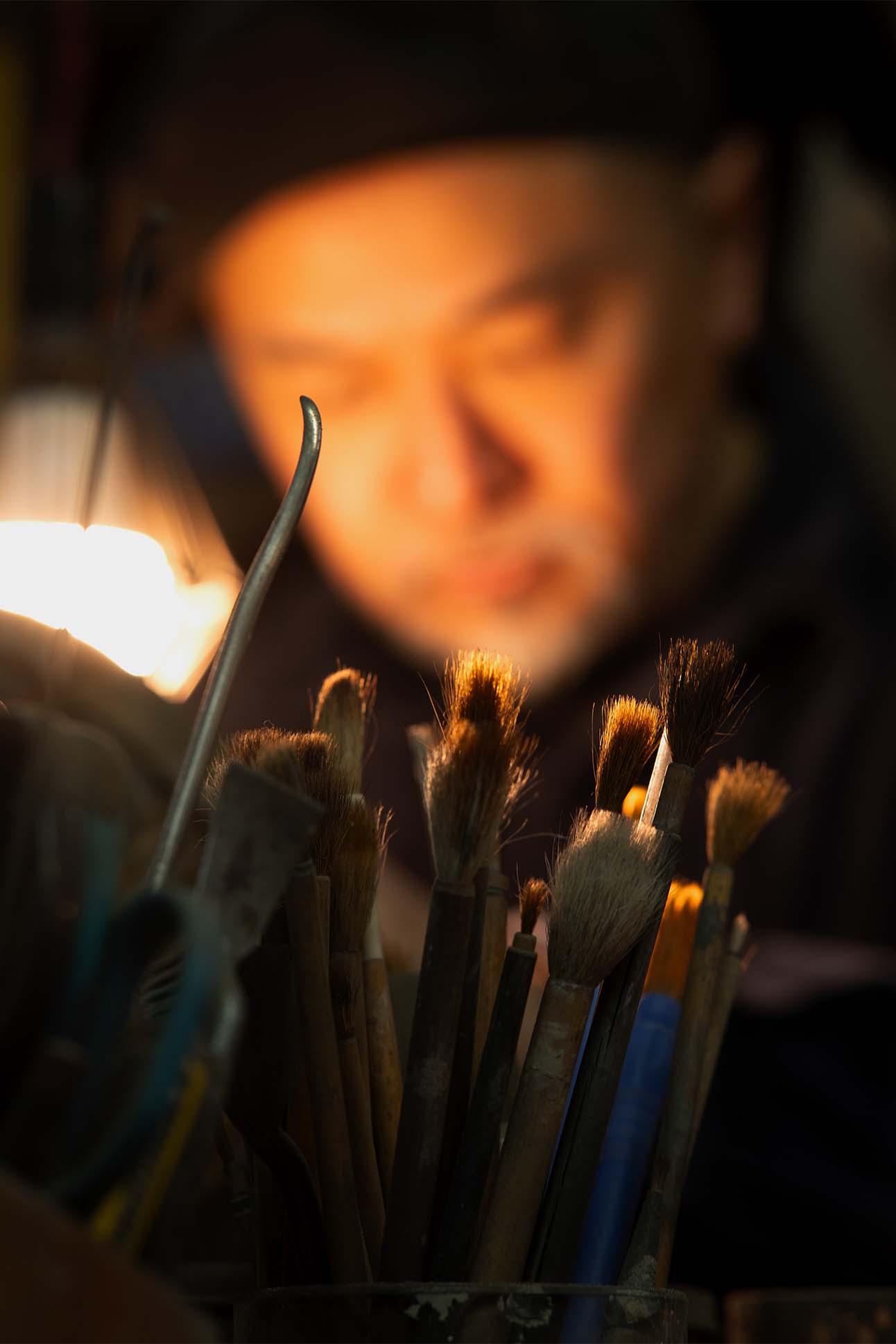
Over time, he began to experiment, introducing forms that complement modern interiors and appeal to audiences beyond Japan. In 2014, he assumed the role of representative director from his father. Nine years later, his mother passed the mantle on, naming Shigeo head of the family business.
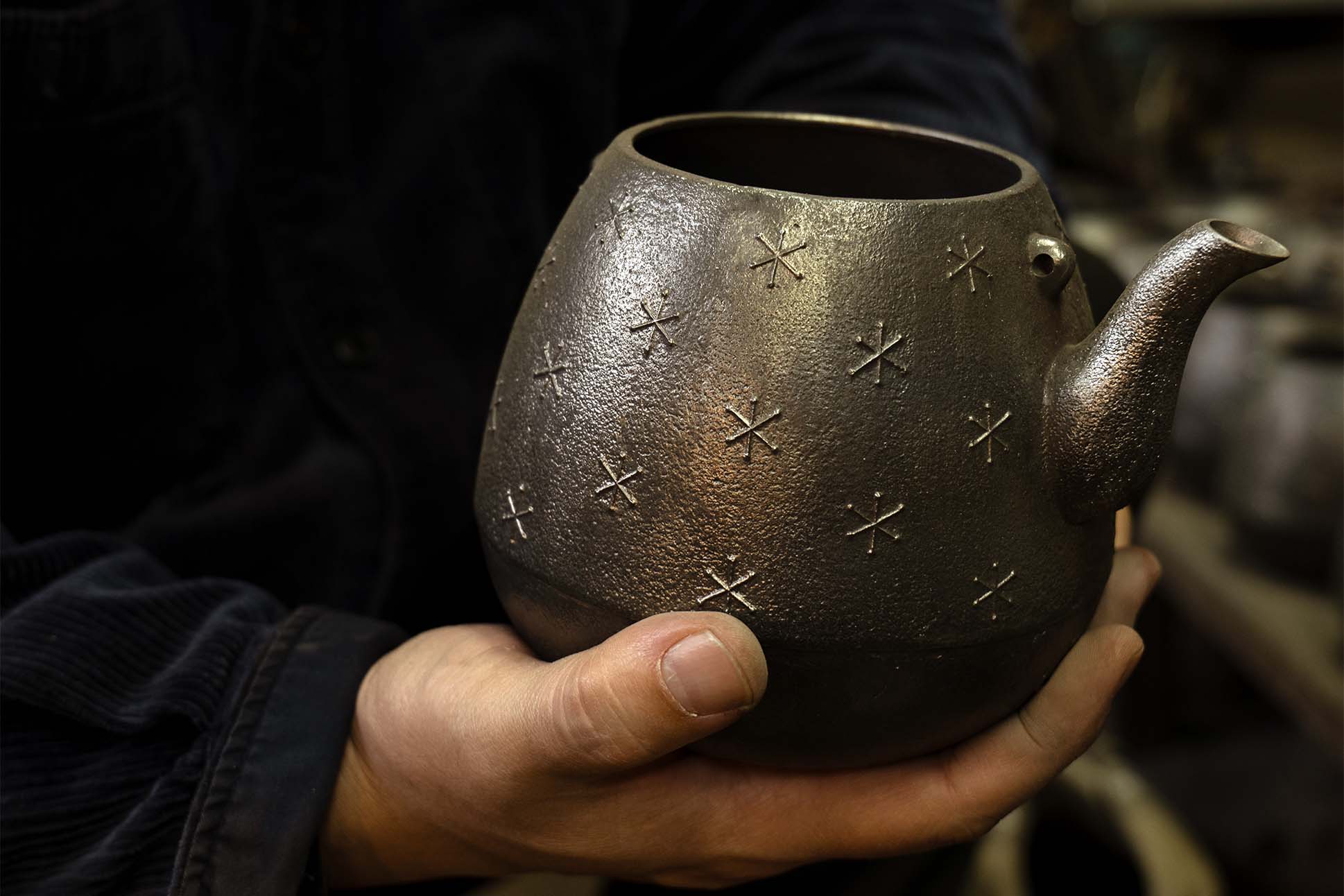
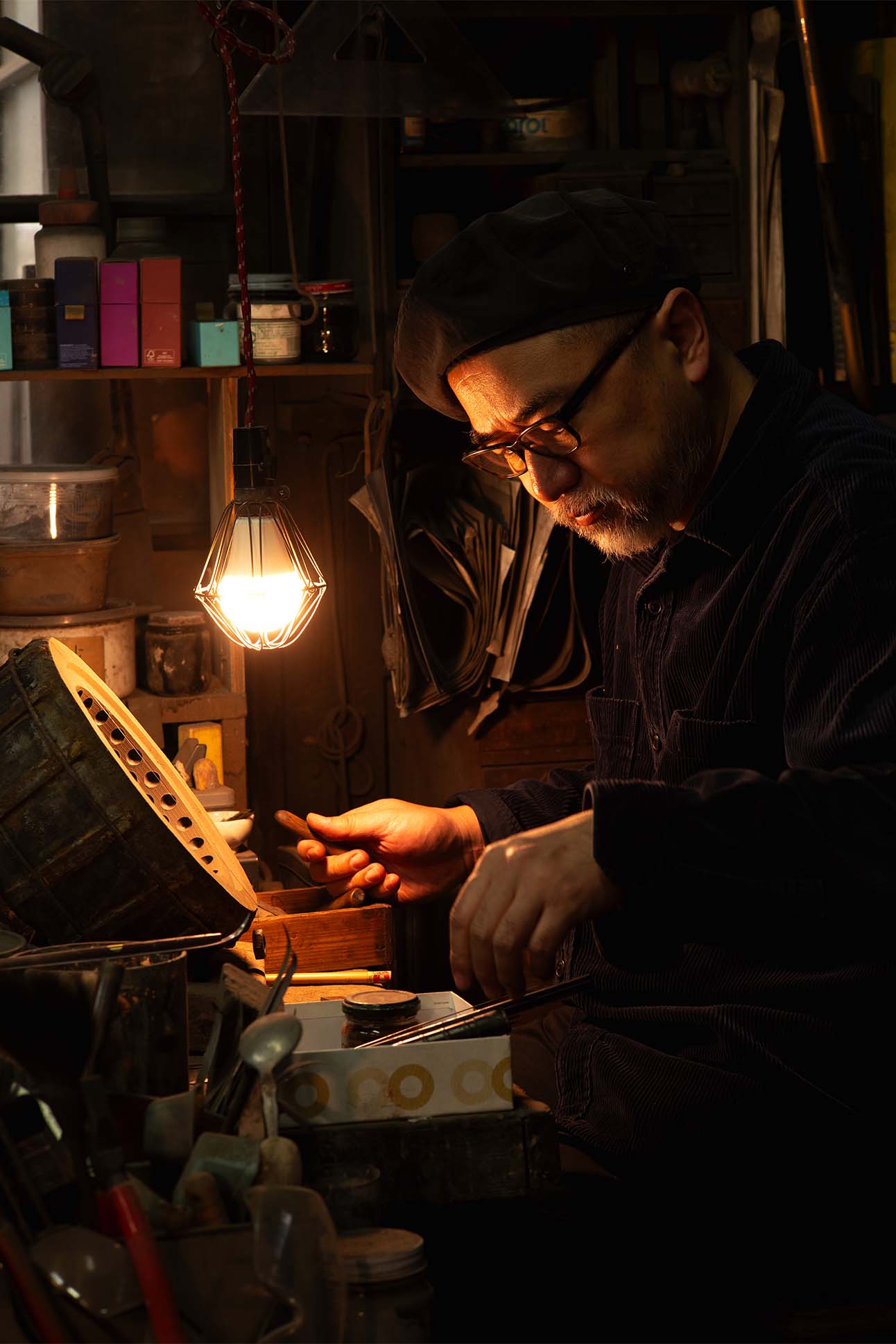
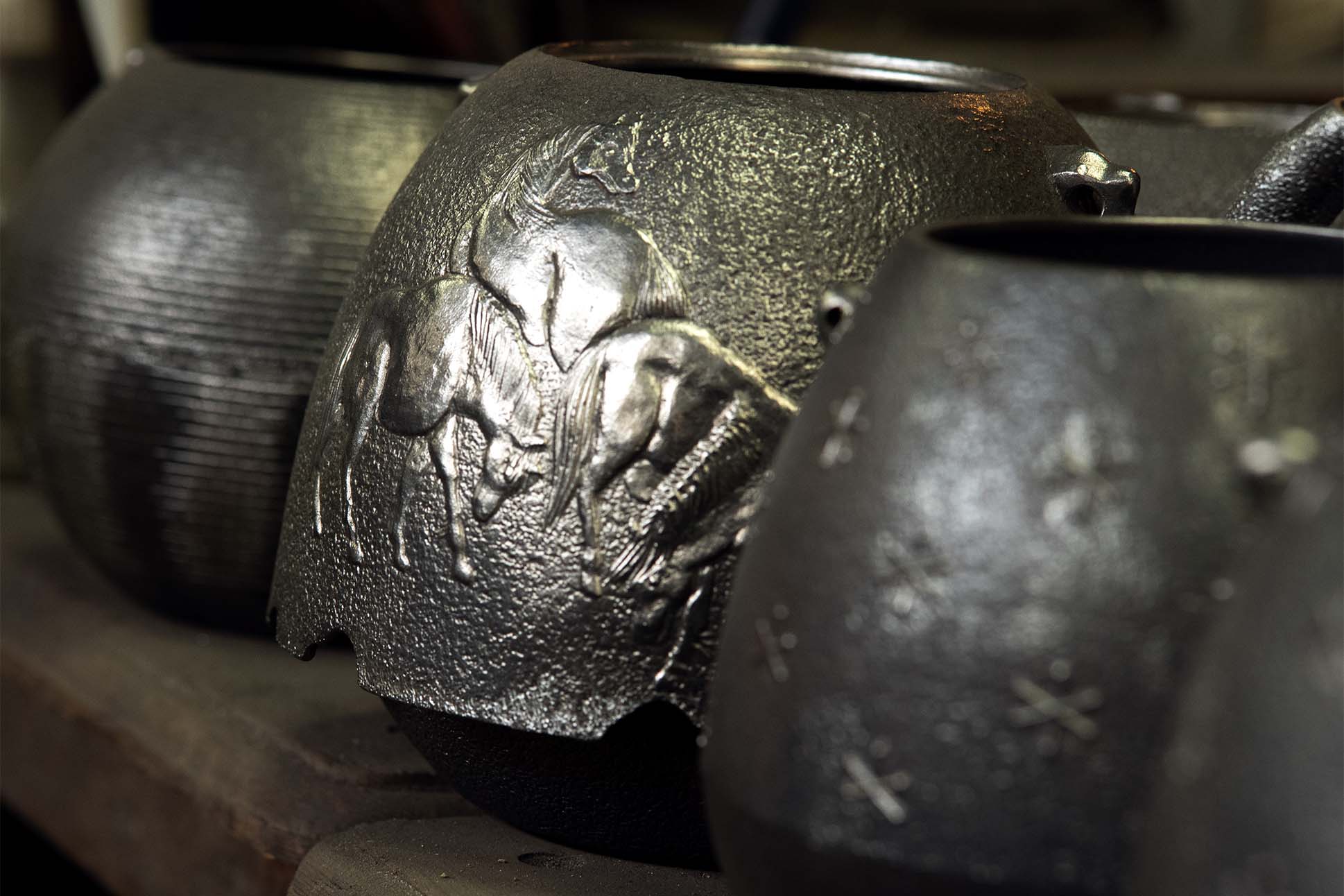
Though his role was shaped in part by filial obligation, there is no doubt that Nambu tekki is Shigeo’s calling. In the workshop, a meditative focus settles over him. There, his hands deftly shape the testubin (kettle) mold, pressing dozens of nodes onto the surface in an arare (hail) pattern, a hallmark of Nambu ironware. More than mere aesthetics, the technique thickens the iron, increasing its capacity to retain heat.
This step is Shigeo’s favorite part of the process. “Once the iron is poured in, the mold is destroyed and can never be perfectly replicated,” he says. “It exists like this only for a moment. Then, it is gone.” Later, once the casting burrs have been removed, the piece will be charcoal fired at 1,652-degrees for an hour and its interior coated with an oxidized layer, rendering it rust-proof even when filled with water. After firing, the exterior is polished and finished with a lacquer coating, which imparts color and prevents further oxidation.
Even as Nambu tekki wares abound, taking the diverse forms of wind chimes and sukiyaki pots, tetsubin remains ever popular. Devotees swear by the kettle’s health benefits, attributed to the ionized iron released from its oxidized interior into the boiling water. For this reason, tea prepared with water from a tetsubin is thought to have a superior taste. Iron softens the water, resulting in a sweeter, mellower profile. Within the refined world of Japanese tea, there is no better vessel with which to brew.
At Suzuki Morihisa Studio, one can purchase tetsubin from across the family’s centuries-long oeuvre, including designs by 13th-generation master Shigeyoshi Suzuki Morihisa. The first Nambu tekki craftsman to be named an Intangible Cultural Property, his stylish hino-maru tetsubin are perennial favorites. Alongside them sit Shigeo’s own designs, sporting modern, architectural touches.
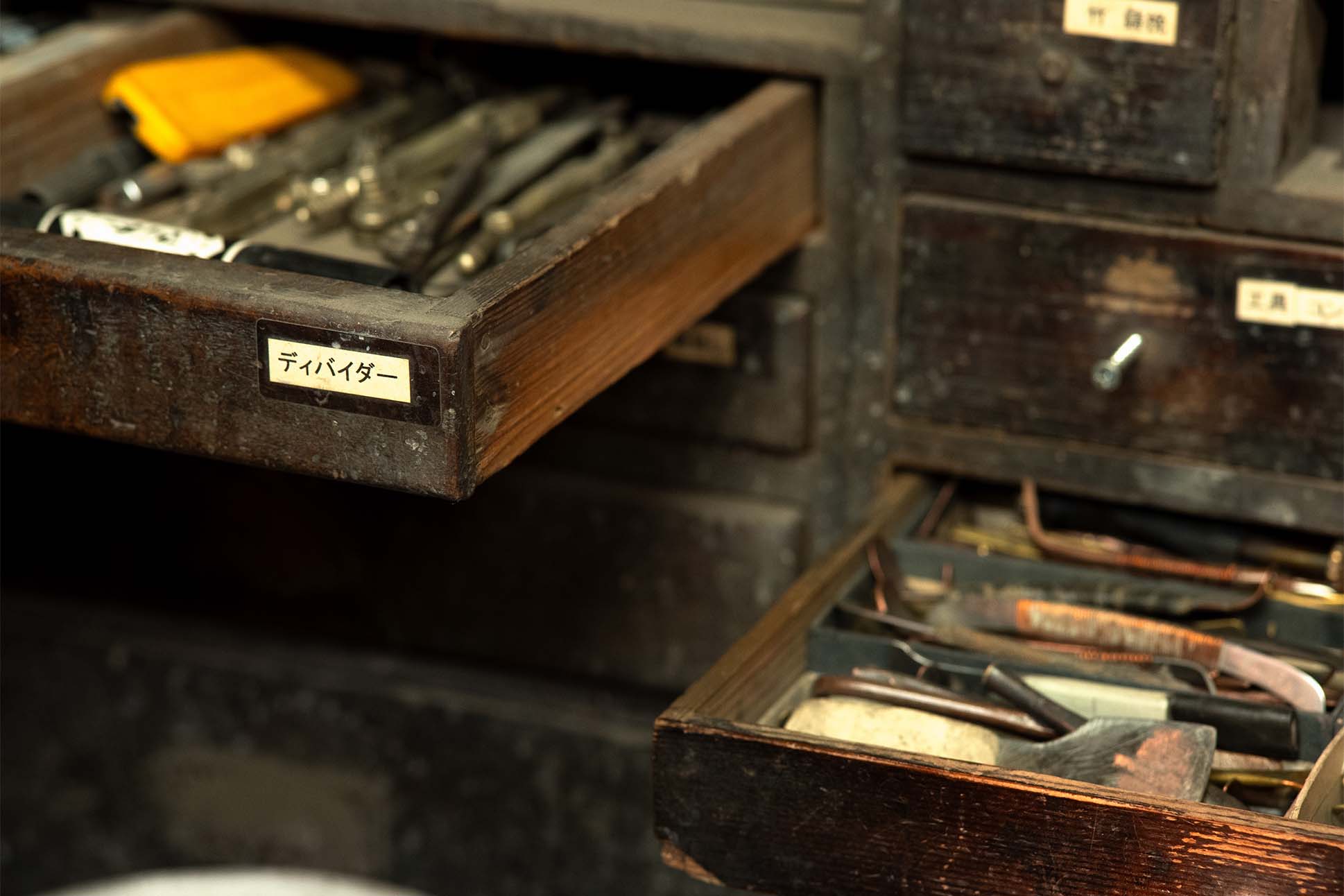
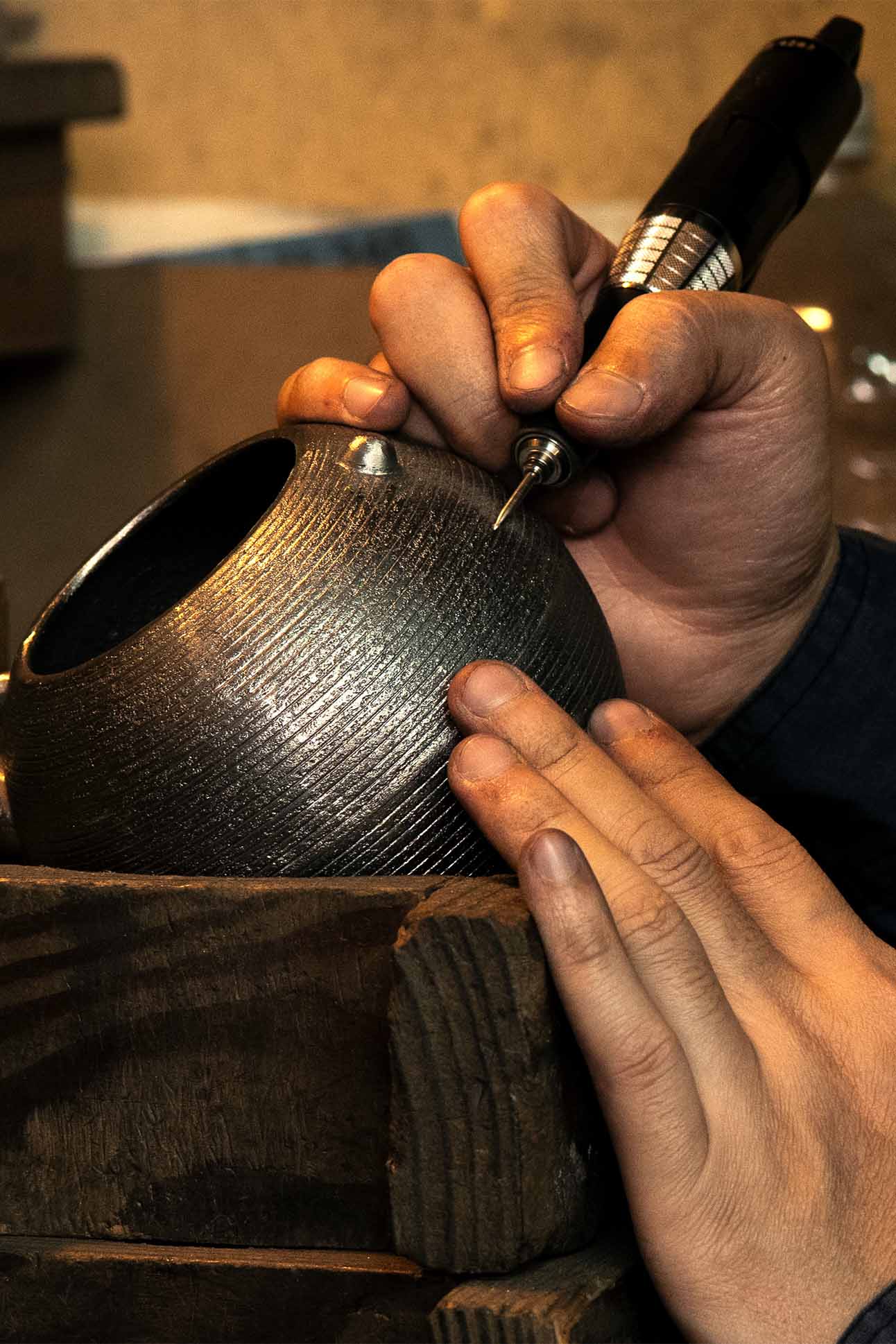
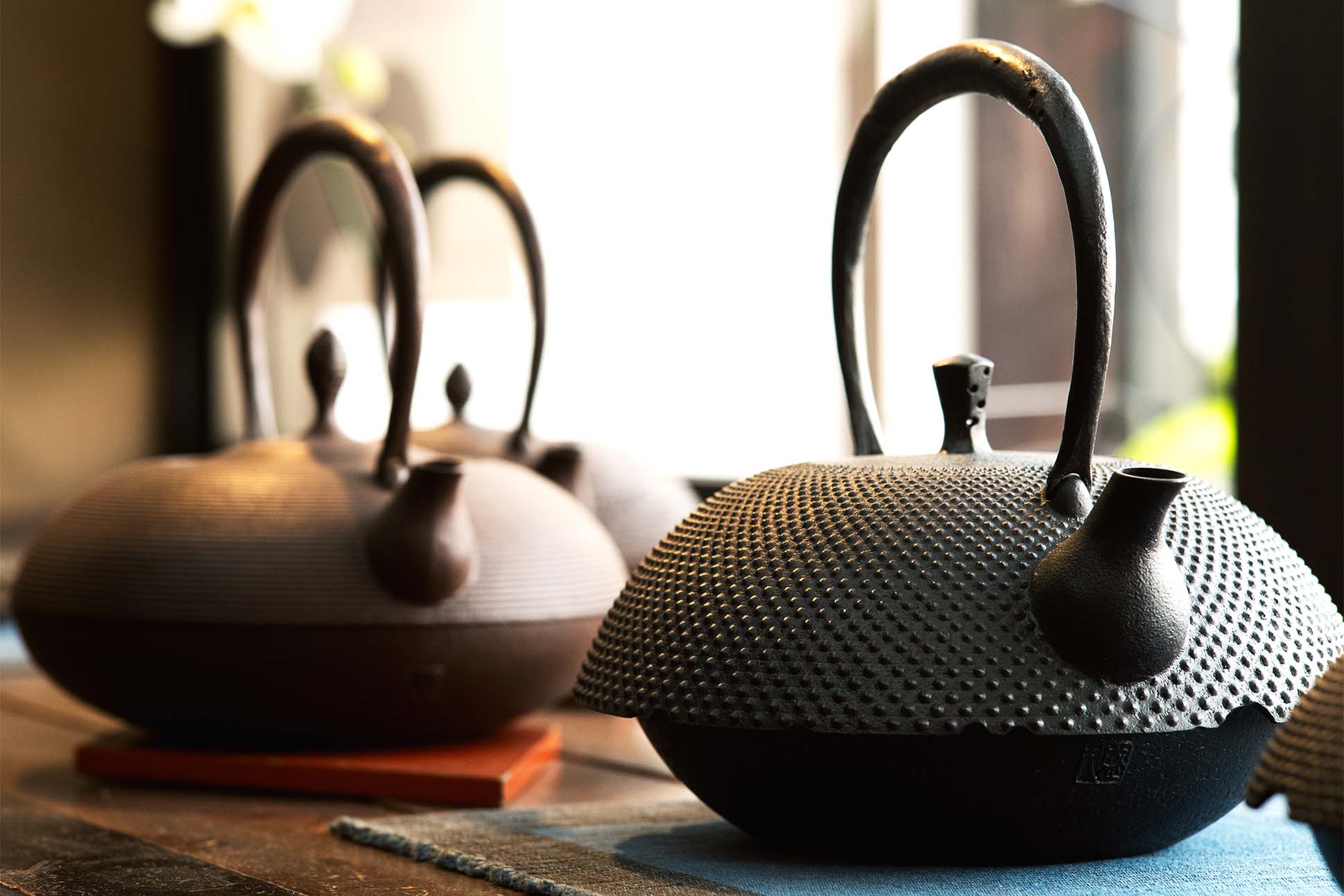
In recent years, though, Nambu tekki has faced an uncertain future as demographics change, the market shifts, and fewer new artisans learn the art. Rather than consigning the craft to the annals of history, Shigeo works to elevate its place in contemporary life. He has redesigned forms for modern tastes, casting tetsubin with sleek cylindrical shapes and angular handles, while situating Nambu tekki in spaces where the art’s intricacies can be truly appreciated.
In the executive lounge of Hotel Chinzanso Tokyo, for example, an exhibition case displays the family’s most notable designs. Meanwhile, Shigeo’s old friend, the designer Shinichiro, furnishes his stylish restaurants with Suzuki Morihisa Studio wares. And in late 2025, under Shinichiro’s guidance, Shigeo collaborated with sculptor Clara Imbert to produce three pieces for Beyond Our Horizons, part of Chanel’s la Galerie du 19M Tokyo exhibition. In the gallery space, the craftsmanship of Nambu tekki seemed to transcend its utilitarian origins, asserting itself as art.
For his part, Shigeo is reticent to predict the craft’s future, choosing instead to focus on the present. “I can’t foresee that far,” he says. “All I can do is continue to promote the quality of our product and ensure the knowledge is there to be handed down to the next generation.”