
Text by Martha Cheng
Images by Cody Faraon and John Hook
“Kava is meant for conversation,” says Daya Nand, owner of Fiji Kava. “But we’re conversating, and there’s no kava.” Nand remedies the situation by pouring us each a full cup of kava. “Bula!” he says, the Fijian equivalent of “cheers,” as we clink cups and chug the murky tan liquid. Now, deeming us appropriately relaxed, he continues our chat in his kava bar, tucked under a parking ramp on Dillingham Boulevard and facing a row of auto-body shops housed in Quonset huts. In the back is the machine he had specially made in California to pulverize the kava roots he imports from Fiji. He started Fiji Kava more than 20 years ago because, as a fourth-generation Indo-Fijian, “kava is our culture,” he says. In Fiji, “if anything is messed up, the chief will call a meeting. Everybody comes, sits down, drinks kava, and they solve the problem. But if you have Heineken, you be the problem.”
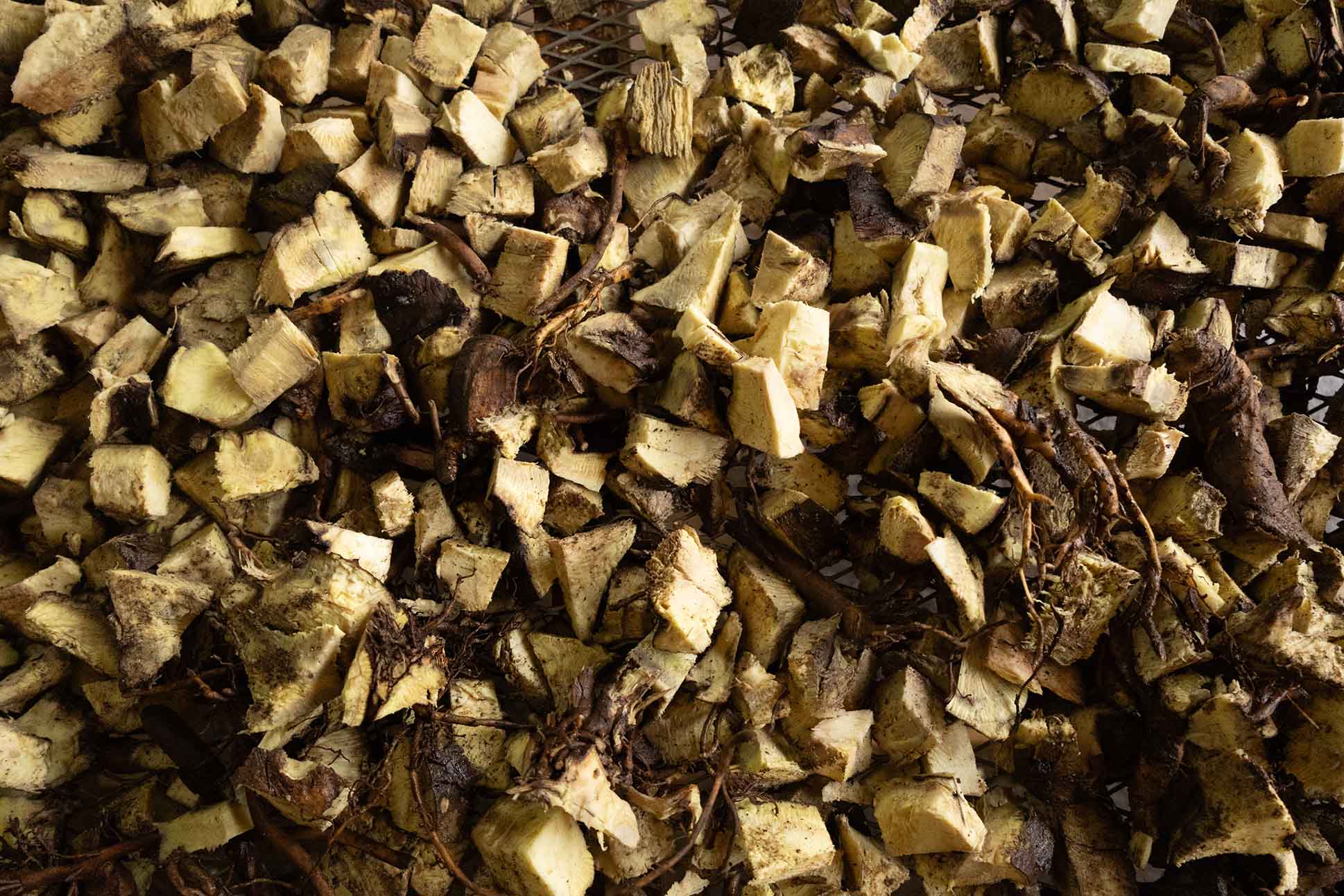
Kava has been cultivated and consumed throughout the South Pacific for at least 2,000 years, its roots pounded and mixed with water to make a drink known for its calming effect. In ‘ōlelo Hawai‘i, it’s known as ‘awa, and it was one of the canoe crops brought over by the first Polynesians who settled Hawai‘i. It plays a ceremonial as well as social role—the latter increasingly in kava bars that have been multiplying across the country. Galen McCleary, the general manager of Pu‘u O Hōkū Ranch on Moloka‘i, which sells its freshly frozen and pulverized ‘awa to individuals and kava bars across the Hawaiian Islands and as far as Florida, says the demand for ‘awa has grown significantly in recent years. The farm currently has approximately 15 acres in ‘awa production and is establishing about 1,000 new plants a year. (It takes about three and a half years to produce a mature crop.) “The demand for it definitely outstrips our supply, and we’re trying to keep up,” McCleary says. “Part of [the rise in interest] is due to the trend of people getting off alcohol and looking for substitutes. I think during the pandemic, people who were drinking ‘awa started drinking more of it, and people who had never heard of it before have started to try it and drink it.”
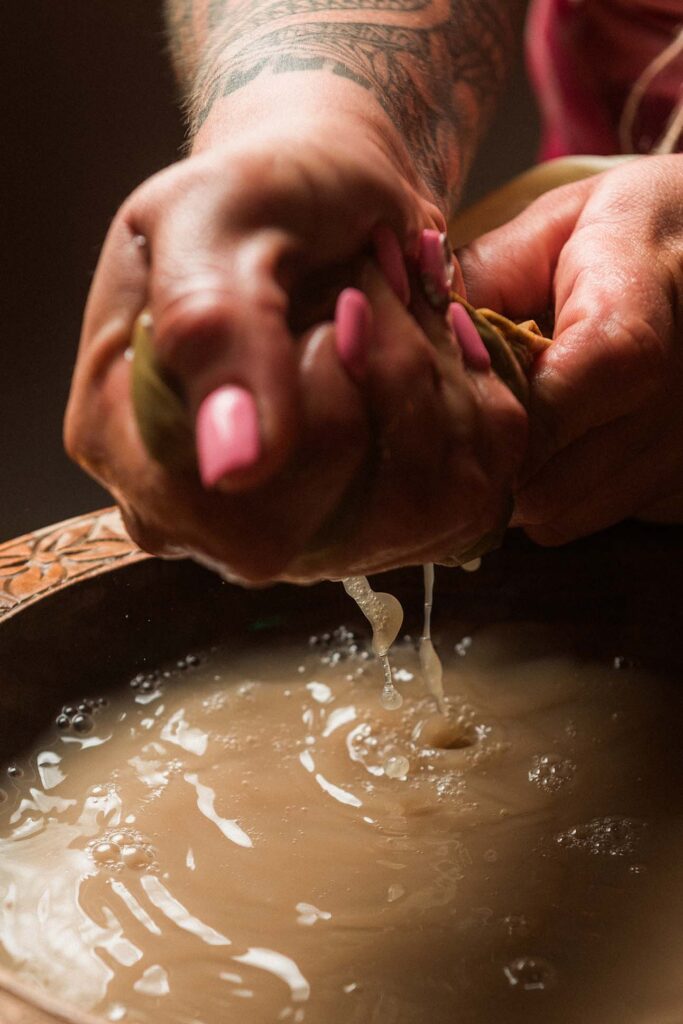


Pu‘u O Hōkū started growing ‘awa in the ’90s, planting varietals that McCleary’s father, Joel, and Ed Johnston, who helped found the Association for Hawaiian ‘Awa, had collected from around Polynesia and Hawai‘i. The farm now grows 16 varieties, from the popular Hiwa to the potent Isa, which McCleary says is the strongest in kavalactones, the compounds in the kava plant that are responsible for its effects. He’s partial to Mo‘oula, which he says occupies a middle ground in strength, and is from a variety that was found above Hālawa Falls. “It’s not as well known because it’s a Moloka‘i varietal, but I love that it’s from here.”
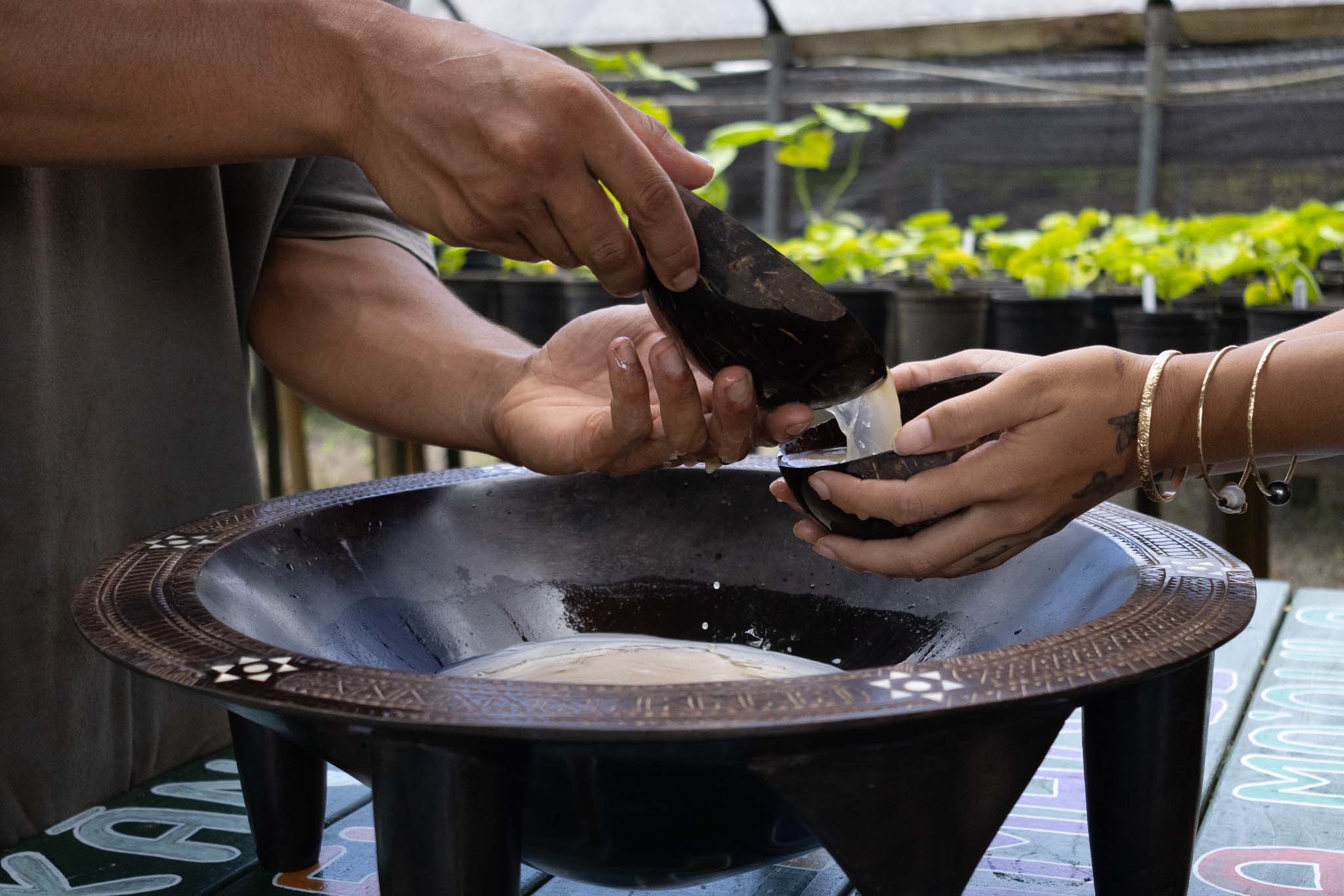
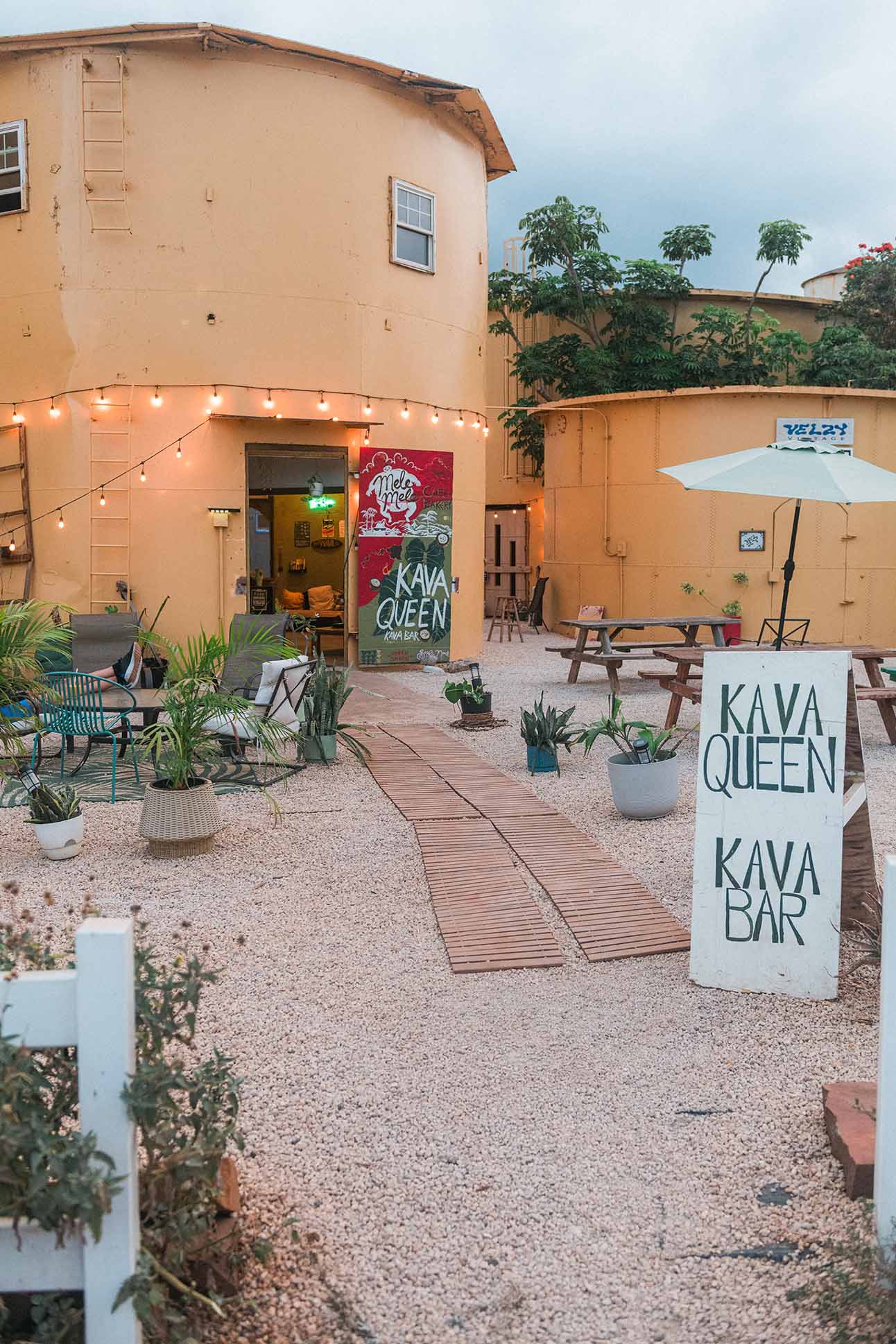
On a recent Monday evening at Kava Queen Kava Bar, housed in a yellow silo in the Old Waialua Sugar Mill, two men—one wearing a shirt with an image of two musubi and the words “kinda fit kinda fat”—order kava mocktails. They carry their drinks, made with kava concentrate and layered with pineapple juice and hibiscus, to the tables outside. At the bar, Ava Taesali’s father, who is running Kava Queen this night, tells the women at the counter about an upcoming open mic night. Ava (her name means kava in Samoan, which her father says was purely a coincidence) started the bar last October. In addition to fruity concoctions, powdered kava root from Vanuatu and Fiji is prepared more traditionally—mixed with water and served in a coconut shell. I approach Micael Haskins, who looks like a regular, after seeing him down two shellfuls.
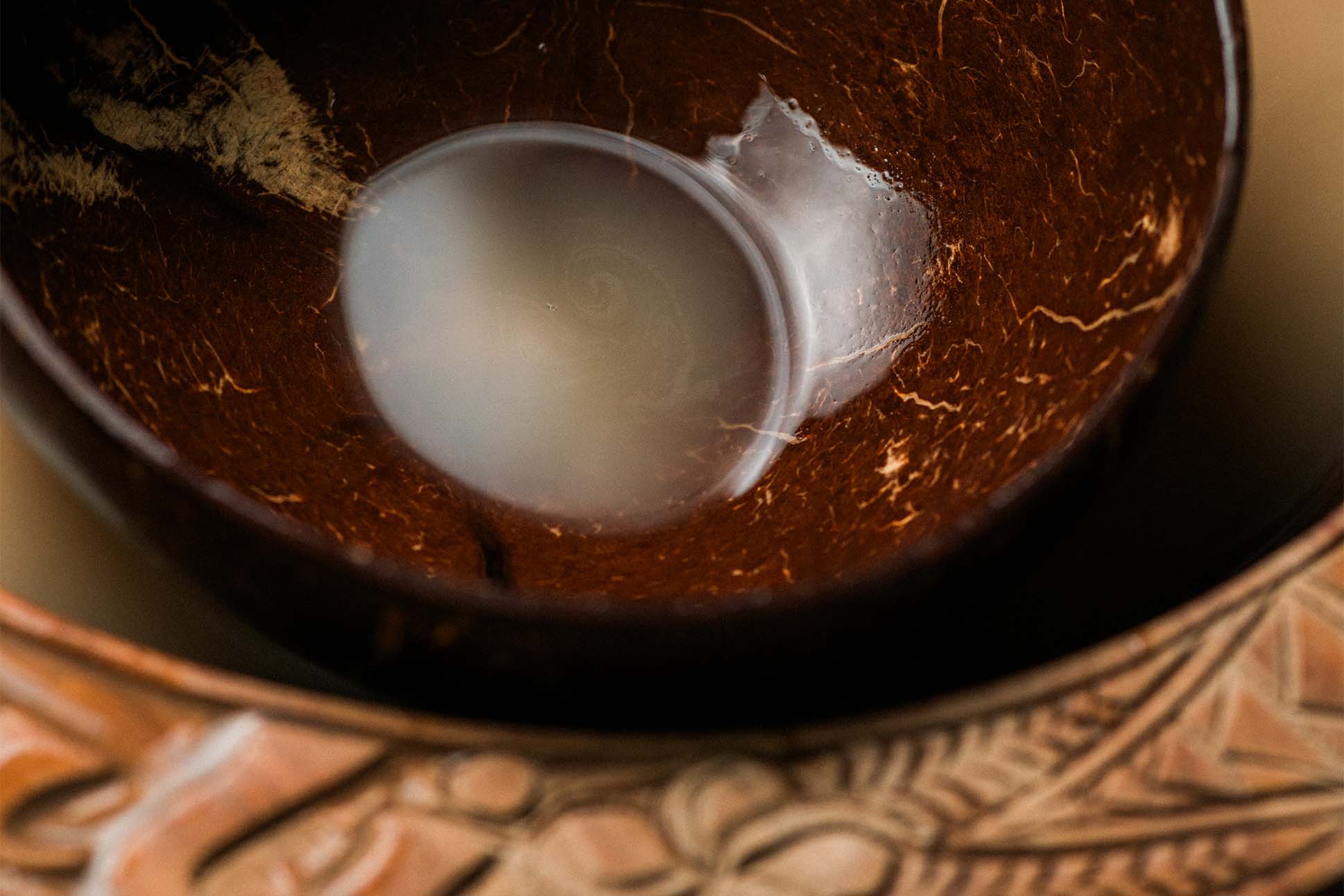
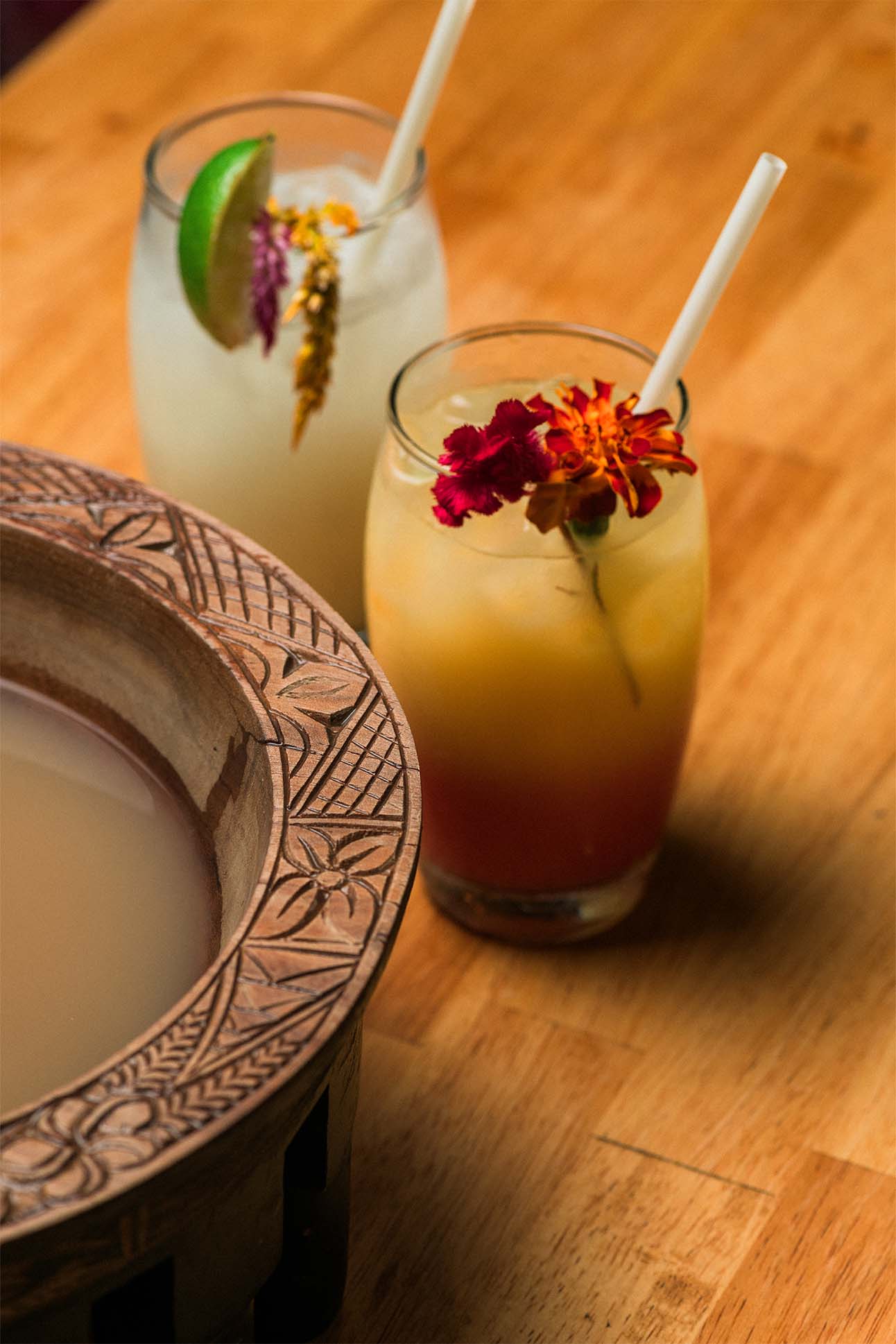
The first time he tried ‘awa was a few years ago, when he was visiting Seattle from Moloka‘i for a conference. “Funniest thing, that kava was from Pu‘u O Hōkū,” he says. He first heard about kava from a post on Facebook, and he was drawn to its cultural history and its potential as an alternative to alcohol. Now, he comes to Kava Queen when he’s on O‘ahu and, at home, prepares his own, sometimes with the fresh frozen ‘awa from Pu‘u O Hōkū and sometimes with the powdered root. He handles the task with the same care that he applies to brewing coffee, experimenting with different water temperatures and types. (He’s partial to making it with Waiākea bottled water.) He finds that ‘awa helps with anxiety as well as the body aches he acquired from playing football. And on weekends, he’ll mix up a big batch for gatherings.
‘Awa encourages conviviality. Weekly ‘awa nights with live music used to be one of the main draws at Da Cove Health Bar and Cafe on Monsarrat Avenue. The fast-casual café has recently reintroduced the occasional ‘awa night since the pandemic, and ‘awa is available on the daily menu. Elsewhere, kava has seen a resurgence in the form of kava wellness shots and sparkling kava drinks, but at Da Cove you’ll find Pu‘u O Hōkū’s ‘awa still served the traditional way: mixed with just water. According to the staff, when Da Cove first opened in 2003, mostly locals would come for the ‘awa; these days, it’s mainly visitors. Still, on a recent late afternoon, after most of the açaí bowl-hungry crowds have cleared out, a group of kama‘āina (local residents) are gathered at a table in the back, chatting over sandwiches, smoothies, and ‘awa. Kava, after all, is made for conversation.