
Text by Martha Cheng
Images by Eagan Hsu, Bells Mayer, Alex Robertson, and Kevin Wang
There was definitely a swell. We stood on the seawall at Jinzun Harbor and watched the shorebreak slam against the coastline’s giant concrete tetrapods, artificial structures meant to dissipate the ocean’s energy.
“Let’s go,” I told my boyfriend.
“But no one’s out,” he said.
“Isn’t this the reason why we travel to surf?” I said impatiently. “For empty waves?”
We paddled out, but I did not end up riding a single wave. Instead, the current swept me out, and when it released its grip, the only way I could reach the shore was to paddle straight into the breakwater barriers. But I couldn’t get back in without getting thrown against the ominous-looking concrete structures. Finally, I ditched my board and let the water pitch me as I reached out for one of the legs of the tetrapods and clung to it like a starfish. In a brief pause between waves, I climbed up the breakwall.
But that wasn’t the worst of it. A few hours later, we happened on another break. This time, there were people surfing the perfect, peeling waves. My boyfriend joined them while I sat on shore, bruised and bleeding.
This is not the Taiwan I grew up knowing. The one I knew was the one most visitors to the island likely picture: its capital, Taipei, with its bustling night markets, the birthplace of Din Tai Fung and its famous soup dumplings, and where my parents and I would pilgrimage for niu rou mian (beef noodle soup) so spicy it would make my dad sweat even more in the city’s humidity. We’d cool off with shaved ice heaped with grass jelly and sweetened taro and start every morning with a Taiwanese breakfast of savory soy milk, fan tuan (sticky rice rolls), and shaobing (flat bread).
My parents were part of the wave of Chinese immigrants that fled to Taiwan starting in 1949 after the Nationalists lost to Mao in China’s civil war. My maternal grandfather was a general to Chiang Kai Shek, whom my mother idolized. But in more recent years, I learned the darker side of his rule: the martial law he imposed for 38 years, one of the longest impositions of martial law, and the suppression of Taiwanese culture and language. The more I learned about Taiwan, the more it reminded me of Hawai‘i, with its layers of history and waves of settlers beginning with Taiwan’s Indigenous populations—to which Polynesians trace their origins.
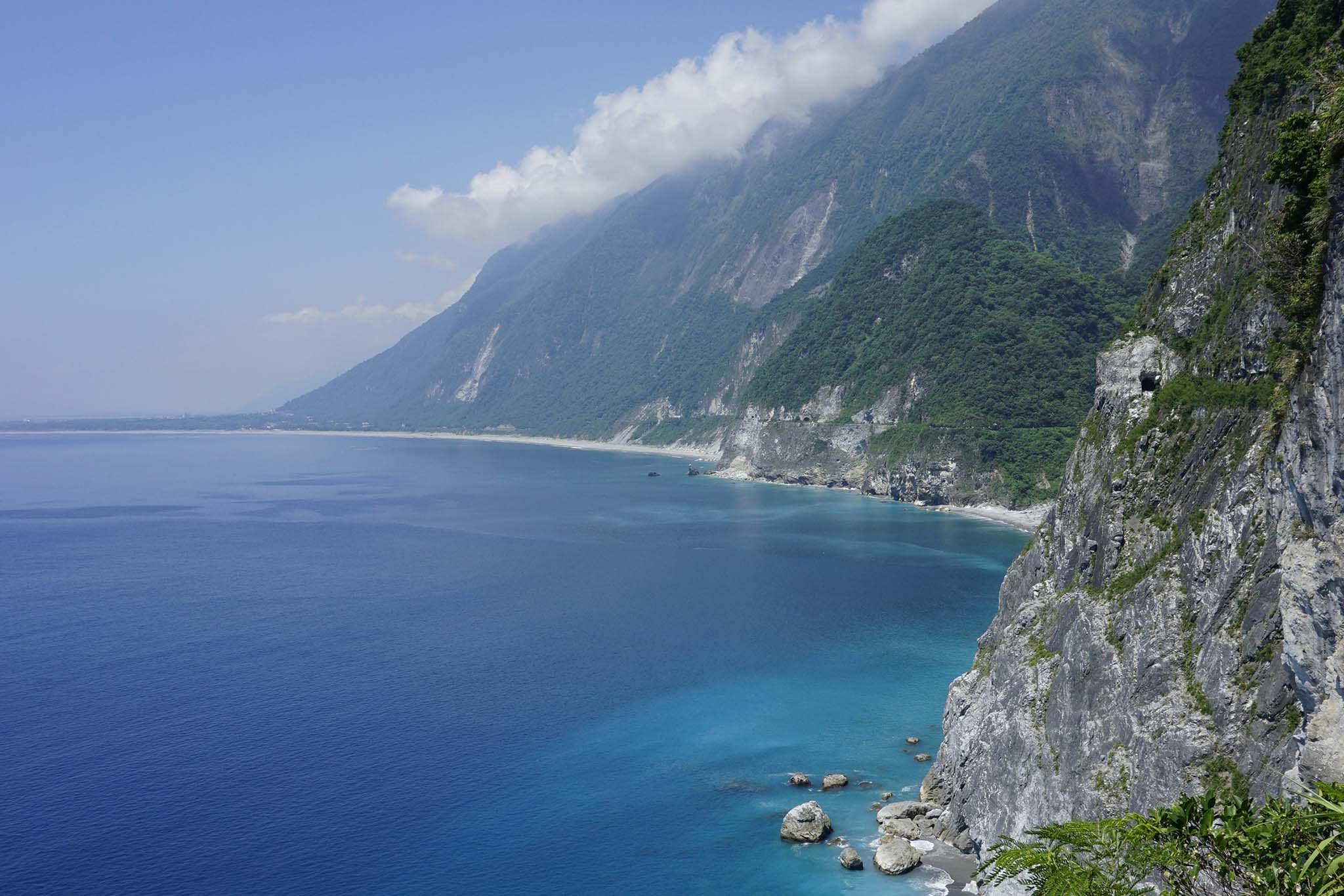
A different facet of Taiwan drove me to the island on each visit. The surf led me to Taiwan’s rugged east coast, lush and junglelike. While Taiwan’s larger cities like Taichung in the west and Kaohsiung in the south match the energy of its teeming capital, the lack of high-speed rail connections in the east coast keeps this side of the island rural. After a few days surfing near Dulan, we headed inland to Chishang, biking around its rice paddies and stopping in open-air cafés for locally grown coffee as well as tea steeped with dried mulberry leaves and cakes baked with milled rice. We stumbled across a tofu skin factory, where sheets of soy hung like clothes on the line to dry.


It wasn’t until I read Clarissa Wei’s 2023 cookbook Made in Taiwan, in which she declared that Tainan is the best place in Taiwan to eat, that I started exploring that southern city. I couldn’t believe that I knew so little about it, despite it being the oldest city in Taiwan and its capital for 200 years, until the capital was moved north in 1887. Since then, I’ve become so taken with the city that on my most recent trip, I bypassed Taipei entirely, taking a bullet train directly from the airport and arriving in Tainan about 90 minutes later.
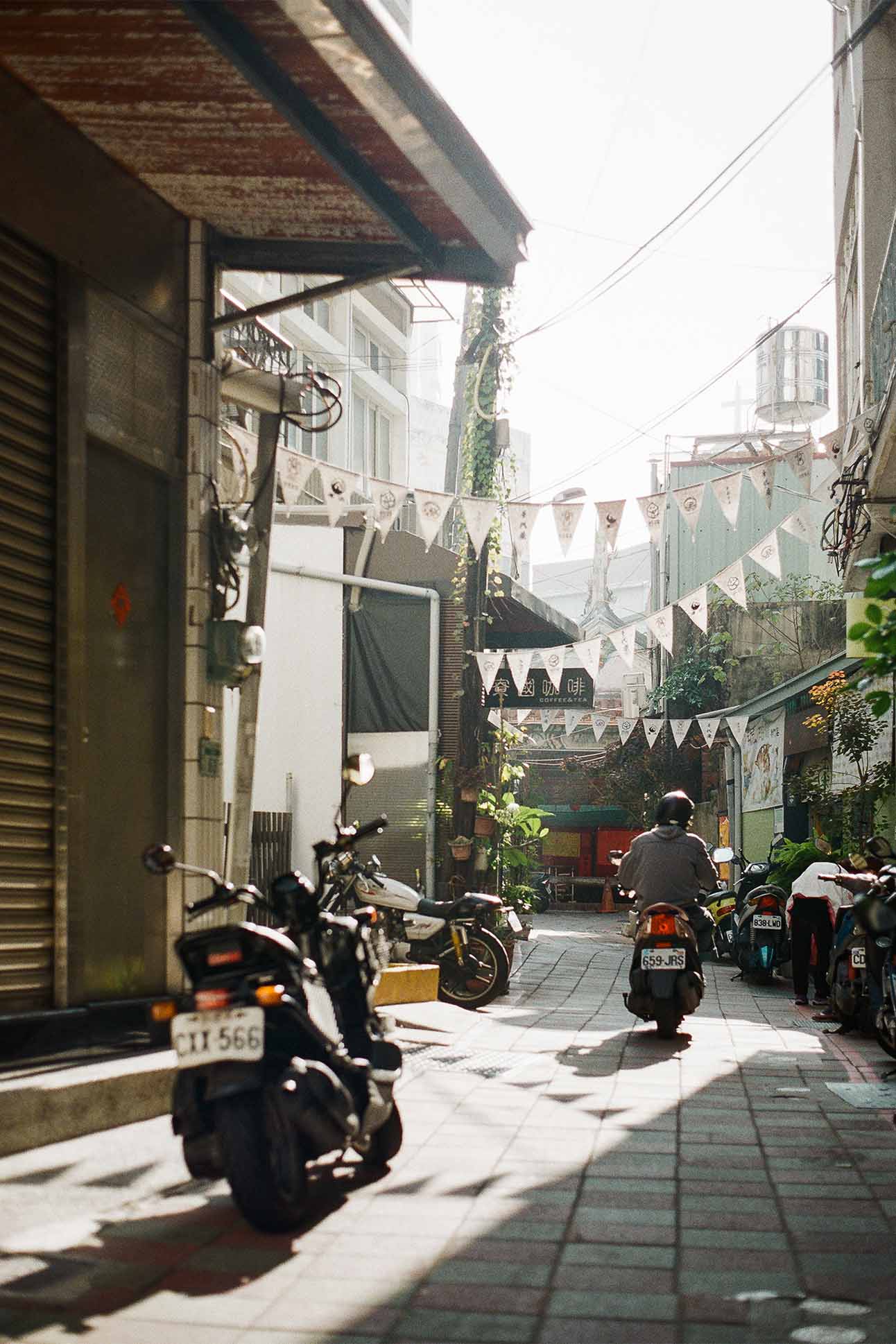
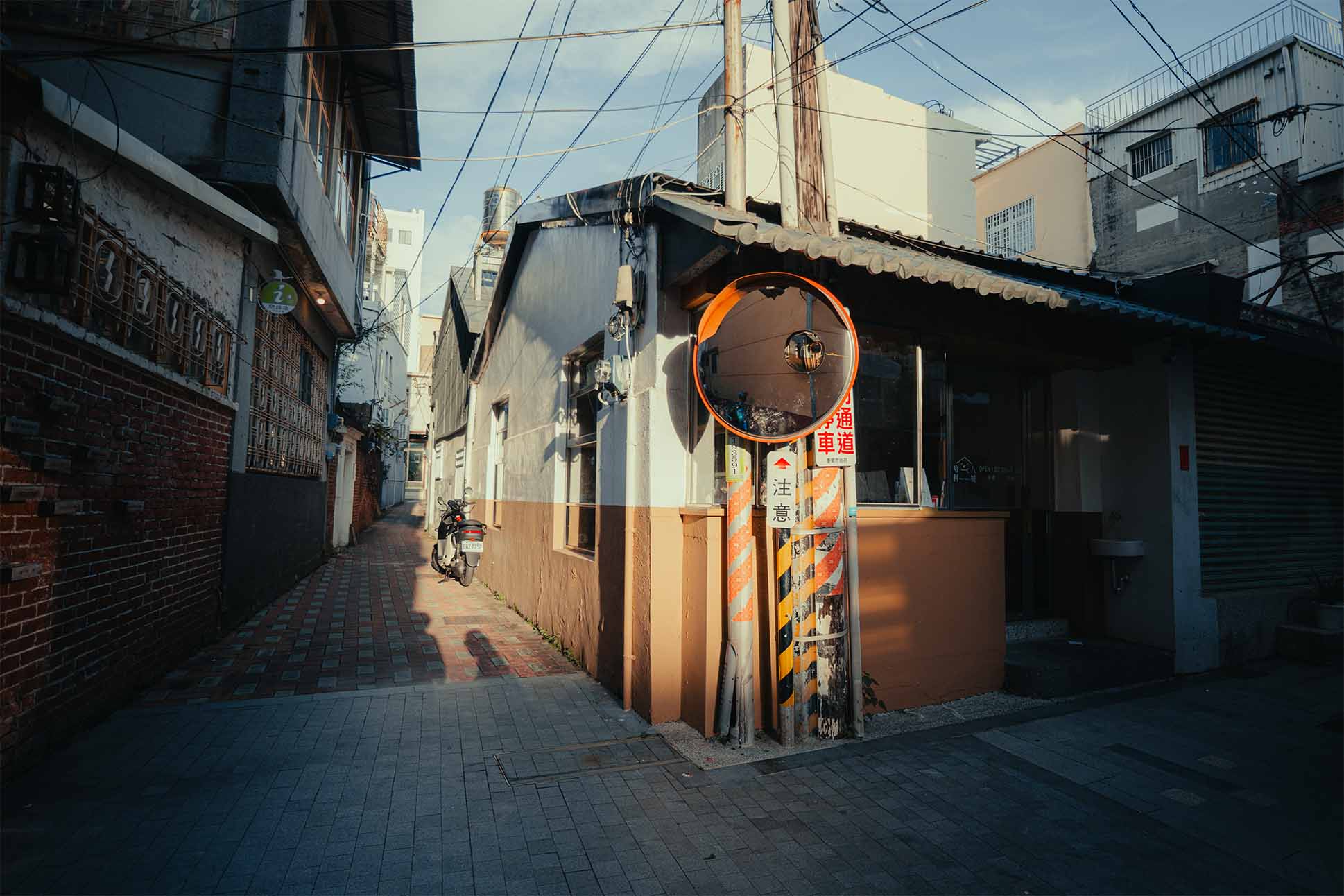
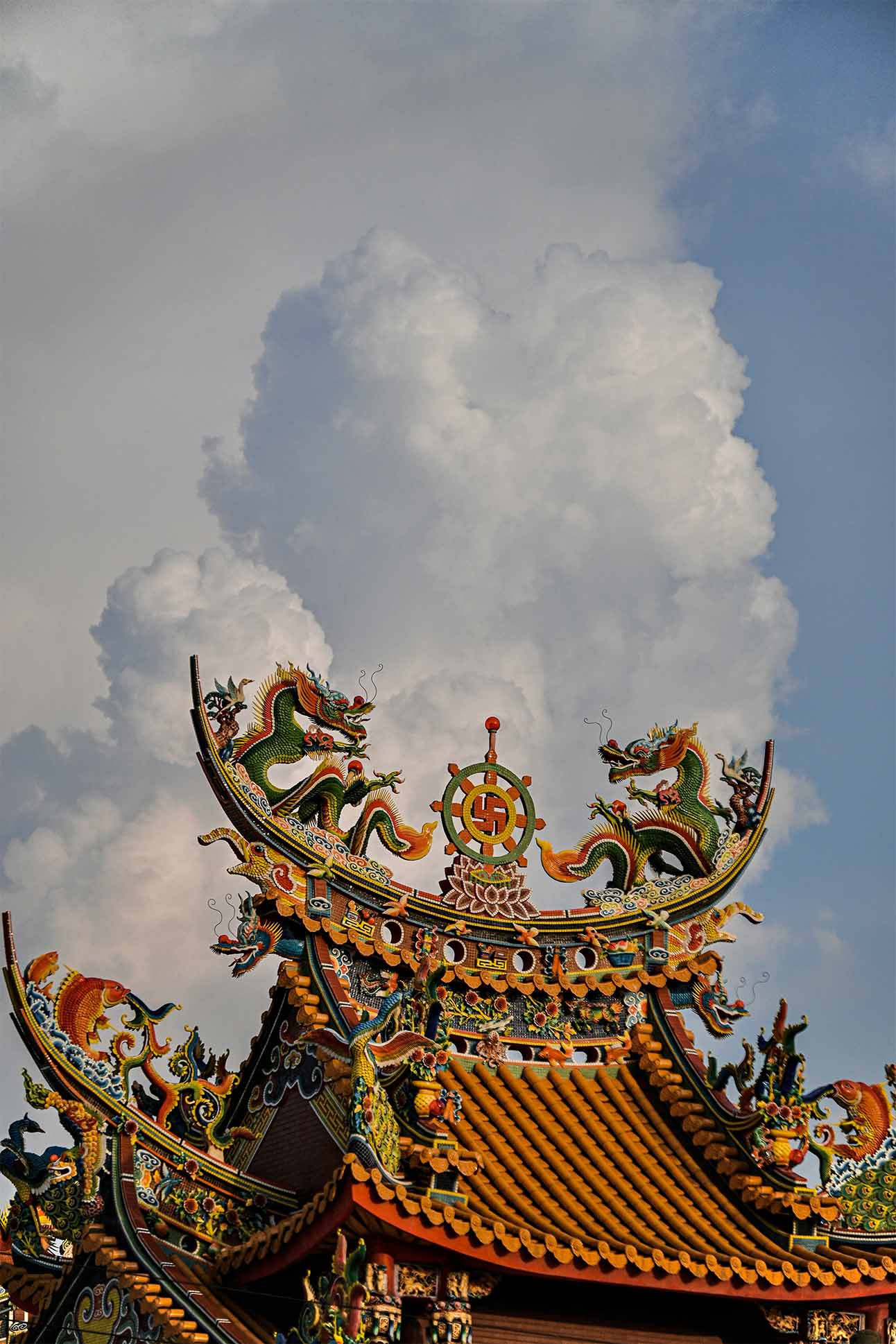
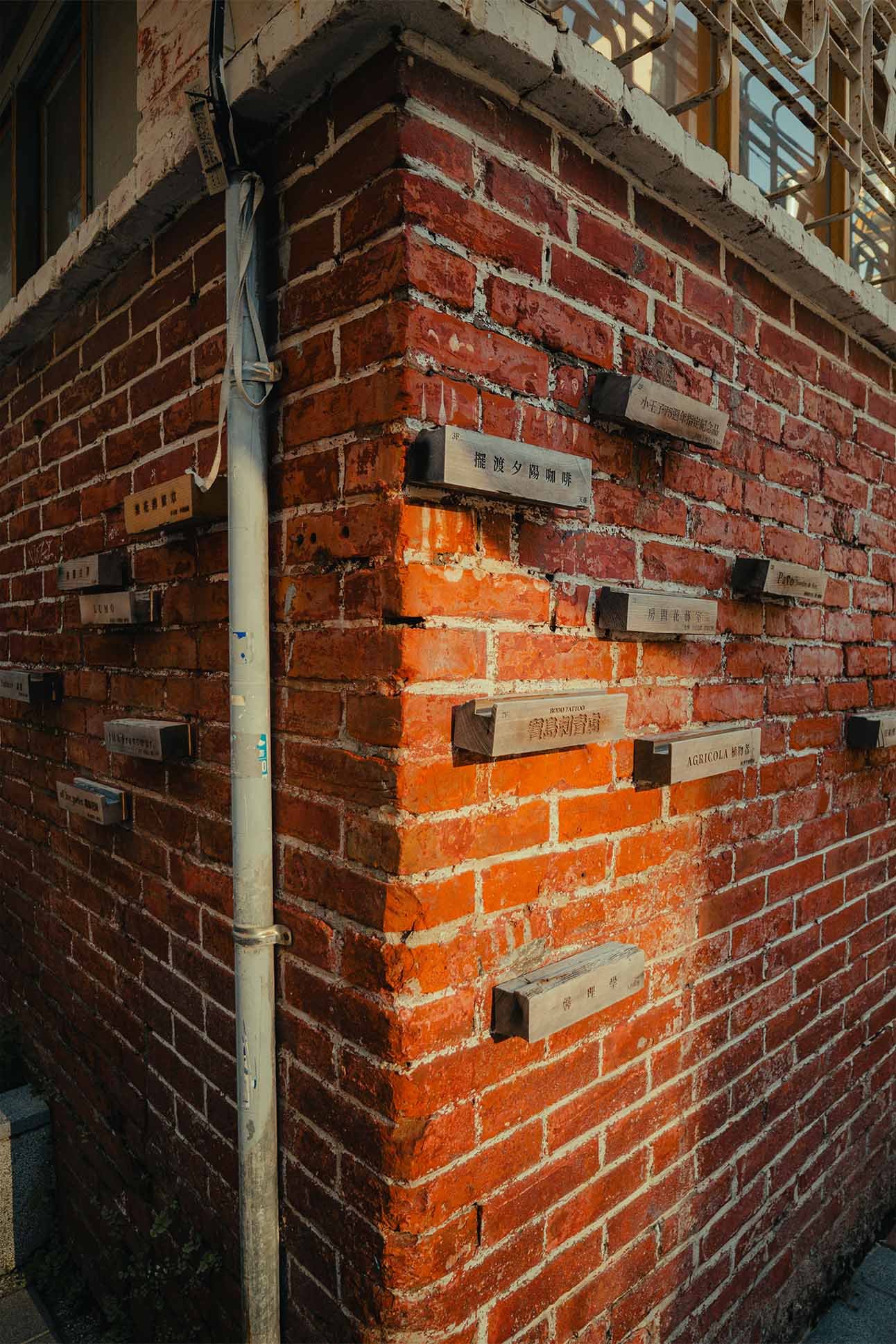
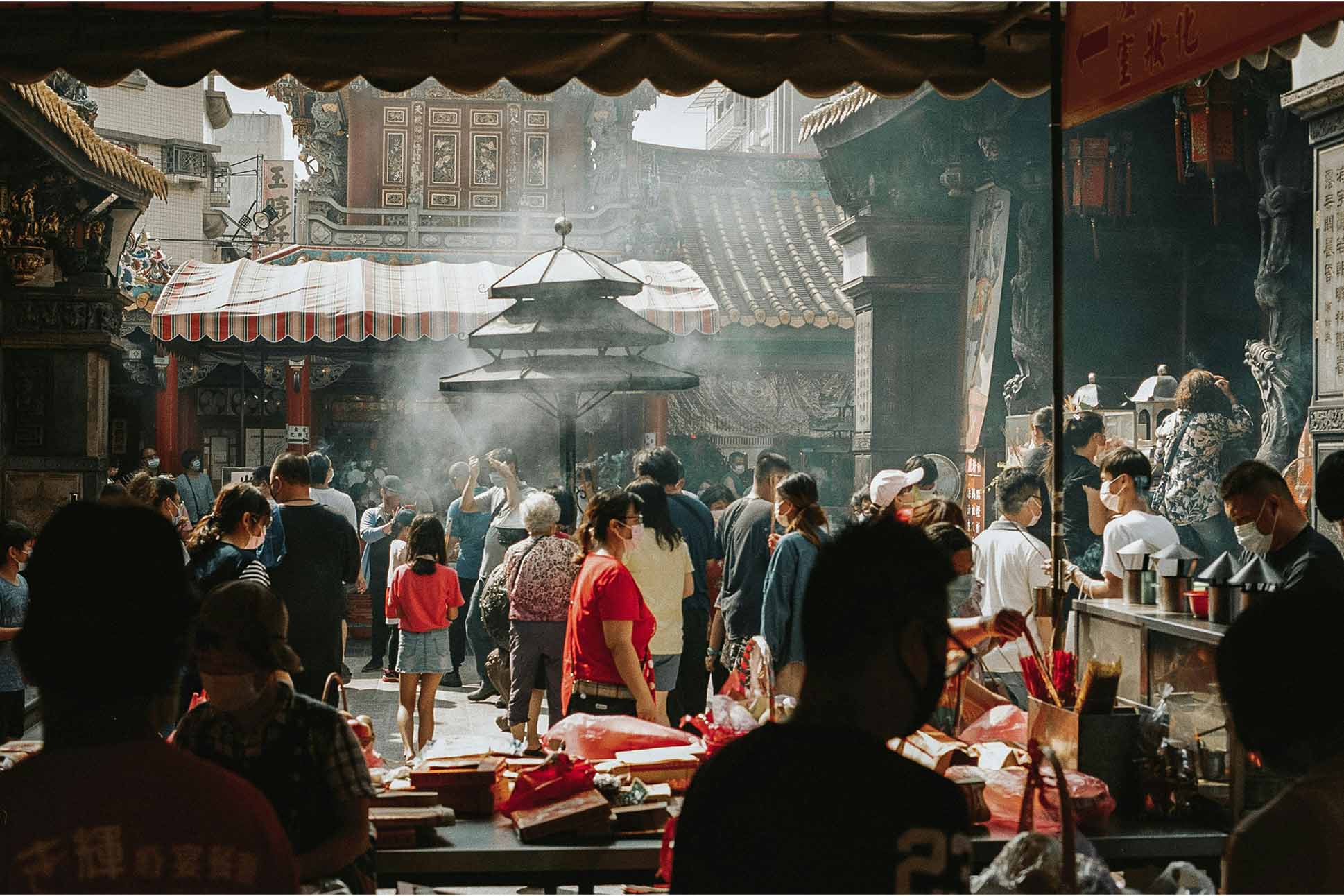
Tainan has what I love most in cities: narrow, chaotic alleyways to get lost in and a tenacious hold on the past, whether through its architecture or its food. It has the highest concentration of temples in the country; I glimpsed their gilded and green rooftops, their corners curved skyward, in nearly every alley and road I walked down. The city’s Buddhist and Taoist temples are woven into residents’ daily lives. At Dongyue Temple, built in 1673 and dedicated to the Taoist ruler of the underworld, people communicate with the dead; on the seventh day of the seventh lunar month, the birthday of Qiniangma, the protector of children, parents bring children to Kailung Temple for coming-of-age rituals; and at the temples throughout, I see students burning paper prayers for help in passing their exams.
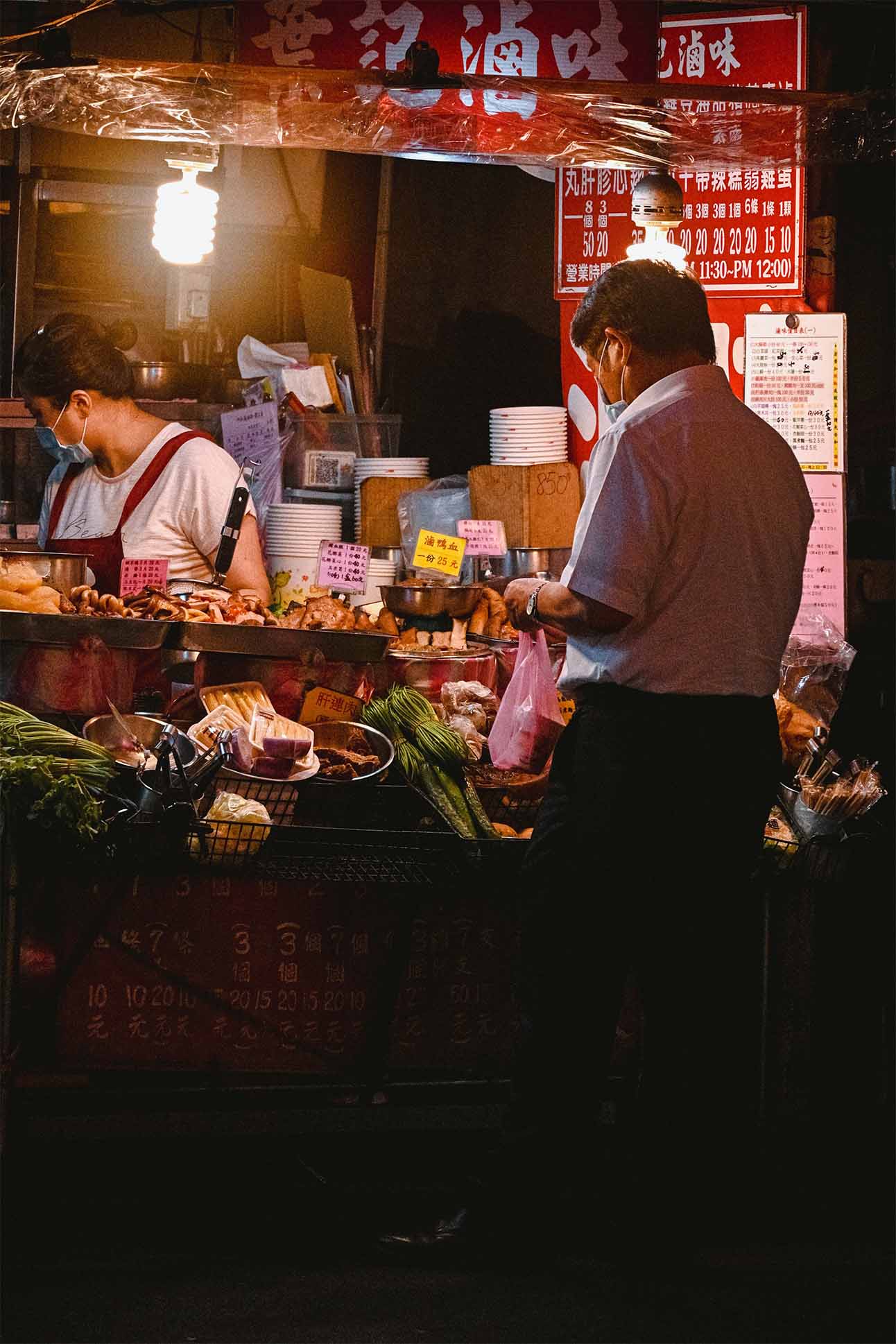
And, of course, there is food everywhere. Vendors set up under sprawling banyan trees and sell nian gao (sticky rice cakes) from the back of motorbikes while small eateries spill out onto the sidewalks serving xiao chi (small eats) and sliced fruits sprinkled with plum powder, or what we know in Hawai‘i as li hing. Unlike in Taipei, the food feels less shaped by Japan’s colonial influence and Nationalist tastes. Most tourists come to Taiwan to eat—those that head to Tainan come to taste old-style Taiwanese cooking. That means dan zai mian, soup noodles with braised minced pork and shrimp; steamed, dense, and savory rice pudding; milkfish fillets in a clear broth. For moments of respite from the heat, I slip into the Art Deco building of Hayashi Department Store, which sells clothing and crafts from local artists. The bottom floor is dedicated to food omiyage, including Taiwan’s famously sweet dried mangoes, while the top floor houses a rooftop balcony, café, and—perhaps less expectedly—a Shinto shrine and bullet holes from a U.S. aircraft during World War II.
But it is impossible to talk about Taiwan these days without acknowledging China’s increasingly aggressive push for unification with the self-governing, democratic nation. It’s especially hard to ignore in Tainan, where Taiwan’s military jets roar overhead with the regularity of clockwork. In my mind, the pull of the past in Tainan—where Taiwanese, rather than Mandarin, is the language I hear most on the streets; where the revival of Siraya, one of Taiwan’s many Indigenous languages, is underway; and where the gu zao wei, or “ancient early taste,” flavors its dishes—feels like the island’s concrete bulwarks along the coast: protection against an uncertain future.